Top Online Cfd Contract for Difference (CFD) Brokers for 2026
We found 11 online brokers that are appropriate for Trading Online Cfd.
Best Online Cfd Guide
Analysis by Andrew Blumer, Updated Last updated – October 13, 2026
Online CFD

I consider online CFD trading one of the most popular instruments on the financial markets today, and it forms a key component of many traders' portfolios.
Online CFD is an abbreviation of Contracts for Difference and allows me to take advantage of leveraged trades on many financial asset types including spot metals, commodities, indices and Forex. However, when I trade a CFD I do not own any underlying asset.
Choosing to trade in an online CFD means engaging in a contract with the financial broker, who is the seller here. A contract is agreed and the instrument price is speculated upon based on the conditions in the markets.
I am trading a contract and speculating on the rise or fall in price movement of an asset.
In brief, with online CFD I can trade price movements of an underlying asset without owning it.
I understand clearly that CFD trading holds risk. Although my exposure to the market is larger than my deposited amount, this also means if the trade does not go in my favour I may lose more than I have deposited. Data from regulators shows that a large majority of retail accounts, often cited between 70 and 89 percent, lose money trading CFDs, which is why I take this risk seriously before placing any trade.

How to Trade Online CFD
Trading online CFDs starts with opening an account with a broker. Below is the process I follow:
Choosing of an Instrument
Firstly, I need to choose an instrument like a cryptocurrency CFD, share CFD, commodity CFD or index CFD. If I am confused, I read a related guide from broker websites and guides on this site. I make sure I understand CFD trading clearly before I trade.
Choosing of Position
After I choose an underlying asset, the next step is to decide on the position. If I believe the price of the underlying asset may rise, I open a long position, which is 'buy.' If I believe the opposite, I open a short position, or 'sell.'
I do not decide the kind of trade blindly, I research it first. I use various signals, charts and indicators. Similarly, I choose the size of the position carefully.
Choosing of Platform
There are several trading platforms but I find the most popular ones are MetaTrader 4 (MT4) and MetaTrader 5 (MT5), since they come equipped with tools that support online CFD trading. MT5 is the newer platform and supports a wider range of assets, including stocks, futures and cryptocurrencies alongside Forex, while MT4 remains focused mainly on Forex and CFDs.
Since MT4 is built primarily for Forex trading, I use the MT5 platform when I want to trade other CFD assets such as indices, commodities or shares. Many brokers also now offer cTrader as an alternative, which I find appealing for its cleaner charting and faster manual execution, though its library of automated trading tools is smaller than MT5's.
All of these platforms are also available as mobile apps, so I can track my trading on the go, in real time.
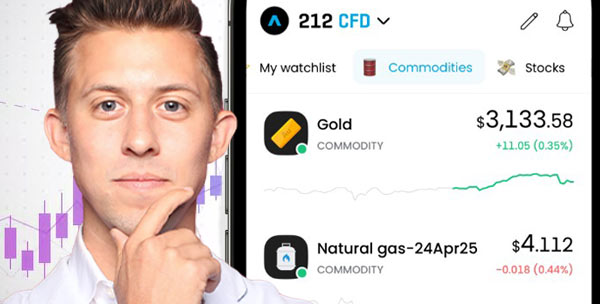
Online CFD Examples
I calculate online CFDs as the price difference between entry and exit multiplied by the number of units in the position.
Online CFD Example 1
Say I buy 1000 units of an online CFD at the rate of 100p per unit. My total stands at $1,000. I later sell the same volume at the rate of 120p per unit. My sell value is then $1,200. So I make a profit of $200.
Online CFD Example 2
Let me consider the same buying rate and volume as example 1, but with a different sell value. If I sell all 1000 units at the rate of 90p per unit, I receive $900 in total. This means I take a loss of $100.
Online CFD Example 3
Say I open a CFD position on gold, buying the equivalent of 10 ounces at $2,600 per ounce. My total exposure is $26,000, but because I am trading on margin I might only need to put up a fraction of that as initial capital. If gold rises to $2,650 per ounce and I close the position, I gain $50 per ounce, or $500 in total, on my full position size, even though my own capital outlay was much smaller.
Online CFD Leverage and Margin
I treat leveraged trades like CFDs as high risk. I make sure I understand what I am doing before I trade with leverage.
There are important considerations when I trade in an online CFD. Only a small percentage of capital is required to start with. The rest is leveraged, or borrowed, from the broker.
Under current rules from regulators such as the UK's FCA and the EU's ESMA, leverage for retail clients is capped and ranges from 30 to 1 down to 2 to 1, depending on the volatility of the underlying asset. For example, major currency pairs are typically capped at 30 to 1, while a highly volatile asset like a cryptocurrency CFD can be capped as low as 2 to 1, meaning I would need to put up 50 percent of the position's value as margin. Some brokers operating outside these jurisdictions still offer much higher leverage, sometimes up to 1 to 1000, but I know that comes with a corresponding increase in risk. I also know that speculated gains may be high compared to my initial capital invested, but losses could be equally high. I only consider CFD trading appropriate for experienced traders because of these risks.
This kind of leverage is not offered in traditional trading.
Online CFD Platforms
The most popular online CFD platforms I come across are MT4, MT5 and increasingly cTrader. All of them offer important tools including charts to help me make the right decision in online CFD trading across indices, shares, commodities and cryptocurrencies.
I find these platforms keep their tools updated and continue to offer a user-friendly experience, with MT5 generally seen as the stronger choice for multi-asset trading and automation, and cTrader often preferred by manual and scalping traders for its execution speed.
Online CFD Trading Advantages
There are several advantages I see in online CFD trading. Where regulation allows it, higher leverage is available, which means a lower margin is required to open a position. In regulated markets like the UK and EU this is capped between 30 to 1 and 2 to 1 depending on the asset, while some offshore brokers advertise leverage as high as 1 to 1000.
I can go long as well as short on the instrument and enjoy greater flexibility since I do not actually own the underlying asset. Many brokers offer online CFD trading across several markets, not limited to just one.
Online CFD and Taxation
I do not pay stamp duty on it since I never own the underlying asset. However, tax is applicable on capital gains, and I make sure to check the specific tax treatment that applies in my own country, since rules vary by jurisdiction.
Online CFD Verdict
I have seen online CFD trading gain significant popularity in recent years, since entry is simple and requires relatively low capital. Depending on the asset and my broker's regulatory limits, I might only need to put up somewhere between 2 and 5 percent of the total value of the underlying asset in margin, with the rest effectively financed through leverage.
I recognise CFD trading is high risk, but for experienced traders it offers useful features such as leverage, relatively low margin requirements and zero stamp duty. I am careful to choose my underlying assets and position sizes thoughtfully. I prefer opting for lower leverage to keep my risk manageable. I always deal with a well established broker in the industry, and I make sure the broker I choose is properly regulated in a recognised jurisdiction such as by the FCA, ASIC or CySEC.
My Experience With Online CFD Trading
When I first looked seriously at online CFD trading, one of the biggest adjustments was understanding that I was not actually buying the underlying asset. With a CFD, I am taking a position on the movement in its price. That distinction sounds straightforward, but it changes how I think about ownership, leverage, costs and risk.
I found that learning the basic CFD terminology first makes the rest much easier to understand. Terms such as margin, leverage, spread, overnight financing, stop loss and liquidation are not just technical language. They can have a direct effect on how a position behaves and how much money is gained or lost.
Leverage Was the Biggest Difference
The feature I would pay most attention to is CFD leverage. CFDs allow me to gain exposure to a position while committing only part of its full value as margin. That initially makes CFDs appear capital efficient, but the important lesson is that my profit or loss is normally calculated using the full exposure of the position rather than simply the amount of margin I deposited.
For example, if I have £1,000 of available trading capital, I would not interpret the ability to open a £5,000 or £10,000 position as meaning that I can comfortably afford that exposure. A relatively small movement against a leveraged position can produce a disproportionately large loss. Understanding CFD margin therefore became just as important to me as deciding whether I thought a market would rise or fall.
I also found it useful to investigate CFDs without leverage. It helped separate two concepts that are sometimes treated as the same thing: the CFD itself and the amount of leverage applied to the trade.
CFD Trading Costs Are Easy to Underestimate
Another lesson is that I would never judge a CFD trade purely from its entry and exit prices. CFD fees can include spreads, commissions and overnight financing charges, depending on the broker and instrument.
This becomes particularly important when holding a leveraged CFD for more than a short period. A trade can move in the direction I expected while financing costs gradually reduce the return. For that reason, I think CFDs need to be considered differently from simply buying an investment and leaving it in a portfolio for several years.
Trading Shares, Indices, Gold and Oil
One attraction I see with CFDs is the number of markets that can often be accessed through a single platform. Rather than being limited to individual companies, traders can explore share CFDs, index CFDs, commodities and other financial markets.
I find indices particularly useful for understanding the difference between trading an individual company and taking a broader market position. A S&P 500 CFD, for example, gives exposure to movements in a major US stock index rather than making the outcome dependent on one company's share price.
Commodity CFDs introduce different considerations. When looking at gold CFDs or oil CFDs, I have to think about factors such as interest rates, currencies, geopolitical developments, inventories and changes in global supply and demand.
I Would Have a Strategy Before Opening a Trade
One thing I would avoid is opening a position simply because a market suddenly appears to be moving. Looking at different CFD trading strategies helped me appreciate the importance of deciding beforehand why I am entering, where I would take a profit and, more importantly, where I would accept that my original idea was wrong.
A simple CFD example is often more useful than pages of theory. If I open a position expecting an index to rise, I want to know in advance how much I could lose if it falls, how leverage changes that loss, what the spread costs me and whether an overnight charge applies.
I would be particularly careful about judging a strategy from a handful of successful trades. Looking at the average CFD return raises the more important question of whether a strategy remains profitable after losses, spreads, commissions and financing costs have all been included.
CFDs Versus Traditional Investing
Using CFDs also made the distinction between trading and investing much clearer to me. When comparing CFDs versus stocks, the most obvious difference is ownership. If I purchase ordinary shares, I own an interest in the company. If I open a CFD based on those shares, I normally own a contract linked to their price movement rather than the shares themselves.
The same distinction matters when considering CFDs versus ETFs. For long-term exposure to a diversified market, I would generally think about the purpose of owning an ETF very differently from taking a leveraged CFD position on an index.
I also found it useful to compare CFDs versus forex, CFDs versus futures and CFDs versus options. They can all provide ways of speculating on financial markets, but their pricing, expiry, leverage, ownership and risk characteristics are different.
I would spend almost as much time comparing the broker as analysing the market I intended to trade. When comparing CFD brokers, I would look beyond the headline spread and examine regulation, execution, available markets, withdrawal procedures, overnight charges, platform stability and risk-management tools.
A CFD brokers list can narrow down the choices, but I would still investigate each provider individually. I would also check which legal entity would actually hold my account because the protections and CFD rules can differ considerably between jurisdictions.
This becomes obvious when comparing CFD trading in the UK, CFD platforms in Australia and the situation surrounding CFDs in the USA.
We have conducted extensive research and analysis on over multiple data points on Online Cfd Contract for Difference (CFD) Brokers to present you with a comprehensive guide that can help you find the most suitable Online Cfd Contract for Difference (CFD) Brokers. Below we shortlist what we think are the best online cfd after careful consideration and evaluation. We hope this list will assist you in making an informed decision when researching Online Cfd Contract for Difference (CFD) Brokers.
Reputable Online Cfd Checklist
Selecting a reliable and reputable online Online Cfd trading brokerage involves assessing their track record, regulatory status, customer support, processing times, international presence, and language capabilities. Considering these factors, you can make an informed decision and trade Online Cfd more confidently.
Selecting the right online Online Cfd trading brokerage requires careful consideration of several critical factors. Here are some essential points to keep in mind:
- Ensure your chosen Online Cfd broker has a solid track record of at least two years in the industry.
- Verify that the Online Cfd broker has a customer support team of at least 15 members responsive to queries and concerns.
- Check if the Online Cfd broker operates under the regulatory framework of a jurisdiction that can hold it accountable for any misconduct or resolve disputes fairly and impartially.
- Ensure that the Online Cfd broker can process deposits and withdrawals within two to three days, which is crucial when you need to access your funds quickly.
- Look for Online Cfd brokers with an international presence in multiple countries, offering its clients local seminars and training programs.
- Ensure the Online Cfd broker can hire staff from diverse locations worldwide who can communicate fluently in your local language.
Our team have listed brokers that match your criteria for you below. All brokerage data has been summarised into a comparison table. Scroll down.
Compare Key Features of Online Cfd in Our Brokerage Comparison Table
When choosing a broker for online cfd trading, it's essential to compare the different options available to you. Our online cfd brokerage comparison table below allows you to compare several important features side by side, making it easier to make an informed choice.
- Minimum deposit requirement for opening an account with each online cfd broker.
- The funding methods available for online cfd with each broker.
- The types of instruments you can trade with each online cfd broker, such as forex, stocks, commodities, and indices.
- The trading platforms each online cfd broker provides, including their features, ease of use, and compatibility with your devices.
- The spread type (if applicable) for each online cfd broker affects the cost of trading.
- The level of customer support each online cfd broker offers, including their availability, responsiveness, and quality of service.
- Whether each online cfd broker offers Micro, Standard, VIP, or Islamic accounts to suit your trading style and preferences.
By comparing these essential features, you can choose a online cfd broker that best suits your needs and preferences for online cfd. Our online cfd broker comparison table simplifies the process, allowing you to make a more informed decision.
Top 15 Online Cfd of 2026 compared
Here are the top Online Cfd.
Compare online cfd brokers for min deposits, funding, used by, benefits, account types, platforms, and support levels. When searching for a online cfd broker, it's crucial to compare several factors to choose the right one for your online cfd needs. Our comparison tool allows you to compare the essential features side by side.
All brokers below are online cfd. Learn more about what they offer below.
You can scroll left and right on the comparison table below to see more online cfd that accept online cfd clients.
| Broker |
IC Markets

|
Roboforex

|
eToro

|
XTB
|
XM

|
Pepperstone

|
AvaTrade

|
FP Markets

|
SpreadEx

|
EasyMarkets

|
FXPro

|
|---|---|---|---|---|---|---|---|---|---|---|---|
| Rating | |||||||||||
| Regulation | International Capital Markets Pty Ltd (Australia) (ASIC) Australian Securities & Investments Commission Licence No. 335692, Seychelles Financial Services Authority (FSA) (SD018), IC Markets (EU) Ltd (CySEC) Cyprus Securities and Exchange Commission with License No. 362/18, Capital Markets Authority(CMA) Kenya IC Markets (KE) Ltd, Securities Commission of The Bahamas (SCB) IC Markets (Bahamas) Ltd | RoboForex Ltd is authorised and regulated by the Financial Services Commission (FSC) of Belize under licence No. 000138/32, under the Securities Industry Act 2021, RoboForex Ltd is an (A category) member of The Financial Commission, also RoboForex Ltd is a participant of the Financial Commission Compensation Fund | FCA (Financial Conduct Authority) eToro (UK) Ltd (FCA reference 583263), eToro (Europe) Ltd CySEC (Cyprus Securities Exchange Commission), ASIC (Australian Securities and Investments Commission) eToro AUS Capital Limited ASIC license 491139, CySec (Cyprus Securities and Exchange Commission under the license 109/10), FSAS (Financial Services Authority Seychelles) eToro (Seychelles) Ltd license SD076, eToro (ME) Limited (ADGM) Abu Dhabi (UAE) number 220073, eToro (Europe) Ltd (AMF) Autorité des marchés financiers as a digital assets provider France | FCA (Financial Conduct Authority reference 522157) XTB Limited, CySEC (Cyprus Securities and Exchange Commission reference 169/12), DFSA (Dubai Financial Services Authority XTB MENA Limited licensed 8 July 2021), FSA (Financial Services Authority Seychelles license number SD148), FSCA (Financial Sector Conduct Authority XTB Africa (Pty) Ltd licensed 10 August 2021), KNF (Komisja Nadzoru Finansowego Polish Financial Supervision Authority) | Financial Sector Conduct Authority (FSCA) (49976) XM ZA (Pty) Ltd, Financial Services Commission (FSC) (000261/27) XM Global Limited, Cyprus Securities and Exchange Commission (CySEC) (license 120/10) Trading Point of Financial Instruments Ltd, Australian Securities and Investments Commission (ASIC) (number 443670) Trading Point of Financial Instruments Pty Ltd | Financial Conduct Authority (FCA), Australian Securities and Investments Commission (ASIC), Cyprus Securities and Exchange Commission (CySEC), Federal Financial Supervisory Authority (BaFin), Dubai Financial Services Authority (DFSA), Capital Markets Authority of Kenya (CMA), Pepperstone Markets Limited is incorporated in The Bahamas (number 177174 B), Licensed by the Securities Commission of The Bahamas (SCB) number SIA-F217 | Australian Securities and Investments Commission (ASIC) Ava Capital Markets Australia Pty Ltd (406684), South African Financial Sector Conduct Authority (FSCA) Ava Capital Markets Pty Ltd (45984), Financial Services Agency (Japan FSA) Ava Trade Japan K.K. (1662), Financial Futures Association of Japan (FFAJ) Ava Trade Japan K.K. (1574), Abu Dhabi Global Markets (ADGM) / Financial Regulatory Services Authority (FRSA) Ava Trade Middle East Ltd (190018), Central Bank of Ireland (C53877) AVA Trade EU Ltd, Polish Financial Supervision Authority (KNF) AVA Trade EU Ltd (branch authorisation), British Virgin Islands Financial Services Commission (BVI) Ava Trade Markets Ltd (SIBA/L/13/1049), Israel Securities Authority (ISA) ATrade Ltd (514666577), Financial Superintendence of Colombia (SFC 0261 of 2024), Investment Industry Regulatory Organization of Canada through Friedberg Direct (IIROC) | CySEC (Cyprus Securities and Exchange Commission) (371/18), ASIC AFS (Australian Securities and Investments Commission) (286354), FSP (Financial Sector Conduct Authority in South Africa) (50926), Financial Services Authority Seychelles (FSA) (SD 130) | FCA (Financial Conduct Authority) (190941), Gambling Commission (Great Britain) (8835), licence in Ireland as remote bookmaker for fixed odds betting licence number 1016176 | Easy Forex Trading Ltd is regulated by CySEC (License 079/07). This is the only entity that onboards EU clients. easyMarkets Pty Ltd is regulated by ASIC (AFS License 246566), EF Worldwide Ltd (Seychelles) is regulated by FSA (License SD056), EF Worldwide Ltd (British Virgin Islands) is regulated by FSC (License SIBA/L/20/1135), EF Worldwide (PTY) Ltd is regulated by FSCA (License 54018) | FCA (Financial Conduct Authority) (509956), CySEC (Cyprus Securities and Exchange Commission) (078/07), FSCA (Financial Sector Conduct Authority) (45052), SCB (Securities Commission of The Bahamas) (SIA-F184), FSA (Financial Services Authority of Seychelles) (SD120) |
| Min Deposit | 200 | 10 | 50 | No minimum deposit | 5 | No minimum deposit | 100 | 100 | No minimum deposit | 25 | 100 |
| Funding |
|
|
|
|
|
|
|
|
|
|
|
| Used By | 200,000+ | 730,000+ | 40,000,000+ | 2,000,000+ | 15,000,000+ | 830,000+ | 400,000+ | 200,000+ | 60,000+ | 250,000+ | 11,200,000+ |
| Benefits |
|
|
|
|
|
|
|
|
|
|
|
| Accounts |
|
|
|
|
|
|
|
|
|
|
|
| Platforms | MT5, MT4, MetaTrader WebTrader, Mobile Apps, iOS (App Store), Android (Google Play), MetaTrader iPhone/iPad, MetaTrader Android Google Play, MetaTrader Mac, cTrader, cTrader Web, cTrader iPhone/iPad, cTrader iMac, cTrader Android Google Play, cTrader Automate, cTrader Copy Trading, TradingView, Virtual Private Server, Trading Servers, MT4 Advanced Trading Tools, IC Insights, Trading Central | MT4, MT5, R Mobile Trader, R StocksTrader, WebTrader, Mobile Apps, iOS (App Store), Android (Google Play), Windows | eToro Trading App, Mobile Apps, iOS (App Store), Android (Google Play), CopyTrading, Web | MT4, Mirror Trader, Web Trader, Tablet, Mobile Apps, iOS (App Store), Android (Google Play) | MT5, MT5 WebTrader, XM Apple App for iPhone, XM App for Android Google Play, Tablet: MT5 for iPad, MT5 for Android Google Play, XM App for iPad, XM App for iOS (App Store), Android (Google Play), Mobile Apps | MT4, MT5, cTrader,WebTrader, TradingView, Windows, Mobile Apps, iOS (App Store), Android (Google Play) | MT4, MT5, Web Trading, AvaTrade App, AvaOptions, Mac Trading, AvaSocial, Mobile Apps, iOS (App Store), Android (Google Play) | MT4, MT5, TradingView, cTrader, WebTrader, Mobile Trader, Mobile Apps, iOS (App Store), Android (Google Play) | Web, Mobile Apps, iOS (App Store), Android (Google Play), iPad App, iPhone App, TradingView | easyMarkets App, Mobile Apps, iOS (App Store), Android (Google Play), Web Platform, TradingView, MT4, MT5 | MT4, MT5, cTrader, FxPro WebTrader, FxPro Mobile Apps, iOS (App Store), Android (Google Play) |
| Support |
|
|
|
|
|
|
|
|
|
|
|
| Learn More |
Sign
Up with icmarkets |
Sign
Up with roboforex |
Sign
Up with etoro |
Sign
Up with xtb |
Sign
Up with xm |
Sign
Up with pepperstone |
Sign
Up with avatrade |
Sign
Up with fpmarkets |
Sign
Up with spreadex |
Sign
Up with easymarkets |
Sign
Up with fxpro |
| Risk Warning | Losses can exceed deposits | Losses can exceed deposits | 52% of retail investor accounts lose money when trading CFDs with this provider. | 69% - 80% of retail investor accounts lose money when trading CFDs with this provider. You should consider whether you understand how CFDs work and whether you can afford to take the high risk of losing your money. | CFDs are complex instruments and come with a high risk of losing money rapidly due to leverage. 74.48% of retail investor accounts lose money when trading CFDs with this provider. You should consider whether you understand how CFDs work and whether you can afford to take the high risk of losing your money. | 75-95 % of retail investor accounts lose money when trading CFDs | 57% of retail investor accounts lose money when trading CFDs with this provider | Losses can exceed deposits | 62% of retail CFD accounts lose money | 76% of retail investor accounts lose money when trading CFDs with this provider. | 74% of retail investor accounts lose money when trading CFDs and Spread Betting with this provider |
| Demo |
IC Markets Demo |
Roboforex Demo |
eToro Demo |
XTB Demo |
XM Demo |
Pepperstone Demo |
AvaTrade Demo |
FP Markets Demo |
SpreadEx Demo |
easyMarkets Demo |
FxPro Demo |
| Excluded Countries | US, IR, CA, NZ, JP | AU, BE, BQ, BR, CA, CW, CZ, DE, ES, EE, EU, FM, FR, FI, GW, ID, IR, JP, LR, MP, NL, PF, PL, RU, SE, SJ, SS, SL, SI, TL, TR, DO, US, IT, AT, PT, BG, HR, CY, DK, FL, GR, IE, LV, LT, MT, RO, SK, CH | ZA, ID, IR, KP, BE, CA, JP, SY, TR, IL, BY, AL, MD, MK, RS, GN, CD, SD, SA, ZW, ET, GH, TZ, LY, UG, ZM, BW, RW, TN, SO, NA, TG, SL, LR, GM, DJ, CI, PK, BN, TW, WS, NP, SG, VI, TM, TJ, UZ, LK, TT, HT, MM, BT, MH, MV, MG, MK, KZ, GD, FJ, PT, BB, BM, BS, AG, AI, AW, AX, LB, SV, PY, HN, GT, PR, NI, VG, AN, CN, BZ, DZ, MY, KH, PH, VN, EG, MN, MO, UA, JO, KR, AO, BR, HR, GL, IS, IM, JM, FM, MC, NG, SI, | US, IN, PK, BD, NG , ID, BE, AU | US, CA, IL, IR | AF, AS, AQ, AM, AZ, BY, BE, BZ, BT, BA, BI, CM, CA, CF, TD, CG, CI, ER, GF, PF, GP, GU, GN, GW, GY, HT, VA, IR, IQ, JP, KZ, LB, LR, LY, ML, MQ, YT, MZ, MM, NZ, NI, KP, PS, PR, RE, KN, LC, VC, WS, SO, GS, KR, SS, SD, SR, SY, TJ, TN, TM, TC, US, VU, VG, EH, ES, YE, ZW, ET | BE, BR, KP, NZ, TR, US, CA, SG | US, JP, NZ | US, TR | US, IL, BC, MB, QC, ON, AF, BY, BI, KH, KY, TD, KM, CG, CU, CD, GQ, ER, FJ, GN, GW, HT, IR, IQ, LA, LY, MZ, MM, NI, KP, PW, PA, RU, SO, SS, SD, SY, TT, TM, VU, VE, YE | US, CA, IR |
All Online cfd in more detail
You can compare Online Cfd ratings, min deposits what the the broker offers, funding methods, platforms, spread types, customer support options, regulation and account types side by side.
We also have an indepth Top Online Cfd for 2026 article further below. You can see it now by clicking here
We have listed top Online cfd below.
Online Cfd Table of Contents
- Online Cfd Explained
- 6 Factors to Consider when Choosing Online Cfd
- Are Your Online Cfd Trusted And Established?
- Are The Online Cfd World Leading?
- What are the Online Cfd Commissions and Fees?
- What are the Online Cfd Funding and Withdrawl Methods?
- Find Online Cfd with Round-the-clock support?
- Make sure the Online Cfd Offer Comprehensive Trader resources?
- Why Online Cfd needs to be regulated?
- Online Cfd FAQ
- What are the best Online cfd brokers?
- What is the best Online cfd broker?
- Related Online Cfd Reviews
- Related Online Cfd Alternatives
- Related Online Cfd Comparisons
Online Cfd Explained
Trading volatile financial markets with Online Cfd can be challenging, even for experienced traders. In addition to the online educational resources available, traders should consider the platform offered by Online Cfd to ensure a successful trading experience.
Selecting Online Cfd at the forefront of innovation and considered an industry leader is crucial. Doing so will ensure you are equipped with the tools and features to navigate volatile Online Cfd markets effectively.
Reliability is key to gaining access to financial markets. Look for Online Cfd that you can rely on to provide a stable and secure trading environment, allowing you to execute trades with Online Cfd confidently.
6 Factors to Consider when Choosing Online Cfd
Follow these five rules for selecting Online Cfd that are right for you:
Are Your Online Cfd Trusted And Established?
Search for a reputable Online Cfd with a extensive proven track record for Online Cfd, enabling you to focus solely on implementing your trading strategy and navigating the markets with confidence. The top rated Online Cfd broker is IC Markets. Established in 2007, and in operation for 19 years IC Markets have a head office in Australia.
IC Markets is regulated. This means IC Markets are supervised by and is checked for conduct by International Capital Markets Pty Ltd (Australia) (ASIC) Australian Securities & Investments Commission Licence No. 335692, Seychelles Financial Services Authority (FSA) (SD018), IC Markets (EU) Ltd (CySEC) Cyprus Securities and Exchange Commission with License No. 362/18, Capital Markets Authority(CMA) Kenya IC Markets (KE) Ltd, Securities Commission of The Bahamas (SCB) IC Markets (Bahamas) Ltd regulatory bodies.
Another top rated broker is Roboforex.
Roboforex was established 2009, and in operation for 17 years Roboforex have a head office in Belize.
Roboforex is regulated. This means Roboforex are supervised by and is checked for conduct by International Capital Markets Pty Ltd (Australia) (ASIC) Australian Securities & Investments Commission Licence No. 335692, Seychelles Financial Services Authority (FSA) (SD018), IC Markets (EU) Ltd (CySEC) Cyprus Securities and Exchange Commission with License No. 362/18, Capital Markets Authority(CMA) Kenya IC Markets (KE) Ltd, Securities Commission of The Bahamas (SCB) IC Markets (Bahamas) Ltd regulatory bodies.
| Broker |
IC Markets
|
Roboforex
|
eToro
|
XTB
|
XM
|
Pepperstone
|
AvaTrade
|
FP Markets
|
|---|---|---|---|---|---|---|---|---|
| Year Established | 2007 | 2009 | 2007 | 2002 | 2009 | 2010 | 2006 | 2005 |
| Head Office | Australia | Belize | Cyprus, UK | Poland | Cyprus | Australia | Ireland | Australia |
| Regulation | International Capital Markets Pty Ltd (Australia) (ASIC) Australian Securities & Investments Commission Licence No. 335692, Seychelles Financial Services Authority (FSA) (SD018), IC Markets (EU) Ltd (CySEC) Cyprus Securities and Exchange Commission with License No. 362/18, Capital Markets Authority(CMA) Kenya IC Markets (KE) Ltd, Securities Commission of The Bahamas (SCB) IC Markets (Bahamas) Ltd | RoboForex Ltd is authorised and regulated by the Financial Services Commission (FSC) of Belize under licence No. 000138/32, under the Securities Industry Act 2021, RoboForex Ltd is an (A category) member of The Financial Commission, also RoboForex Ltd is a participant of the Financial Commission Compensation Fund | FCA (Financial Conduct Authority) eToro (UK) Ltd (FCA reference 583263), eToro (Europe) Ltd CySEC (Cyprus Securities Exchange Commission), ASIC (Australian Securities and Investments Commission) eToro AUS Capital Limited ASIC license 491139, CySec (Cyprus Securities and Exchange Commission under the license 109/10), FSAS (Financial Services Authority Seychelles) eToro (Seychelles) Ltd license SD076, eToro (ME) Limited (ADGM) Abu Dhabi (UAE) number 220073, eToro (Europe) Ltd (AMF) Autorité des marchés financiers as a digital assets provider France | FCA (Financial Conduct Authority reference 522157) XTB Limited, CySEC (Cyprus Securities and Exchange Commission reference 169/12), DFSA (Dubai Financial Services Authority XTB MENA Limited licensed 8 July 2021), FSA (Financial Services Authority Seychelles license number SD148), FSCA (Financial Sector Conduct Authority XTB Africa (Pty) Ltd licensed 10 August 2021), KNF (Komisja Nadzoru Finansowego Polish Financial Supervision Authority) | Financial Sector Conduct Authority (FSCA) (49976) XM ZA (Pty) Ltd, Financial Services Commission (FSC) (000261/27) XM Global Limited, Cyprus Securities and Exchange Commission (CySEC) (license 120/10) Trading Point of Financial Instruments Ltd, Australian Securities and Investments Commission (ASIC) (number 443670) Trading Point of Financial Instruments Pty Ltd | Financial Conduct Authority (FCA), Australian Securities and Investments Commission (ASIC), Cyprus Securities and Exchange Commission (CySEC), Federal Financial Supervisory Authority (BaFin), Dubai Financial Services Authority (DFSA), Capital Markets Authority of Kenya (CMA), Pepperstone Markets Limited is incorporated in The Bahamas (number 177174 B), Licensed by the Securities Commission of The Bahamas (SCB) number SIA-F217 | Australian Securities and Investments Commission (ASIC) Ava Capital Markets Australia Pty Ltd (406684), South African Financial Sector Conduct Authority (FSCA) Ava Capital Markets Pty Ltd (45984), Financial Services Agency (Japan FSA) Ava Trade Japan K.K. (1662), Financial Futures Association of Japan (FFAJ) Ava Trade Japan K.K. (1574), Abu Dhabi Global Markets (ADGM) / Financial Regulatory Services Authority (FRSA) Ava Trade Middle East Ltd (190018), Central Bank of Ireland (C53877) AVA Trade EU Ltd, Polish Financial Supervision Authority (KNF) AVA Trade EU Ltd (branch authorisation), British Virgin Islands Financial Services Commission (BVI) Ava Trade Markets Ltd (SIBA/L/13/1049), Israel Securities Authority (ISA) ATrade Ltd (514666577), Financial Superintendence of Colombia (SFC 0261 of 2024), Investment Industry Regulatory Organization of Canada through Friedberg Direct (IIROC) | CySEC (Cyprus Securities and Exchange Commission) (371/18), ASIC AFS (Australian Securities and Investments Commission) (286354), FSP (Financial Sector Conduct Authority in South Africa) (50926), Financial Services Authority Seychelles (FSA) (SD 130) |
| Used By | 200,000+ | 730,000+ | 40,000,000+ | 2,000,000+ | 15,000,000+ | 830,000+ | 400,000+ | 200,000+ |
| Negative balance protection | Yes | Yes | Yes | Yes | Yes | Yes | Yes | Yes |
| Guaranteed Stop Loss | No | No | No | No | No | Yes | No | No |
| Learn More | Visit IC Markets | Visit Roboforex | Visit eToro | Visit XTB | Visit XM | Visit Pepperstone | Visit AvaTrade | Visit FP Markets |
| Risk Warning | Losses can exceed deposits | Losses can exceed deposits | 52% of retail investor accounts lose money when trading CFDs with this provider. | 69% - 80% of retail investor accounts lose money when trading CFDs with this provider. You should consider whether you understand how CFDs work and whether you can afford to take the high risk of losing your money. | CFDs are complex instruments and come with a high risk of losing money rapidly due to leverage. 74.48% of retail investor accounts lose money when trading CFDs with this provider. You should consider whether you understand how CFDs work and whether you can afford to take the high risk of losing your money. | 75-95 % of retail investor accounts lose money when trading CFDs | 57% of retail investor accounts lose money when trading CFDs with this provider | Losses can exceed deposits |
Are The Online Cfd World Leading?
Opt for Online Cfd that set themselves apart as an industry leader by actively embracing innovation. Take IC Markets as an example, which is renowned for Segregates clients funds and boasts an extensive array of 2850 tradable instruments. Moreover, IC Markets caters to the needs of its clients with both an online trading platform and a mobile application, making it incredibly convenient to access the markets from anywhere, at any time.
In addition, the IC Markets platform enables access to a variety of financial markets worldwide. IC Markets is a world-leader when it comes to innovation and they are always looking at ways to improve and to maintain their competitive advantage.
Another good choice when looking for Online Cfd is Roboforex. Roboforex Segregates clients funds and offers over 12000 instruments.
| Broker |
IC Markets
|
Roboforex
|
eToro
|
XTB
|
XM
|
Pepperstone
|
AvaTrade
|
FP Markets
|
|---|---|---|---|---|---|---|---|---|
| Instruments Available | 2850 | 12000 | 7000 | 10900 | 1464 | 2700 | 1250 | 10000 |
| Platforms | MT5, MT4, MetaTrader WebTrader, Mobile Apps, iOS (App Store), Android (Google Play), MetaTrader iPhone/iPad, MetaTrader Android Google Play, MetaTrader Mac, cTrader, cTrader Web, cTrader iPhone/iPad, cTrader iMac, cTrader Android Google Play, cTrader Automate, cTrader Copy Trading, TradingView, Virtual Private Server, Trading Servers, MT4 Advanced Trading Tools, IC Insights, Trading Central | MT4, MT5, R Mobile Trader, R StocksTrader, WebTrader, Mobile Apps, iOS (App Store), Android (Google Play), Windows | eToro Trading App, Mobile Apps, iOS (App Store), Android (Google Play), CopyTrading, Web | MT4, Mirror Trader, Web Trader, Tablet, Mobile Apps, iOS (App Store), Android (Google Play) | MT5, MT5 WebTrader, XM Apple App for iPhone, XM App for Android Google Play, Tablet: MT5 for iPad, MT5 for Android Google Play, XM App for iPad, XM App for iOS (App Store), Android (Google Play), Mobile Apps | MT4, MT5, cTrader,WebTrader, TradingView, Windows, Mobile Apps, iOS (App Store), Android (Google Play) | MT4, MT5, Web Trading, AvaTrade App, AvaOptions, Mac Trading, AvaSocial, Mobile Apps, iOS (App Store), Android (Google Play) | MT4, MT5, TradingView, cTrader, WebTrader, Mobile Trader, Mobile Apps, iOS (App Store), Android (Google Play) |
| Excluded Countries | US, IR, CA, NZ, JP | AU, BE, BQ, BR, CA, CW, CZ, DE, ES, EE, EU, FM, FR, FI, GW, ID, IR, JP, LR, MP, NL, PF, PL, RU, SE, SJ, SS, SL, SI, TL, TR, DO, US, IT, AT, PT, BG, HR, CY, DK, FL, GR, IE, LV, LT, MT, RO, SK, CH | ZA, ID, IR, KP, BE, CA, JP, SY, TR, IL, BY, AL, MD, MK, RS, GN, CD, SD, SA, ZW, ET, GH, TZ, LY, UG, ZM, BW, RW, TN, SO, NA, TG, SL, LR, GM, DJ, CI, PK, BN, TW, WS, NP, SG, VI, TM, TJ, UZ, LK, TT, HT, MM, BT, MH, MV, MG, MK, KZ, GD, FJ, PT, BB, BM, BS, AG, AI, AW, AX, LB, SV, PY, HN, GT, PR, NI, VG, AN, CN, BZ, DZ, MY, KH, PH, VN, EG, MN, MO, UA, JO, KR, AO, BR, HR, GL, IS, IM, JM, FM, MC, NG, SI, | US, AU, CA, JP, KR, KP, SG, MU, IL, TR, IN, PK, BA, ET, UG, CU, SY, BD, NG, ID, BE, LY, MO, KE, YE, VU, GY, CD, CG, AF, LA, MZ, IQ, IR | US, CA, IL, IR | AF, AS, AQ, AM, AZ, BY, BE, BZ, BT, BA, BI, CM, CA, CF, TD, CG, CI, ER, GF, PF, GP, GU, GN, GW, GY, HT, VA, IR, IQ, JP, KZ, LB, LR, LY, ML, MQ, YT, MZ, MM, NZ, NI, KP, PS, PR, RE, KN, LC, VC, WS, SO, GS, KR, SS, SD, SR, SY, TJ, TN, TM, TC, US, VU, VG, EH, ES, YE, ZW, ET | BE, BR, KP, NZ, TR, US, CA, SG | US, JP, NZ |
| Forex pairs offered | 65 | 40 | 65 | 69 | 55 | 93 | 53 | 70 |
| Major forex pairs | Yes | Yes | Yes | Yes | Yes | Yes | Yes | Yes |
| Minor forex pairs | Yes | Yes | Yes | Yes | Yes | Yes | Yes | Yes |
| Exotic forex pairs | Yes | Yes | Yes | Yes | Yes | Yes | Yes | Yes |
| Cryptocurrencies (availability subject to regulation) | Yes | Yes | Yes | No | No | Yes | Yes | Yes |
| Commodities Offered | 28 | 100 | 67 | 27 | 8 | 40 | 19 | 29 |
| Metals | Yes | Yes | Yes | Yes | Yes | Yes | Yes | Yes |
| Energies | Yes | No | Yes | Yes | Yes | Yes | Yes | Yes |
| Agricultural | Yes | No | Yes | Yes | No | Yes | Yes | Yes |
| Stocks Offered | 2100 | 8484 | 7246 | 6617 | 1350 | 1100 | 647 | 10000 |
| UK Shares | Yes | Yes | Yes | Yes | Yes | Yes | Yes | Yes |
| US Shares | Yes | Yes | Yes | Yes | Yes | Yes | Yes | Yes |
| German Shares | Yes | Yes | Yes | Yes | Yes | Yes | Yes | Yes |
| Japanese Shares | Yes | Yes | Yes | Yes | Yes | Yes | Yes | Yes |
What are the Online Cfd Commissions and Fees?
Ensure that your broker is transparent with fees and those dues are competitive.
The best rated Online Cfd broker IC Markets offers competitive offers for Forex, CFDs, Spread Betting, Share dealing, Cryptocurrencies. IC Markets minimum deposit is 200.
Another top rated Online Cfd broker Roboforex offers Forex, CFDs. Roboforex minimum deposit is 10. Please note that any cryptocurrency availability with any broker is subject to regulation.
| Broker |
IC Markets
|
Roboforex
|
eToro
|
XTB
|
XM
|
Pepperstone
|
AvaTrade
|
FP Markets
|
|---|---|---|---|---|---|---|---|---|
| Min Deposit | 200 | 10 | 50 | 0 | 5 | 0 | 100 | 100 |
| Withdrawl Fees | No | No | Yes | Yes | No | No | No | No |
| Inactivity Fees | No | No | Yes | Yes | Yes | No | Yes | No |
| Deposit Fees | No | No | No | No | No | No | No | No |
| CFD Commission Fees | Yes | No | Yes | Yes | No | Yes | No | Yes |
What are the Online Cfd Funding and Withdrawal Methods?
Efficient and hassle-free funding and withdrawal facilities can significantly improve your overall trading experience when dealing with Online Cfd. It streamlines the trading process and helps you focus on making informed decisions rather than worrying about deposit and withdrawal matters with Online Cfd.
| Broker |
IC Markets
|
Roboforex
|
eToro
|
XTB
|
XM
|
Pepperstone
|
AvaTrade
|
FP Markets
|
|---|---|---|---|---|---|---|---|---|
| Bank transfer | Yes | Yes | Yes | Yes | Yes | Yes | Yes | Yes |
| Credit Cards | Yes | Yes | Yes | Yes | Yes | Yes | Yes | Yes |
| Paypal | Yes | No | Yes | Yes | No | Yes | Yes | Yes |
| Skrill | Yes | No | Yes | Yes | No | Yes | No | Yes |
| Payoneer | No | Yes | No | Yes | No | Yes | Yes | No |
| Neteller | Yes | Yes | Yes | Yes | Yes | Yes | Yes | Yes |
Find Online Cfd with Round-the-clock support?
Effective customer service is an essential factor to consider when dealing with Online Cfd.
Online Cfd customer service entails various support services to aid customers in making the most cost-effective and appropriate use of the brokers' services.
The customer support options offered by Online Cfd can include phone answering services, live chat support, and email customer service support.
IC Markets support a wide range of languages including English, Japanese, Chinese, Polish, Afrikans, Danish, Dutch, German and more
Roboforex support a wide range of languages including English, Chinese Simplified, Chinese Traditional, Indonesian, Malaysian, Portuguese, Spanish, Italian, Polish, Arabic, Thai, Russian, and Ukrainian
IC Markets and Roboforex offer support where clients are able to call or contact the helpdesk via email or a chat service.
| Broker |
IC Markets
|
Roboforex
|
eToro
|
XTB
|
XM
|
Pepperstone
|
AvaTrade
|
FP Markets
|
|---|---|---|---|---|---|---|---|---|
| Support |
|
|
|
|
|
|
|
|
| Languages | English, Japanese, Chinese, Polish, Afrikans, Danish, Dutch, German and more | English, Chinese Simplified, Chinese Traditional, Indonesian, Malaysian, Portuguese, Spanish, Italian, Polish, Arabic, Thai, Russian, and Ukrainian | English, German, Spanish, French, Italian | English, Spanish, Czech, Chinese, German, French, Italian, Polish, Portuguese, Romanian, Slovenian, and Turkish | Arabic, Chinese, English, French, German, Greek, Hindi, Hungarian, Indonesian, Italian, Japanese, Korean, Malay, Polish, Portuguese, Russian, Spanish, Swedish, Thai, and Turkish | English, Spanish, Portuguese, Thai, Russian, Italian, French, German, Polish, Chinese, Vietnamese, and Arabic | Arabic, Simplified Chinese, Traditional Chinese, Dutch, English, Finnish, French, German, Hungarian, Italian, Indonesian, Japanese, Mongolian, Polish, Portuguese, Russian, Spanish, Swedish, Thai, Malay, Korean and Turkish | English, Arabic, Indonesian, Italian, Spanish, French, Russian, Chinese, Japanese, German, Portuguese, Thai, French, Malay, Greek, Vietnamese, Romanian, Turkish, Slovenian, Dutch, Polish, Finnish, Norwegian, Swedish, Serbian, Lithuanian, Hungarian, Galician, Estonian, Danish, Czech, Croatian, Bulgarian, Basque |
| Learn More | Visit IC Markets | Visit Roboforex | Visit eToro | Visit XTB | Visit XM | Visit Pepperstone | Visit AvaTrade | Visit FP Markets |
| Risk Warning | Losses can exceed deposits | Losses can exceed deposits | 52% of retail investor accounts lose money when trading CFDs with this provider. | 69% - 80% of retail investor accounts lose money when trading CFDs with this provider. You should consider whether you understand how CFDs work and whether you can afford to take the high risk of losing your money. | CFDs are complex instruments and come with a high risk of losing money rapidly due to leverage. 74.48% of retail investor accounts lose money when trading CFDs with this provider. You should consider whether you understand how CFDs work and whether you can afford to take the high risk of losing your money. | 75-95 % of retail investor accounts lose money when trading CFDs | 57% of retail investor accounts lose money when trading CFDs with this provider | Losses can exceed deposits |
Make sure the Online Cfd Offer Comprehensive Trader resources?
It's important to ensure your Online Cfd provide complimentary resources such as analysis, education, and risk management tools. IC Markets and Roboforex collaborate with top analysts to bring the most up-to-date news and insights to traders.
Sound risk and money management are vital to financial market navigation with Online Cfd. However, selecting the best broker to access the markets is a critical step that traders should not overlook as they embark on trading live financial markets with Online Cfd.
Why Online Cfd needs to be regulated?
Regulated Online Cfd lowers your risk of loss of deposited trading funds.
Lowering your risk is one of the benefits of working with a properly regulated Online Cfd.
Consumers are protected by Online Cfd regulation, critical to preventing inadequate services and potential financial harm.
Regulation of Online Cfd is necessary to prevent fraud. The Online Cfd working capital and client-funded accounts must be kept separate to avoid conducting business with client funds. Any fraudulent behaviour with Online Cfd is monitored by financial regulators in the jurisdictions brokers are allowed to operate.
Online Cfd List
Funding methods
Bank transfer Credit Card PaypalPlatforms
MT5, MT4, MetaTrader WebTrader, Mobile Apps, iOS (App Store), Android (Google Play), MetaTrader iPhone/iPad, MetaTrader Android Google Play, MetaTrader Mac, cTrader, cTrader Web, cTrader iPhone/iPad, cTrader iMac, cTrader Android Google Play, cTrader Automate, cTrader Copy Trading, TradingView, Virtual Private Server, Trading Servers, MT4 Advanced Trading Tools, IC Insights, Trading CentralCustomer support
Live chat Phone support Email supportAccount Types
Micro account Standard account ECN accountIslamic account VIP account
Funding methods
Bank transfer Credit Card PaypalPlatforms
MT4, MT5, R Mobile Trader, R StocksTrader, WebTrader, Mobile Apps, iOS (App Store), Android (Google Play), WindowsCustomer support
Live chat Phone support Email supportAccount Types
Micro account Standard account ECN accountIslamic account VIP account
eToro is a multi-asset platform which offers both investing in stocks and cryptoassets, as well as trading CFDs.
Please note that CFDs are complex instruments and come with a high risk of losing money rapidly due to leverage. 52% of retail investor accounts lose money when trading CFDs with this provider. You should consider whether you understand how CFDs work, and whether you can afford to take the high risk of losing your money.
This communication is intended for information and educational purposes only and should not be considered investment advice or investment recommendation. Past performance is not an indication of future results.
Copy Trading does not amount to investment advice. The value of your investments may go up or down. Your capital is at risk.
Crypto investments are risky and may not suit retail investors; you could lose your entire investment. Understand the risks here.
Don't invest unless you're prepared to lose all the money you invest. This is a high-risk investment, and you should not expect to be protected if something goes wrong. Take 2 mins to learn more.
eToro USA LLC does not offer CFDs and makes no representation and assumes no liability as to the accuracy or completeness of the content of this publication, which has been prepared by our partner utilizing publicly available non-entity specific information about eToro.
Funding methods
Bank transfer Credit Card PaypalPlatforms
eToro Trading App, Mobile Apps, iOS (App Store), Android (Google Play), CopyTrading, WebCustomer support
Live chat Phone support Email supportAccount Types
Micro account Standard account ECN accountIslamic account VIP account
Funding methods
Bank transfer Credit Card PaypalPlatforms
MT4, Mirror Trader, Web Trader, Tablet, Mobile Apps, iOS (App Store), Android (Google Play)Customer support
Live chat Phone support Email supportAccount Types
Micro account Standard account ECN accountIslamic account VIP account
Funding methods
Bank transfer Credit Card PaypalPlatforms
MT5, MT5 WebTrader, XM Apple App for iPhone, XM App for Android Google Play, Tablet: MT5 for iPad, MT5 for Android Google Play, XM App for iPad, XM App for iOS (App Store), Android (Google Play), Mobile AppsCustomer support
Live chat Phone support Email supportAccount Types
Micro account Standard account ECN accountIslamic account XM Swap-Free account (XM Ultra Low Account) VIP account
Funding methods
Bank transfer Credit Card PaypalPlatforms
MT4, MT5, cTrader,WebTrader, TradingView, Windows, Mobile Apps, iOS (App Store), Android (Google Play)Customer support
Live chat Phone support Email supportAccount Types
Micro account Standard account ECN accountIslamic account Pro Account VIP account
Funding methods
Bank transfer Credit Card PaypalPlatforms
MT4, MT5, Web Trading, AvaTrade App, AvaOptions, Mac Trading, AvaSocial, Mobile Apps, iOS (App Store), Android (Google Play)Customer support
Live chat Phone support Email supportAccount Types
Micro account Standard account ECN accountIslamic account VIP account
Funding methods
Bank transfer Credit Card PaypalPlatforms
MT4, MT5, TradingView, cTrader, WebTrader, Mobile Trader, Mobile Apps, iOS (App Store), Android (Google Play)Customer support
Live chat Phone support Email supportAccount Types
Micro account Standard account ECN accountIslamic account VIP account
Funding methods
Bank transfer Credit Card PaypalPlatforms
Web, Mobile Apps, iOS (App Store), Android (Google Play), iPad App, iPhone App, TradingViewCustomer support
Live chat Phone support Email supportAccount Types
Micro account Standard account ECN accountIslamic account VIP account
Funding methods
Bank transfer Credit Card PaypalPlatforms
easyMarkets App, Mobile Apps, iOS (App Store), Android (Google Play), Web Platform, TradingView, MT4, MT5Customer support
Live chat Phone support Email supportAccount Types
Micro account Standard account ECN accountIslamic account VIP account
Funding methods
Bank transfer Credit Card PaypalPlatforms
MT4, MT5, cTrader, FxPro WebTrader, FxPro Mobile Apps, iOS (App Store), Android (Google Play)Customer support
Live chat Phone support Email supportAccount Types
Micro account Standard account ECN accountIslamic account VIP account

Learn more
Losses can exceed deposits

Losses can exceed deposits