Automated Trading for 2026
We found 11 online brokers that are appropriate for Trading Automated Trading.
Best Automated Trading Guide
Analysis by Andrew Blumer, Updated Last updated – September 30, 2026
Automated Trading Drawbacks
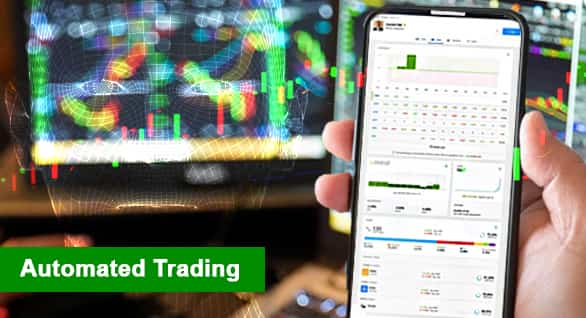
While automated trading offers remarkable efficiency and precision, its far from foolproof. Over the years, Ive learned that no matter how sophisticated your algorithm is, there are still risks and limitations that traders need to manage carefully. Below are the major drawbacks Ive encountered and observed among other traders.
Mechanical and connectivity failures
Automated systems rely heavily on stable internet connections, uninterrupted power, and smooth communication between trading platforms and brokers. A single disruption can cause significant losses. I personally faced this issue in April 2025, when my internet connection dropped during a high volatility crypto session. The bot failed to execute a closing order, leaving an open position that cost me nearly $200 before I could intervene manually. Such incidents highlight why its vital to have a backup internet connection or use a reliable Virtual Private Server (VPS) to ensure your trading systems remain online continuously.
Constant monitoring required
Despite its name, automated trading still requires human oversight. Power outages, broker downtime, or even small software bugs can halt or distort your trades without warning. Early in my trading journey, I underestimated this and left my bot unattended overnight. When I checked in the morning, it had looped through the same command multiple times due to a minor script error, over leveraging my account. Since then, Ive adopted strict monitoring routines and now rely on VPS hosting, which keeps my bots running 24/7 with automated alerts if any issue arises.
Over optimization risks
Many traders fall into the trap of over optimizing their strategies during backtesting. This happens when a system is fine tuned so perfectly to historical data that it performs poorly in real markets. I once spent weeks adjusting parameters on a forex scalping bot that achieved stunning simulated results but failed miserably in live trading due to changing volatility and slippage. Overfitting can make a strategy look flawless on paper but useless in practice. The key is to balance optimization with real world adaptability.
Market anomalies and black swan events
Algorithms operate on logic, not intuition, and cant predict unprecedented market behavior. During major events like the 2025 oil market shock, many automated systems triggered rapid stop outs or even reversed trades unexpectedly. Human traders might pause or adjust strategy during such volatility, but bots often react mechanically, amplifying losses. To counter this, Ive integrated circuit breaker rules automatic shutdowns during extreme price movements to prevent my systems from trading uncontrollably in chaotic markets.
Costs and maintenance
Automated trading isnt free. Between VPS hosting, software licensing, and continuous updates, the costs can add up. Moreover, maintaining code compatibility with brokers APIs and adapting to evolving market structures requires technical expertise or outsourced support. In my case, I spend a few hours weekly tweaking and monitoring code performance something many traders underestimate before diving into automation.
In short, while automation can transform trading, it must be treated as a tool, not a guarantee. Understanding its drawbacks and preparing for them can make the difference between consistent performance and costly surprises.
How to Start with Automated Trading
Getting started with automated trading can seem intimidating at first, but with the right approach, it becomes a structured and exciting journey. I still remember when I built my first trading bot it was a simple moving average strategy coded in Python, but the thrill of watching it execute trades automatically was unforgettable. Whether youre a beginner or an experienced trader looking to scale up, starting correctly can save you from costly errors later.
Understand the basics of algorithmic trading
Before jumping into coding or buying bots, take time to understand how algorithmic trading works. Learn about technical indicators, entry and exit logic, and risk management parameters like stop loss and take profit levels. The goal is to think like a programmer even if youre not one your algorithm should follow a clear, rule based structure that leaves no room for emotional decision making. Familiarizing yourself with the mechanics of how trading platforms process automated orders also helps avoid confusion once you go live.
Choose your trading platform
Different platforms cater to various trading needs. For forex, platforms like MetaTrader 4, MetaTrader 5, and cTrader are extremely popular for their automated trading capabilities through Expert Advisors (EAs) or custom scripts. For crypto, exchanges such as Binance and Bybit support API based automation. I personally use MT5 for forex bots and connect through a VPS for uninterrupted uptime. The key is to select a platform that supports robust backtesting and integrates easily with your broker.
Pick your strategy
Once youve chosen a platform, its time to define your trading logic. This could be as simple as a moving average crossover or as complex as a machine learningbased predictive model. Start small use strategies you already understand and can manually replicate. My first bot followed RSI and MACD indicators on the EUR/USD pair, which gave me a solid foundation for further development. As you gain experience, you can refine or diversify your systems across different markets and timeframes.
Backtest your system
Before putting your algorithm into live action, backtesting is essential. It allows you to see how your system would have performed under historical market conditions. Use high quality data to ensure accuracy and remember that past performance doesnt always predict future results. I typically run a minimum of 23 years of backtesting data before committing real capital. Look for consistency, not perfection steady returns with manageable drawdowns usually indicate a stable system.
Start small and use a demo account
Never go straight to live trading. Begin with a demo account to ensure your bot functions correctly and that you understand its behavior in different conditions. Observe how it handles spreads, slippage, and sudden market volatility. Once confident, move to a small live account this helps you test execution speeds and broker reliability without taking unnecessary risks. I still run all new bots on demo for at least two weeks before deploying them live.
Set up monitoring and fail safes
Even the best systems can fail without proper supervision. Set up automated alerts for trade errors, disconnections, or margin calls. Use a VPS to ensure constant operation, and consider creating circuit breakers that halt trading during extreme volatility. I also recommend reviewing logs daily, as small errors can accumulate into significant issues over time.
Keep learning and adapting
Markets evolve, and so should your algorithms. Regularly analyze performance reports, adjust parameters, and test new ideas. Automation doesnt mean you can set and forget it means you can trade smarter. As Ive learned, continuous refinement is what separates successful automated traders from those who rely on outdated scripts or copied systems.

Technologies Used in Automated Trading
Behind every successful automated trading system lies a powerful combination of technologies that drive speed, accuracy, and adaptability. In 2025, the rise of AI driven algorithms and machine learning models has transformed how traders build and refine strategies. Ive personally seen how even a simple neural network trained on historical price data can identify patterns that manual traders often overlook, making trades more predictive than reactive.
Artificial Intelligence and Machine Learning
Modern automated trading relies heavily on AI and ML to process vast amounts of market data and detect profitable opportunities. These systems can adapt to new conditions by learning from real time inputs. AI based models also help in sentiment analysis, scanning financial news and social media to gauge market mood a tool Ive found especially useful during volatile crypto sessions.
API Integration
APIs (Application Programming Interfaces) act as the bridge between trading bots and brokers. They allow algorithms to send orders, receive quotes, and manage accounts seamlessly. Platforms like MetaTrader, Interactive Brokers, and major crypto exchanges all provide robust APIs that enable traders to connect custom built bots directly to the market with minimal latency.
Cloud Computing and VPS Hosting
Reliability is critical in automation. Thats why many traders, including myself, use Virtual Private Servers (VPS) or cloud based infrastructure to keep bots running 24/7 without interruption. This setup ensures trades execute instantly, even when local power or internet fails. Cloud technology also enables advanced data processing for backtesting and AI model training.
Big Data and Analytics Tools
Automated systems rely on big data analytics to interpret market movements, identify correlations, and optimize trading decisions. Tools like Pythons Pandas, NumPy, and specialized trading libraries allow traders to analyze millions of data points efficiently. Personally, these tools have been invaluable for backtesting strategies and fine tuning risk parameters based on large scale simulations.
Automated Trading Drawbacks
While automated trading offers incredible precision and speed, its still far from flawless. After years of using bots on platforms like MetaTrader 5, Binance, and Bybit, Ive learned that even the most advanced algorithms can stumble when faced with real world conditions. Below are the most significant drawbacks Ive personally experienced and witnessed among fellow traders, especially during volatile events like the 2025 crypto surge and the unexpected rate hikes earlier this year.
Mechanical and connectivity failures
Automated systems depend entirely on stable internet connections, uninterrupted power, and consistent broker server communication. A single glitch can cause unexpected losses. In April 2025, for example, my internet cut out mid trade while Bitcoin was swinging between $64,000 and $68,000. My bot failed to close a leveraged short on time, and I ended up losing around $230 before regaining access. After that, I invested in a backup internet source and a VPS server in London, which has since kept my systems stable with near zero downtime.
Constant monitoring required
Despite the term automated, no trading system is truly hands off. Power outages, broker maintenance, or code bugs can cause silent failures. In my early trading days, I left a forex bot running on EUR/USD overnight without supervision. The next morning, I woke up to find my account over leveraged due to a logic loop that kept opening buy orders repeatedly. That lesson cost me about 3% of my capital but taught me the importance of round the clock monitoring and using VPS alerts that notify me instantly if any trade execution fails or lags.
Over optimization risks
Many traders (my past self included) make the mistake of overfitting bots to historical data. I once spent two weeks tweaking an S&P 500 scalping algorithm that produced nearly 90% win rates in backtests. But in live trading especially during the January 2025 inflation data release it performed poorly due to slippage and spread widening. This experience proved that backtesting perfection doesnt equal real world profitability. Its better to aim for robust adaptability rather than flawless backtest curves.
Market anomalies and black swan events
Algorithms cant think intuitively. During the 2025 oil price shock, for instance, many automated systems triggered back to back stop losses as crude prices crashed from $82 to below $70 in just hours. My own bot entered a loop of long entries before I manually intervened. Since then, Ive added circuit breaker rules that automatically halt trading when volatility or spread exceeds certain thresholds essential for unpredictable events like central bank rate surprises or crypto flash crashes.
Costs and maintenance
Automation can be expensive. Between VPS hosting ($20$40/month), paid backtesting tools, and the time spent updating code for new broker APIs, costs add up quickly. In my case, maintaining my trading environment costs roughly $70 a month, not counting cloud AI training for predictive models. Regular updates are also vital especially when brokers like Binance update their API limits or MetaTrader adjusts order execution rules. Many traders underestimate this ongoing effort before going all in on automation.
In short, while automation can revolutionize trading efficiency, it should never replace awareness and discipline. Treat your bots as assistants, not autopilots because even the best code cant predict every market twist.
How to Start with Automated Trading
Getting started with automated trading may feel overwhelming, but it becomes thrilling once you build your first working system. I still remember creating my first bot back in 2022 a simple moving average crossover for EUR/USD written in Python. The moment it placed its first live trade felt like watching magic. Heres how you can start your journey safely and effectively.
Understand the basics of algorithmic trading
Before coding or buying pre built bots, understand how algorithmic trading works. Learn core concepts like entry and exit logic, risk to reward ratios, and how indicators like RSI, MACD, and Bollinger Bands interact. Think like a developer: your algorithm should follow strict rules with no emotional influence. For instance, my current crypto bot never opens a trade unless RSI diverges by more than 5% from its 20 day average simple logic that prevents emotional overtrading.
Choose your trading platform
Each platform offers unique advantages. For forex, MetaTrader 4 and MetaTrader 5 remain unbeatable for Expert Advisors (EAs). For crypto, Binance, Bybit, and OKX provide strong API integration. Personally, I use MT5 for forex and Binances API for crypto pairs like BTC/USDT and ETH/USDT. Always pick a platform that supports solid backtesting tools and low latency execution, as even a 200ms delay can affect fast moving trades.
Pick your strategy
Define your systems logic clearly. Start with strategies you understand, such as moving average crossovers or breakout systems. My current USD/JPY bot uses RSI and stochastic indicators for swing entries, earning an average of 35% per month since February 2025. Once youre comfortable, you can explore advanced setups using AI or reinforcement learning to predict short term price patterns.
Backtest your system
Always backtest before going live. I typically run three years of historical data around 1 million ticks to ensure stability. For example, my EUR/USD scalping bot maintained an average drawdown under 4% across 20222025 test data, which gave me confidence before live trading. However, remember that past performance ? future results, especially during macroeconomic changes like rate hikes or geopolitical shocks.
Start small and use a demo account
Never skip demo testing. Run your bot on a demo for at least two weeks before funding it with real money. I still test all updates on demo first especially after learning the hard way in 2024 when a simple typo in my lot size multiplier caused a $50 overtrade. Start small, like with $100$300, to validate live performance before scaling.
Set up monitoring and fail safes
Use automated alerts and real time monitoring to catch errors early. My current setup uses Telegram alerts that ping me instantly if latency exceeds 500ms or if a trade fails to close. I also implement circuit breakers that pause trading when drawdown surpasses 10%. These systems saved my account more than once during unexpected market moves like the March 2025 NASDAQ dip.
Keep learning and adapting
Markets evolve your algorithms should too. I regularly review weekly reports to identify changes in slippage, spread, and execution time. Small tweaks, like adjusting time filters or volatility thresholds, often improve performance more than full overhauls. Staying updated with new tech such as ChatGPT API integration for sentiment analysis or TensorFlow for predictive models can give your bots a serious edge.

Technologies Used in Automated Trading
In 2025, the backbone of successful automated trading systems lies in AI driven algorithms, machine learning, and cloud infrastructure. These tools have completely changed how I trade. My current AI model, for instance, trained on over 10 years of EUR/USD and BTC/USD data, now predicts short term momentum shifts with about 68% accuracy something nearly impossible with manual analysis alone.
Artificial Intelligence and Machine Learning
AI models now process massive market datasets and identify profitable signals faster than humans ever could. I use a lightweight LSTM neural network to detect reversal patterns based on order flow and volatility. It helped me anticipate Bitcoins rebound in May 2025 when the price jumped from $57,000 to over $61,000 within days. These models also assist in sentiment analysis, scanning platforms like X (formerly Twitter) and financial news to gauge market tone.
API Integration
APIs connect bots to brokers, enabling instant order execution and account management. Platforms such as MetaTrader, Interactive Brokers, and Binance provide highly reliable APIs. My bots send over 10,000 data requests daily via Binances API with less than 100ms delay, ensuring precise entries and exits during high frequency trading sessions.
Cloud Computing and VPS Hosting
Reliability and uptime are non negotiable. I run most of my trading bots on a New York based VPS with sub 20ms latency to broker servers. This ensures uninterrupted 24/7 operation even if my local system fails. Cloud services like AWS and Google Cloud also make it easier to backtest large datasets and train AI models without overloading my personal computer.
Big Data and Analytics Tools
Automated trading thrives on big data. Tools like Pandas, NumPy, and Scikit learn allow me to analyze millions of price points efficiently. For instance, using Python, I backtested a 5 minute BTC strategy over 3 million ticks and optimized stop loss placement using data driven analysis. These tools turn raw market data into actionable insights that fuel algorithmic precision.
Automated Trading Verdict
Automated trading has come a long way since I first started experimenting with basic Python scripts. The blend of AI driven analytics, real time sentiment tracking, and cloud based execution has made algorithmic trading more accessible and powerful than ever. However, the core truth remains: automation amplifies both skill and mistakes. A well designed bot can multiply profits, but a poorly monitored one can just as quickly magnify losses.
Over the past year, weve seen major shifts in how markets behave. The post rate hike volatility in early 2025, the sudden crypto rebound from $52,000 to $68,000, and the brief oil dip below $70 all tested algorithmic systems worldwide. Some traders who relied entirely on AI bots suffered heavy drawdowns, while those who combined automation with human intuition managed to adapt faster. This reinforces my belief that success in 2025s markets comes from a hybrid approach: leveraging technology while staying actively engaged with market fundamentals.
For anyone starting today, Id recommend viewing automation as a long term skill rather than a shortcut to instant profits. Learn to code, study data, and test your strategies continuously. Dont chase the newest plug and play bots being sold online instead, build or customize one that fits your risk appetite and trading goals. The traders who thrive in this new era arent those with the flashiest systems, but those who understand how and when to let their algorithms work and when to step in manually.
As technology continues to evolve, especially with advancements in quantum computing and predictive AI models, the next generation of automated traders will likely operate in ways we can barely imagine today. But for now, one rule stands firm: automation doesnt replace discipline it rewards it.
We have conducted extensive research and analysis on over multiple data points on Automated Trading to present you with a comprehensive guide that can help you find the most suitable Automated Trading. Below we shortlist what we think are the best automated trading after careful consideration and evaluation. We hope this list will assist you in making an informed decision when researching Automated Trading.
Reputable Automated Trading Checklist
Selecting a reliable and reputable online Automated Trading trading brokerage involves assessing their track record, regulatory status, customer support, processing times, international presence, and language capabilities. Considering these factors, you can make an informed decision and trade Automated Trading more confidently.
Selecting the right online Automated Trading trading brokerage requires careful consideration of several critical factors. Here are some essential points to keep in mind:
- Ensure your chosen Automated Trading broker has a solid track record of at least two years in the industry.
- Verify that the Automated Trading broker has a customer support team of at least 15 members responsive to queries and concerns.
- Check if the Automated Trading broker operates under the regulatory framework of a jurisdiction that can hold it accountable for any misconduct or resolve disputes fairly and impartially.
- Ensure that the Automated Trading broker can process deposits and withdrawals within two to three days, which is crucial when you need to access your funds quickly.
- Look for Automated Trading brokers with an international presence in multiple countries, offering its clients local seminars and training programs.
- Ensure the Automated Trading broker can hire staff from diverse locations worldwide who can communicate fluently in your local language.
Our team have listed brokers that match your criteria for you below. All brokerage data has been summarised into a comparison table. Scroll down.
Compare Key Features of Automated Trading in Our Brokerage Comparison Table
When choosing a broker for automated trading trading, it's essential to compare the different options available to you. Our automated trading brokerage comparison table below allows you to compare several important features side by side, making it easier to make an informed choice.
- Minimum deposit requirement for opening an account with each automated trading broker.
- The funding methods available for automated trading with each broker.
- The types of instruments you can trade with each automated trading broker, such as forex, stocks, commodities, and indices.
- The trading platforms each automated trading broker provides, including their features, ease of use, and compatibility with your devices.
- The spread type (if applicable) for each automated trading broker affects the cost of trading.
- The level of customer support each automated trading broker offers, including their availability, responsiveness, and quality of service.
- Whether each automated trading broker offers Micro, Standard, VIP, or Islamic accounts to suit your trading style and preferences.
By comparing these essential features, you can choose a automated trading broker that best suits your needs and preferences for automated trading. Our automated trading broker comparison table simplifies the process, allowing you to make a more informed decision.
Top 15 Automated Trading of 2026 compared
Here are the top Automated Trading.
Compare automated trading brokers for min deposits, funding, used by, benefits, account types, platforms, and support levels. When searching for a automated trading broker, it's crucial to compare several factors to choose the right one for your automated trading needs. Our comparison tool allows you to compare the essential features side by side.
All brokers below are automated trading. Learn more about what they offer below.
You can scroll left and right on the comparison table below to see more automated trading that accept automated trading clients.
| Broker |
IC Markets

|
Roboforex

|
XTB
|
XM
|
Pepperstone

|
AvaTrade

|
FP Markets

|
EasyMarkets

|
FXPro

|
Admiral

|
ThinkMarkets

|
|---|---|---|---|---|---|---|---|---|---|---|---|
| Rating | |||||||||||
| Regulation | International Capital Markets Pty Ltd (Australia) (ASIC) Australian Securities & Investments Commission Licence No. 335692, Seychelles Financial Services Authority (FSA) (SD018), IC Markets (EU) Ltd (CySEC) Cyprus Securities and Exchange Commission with License No. 362/18, Capital Markets Authority(CMA) Kenya IC Markets (KE) Ltd, Securities Commission of The Bahamas (SCB) IC Markets (Bahamas) Ltd | RoboForex Ltd is authorised and regulated by the Financial Services Commission (FSC) of Belize under licence No. 000138/32, under the Securities Industry Act 2021, RoboForex Ltd is an (A category) member of The Financial Commission, also RoboForex Ltd is a participant of the Financial Commission Compensation Fund | FCA (Financial Conduct Authority reference 522157) XTB Limited, CySEC (Cyprus Securities and Exchange Commission reference 169/12), DFSA (Dubai Financial Services Authority XTB MENA Limited licensed 8 July 2021), FSA (Financial Services Authority Seychelles license number SD148), FSCA (Financial Sector Conduct Authority XTB Africa (Pty) Ltd licensed 10 August 2021), KNF (Komisja Nadzoru Finansowego Polish Financial Supervision Authority) | Financial Sector Conduct Authority (FSCA) (49976) XM ZA (Pty) Ltd, Financial Services Commission (FSC) (000261/27) XM Global Limited, Cyprus Securities and Exchange Commission (CySEC) (license 120/10) Trading Point of Financial Instruments Ltd, Australian Securities and Investments Commission (ASIC) (number 443670) Trading Point of Financial Instruments Pty Ltd | Financial Conduct Authority (FCA), Australian Securities and Investments Commission (ASIC), Cyprus Securities and Exchange Commission (CySEC), Federal Financial Supervisory Authority (BaFin), Dubai Financial Services Authority (DFSA), Capital Markets Authority of Kenya (CMA), Pepperstone Markets Limited is incorporated in The Bahamas (number 177174 B), Licensed by the Securities Commission of The Bahamas (SCB) number SIA-F217 | Australian Securities and Investments Commission (ASIC) Ava Capital Markets Australia Pty Ltd (406684), South African Financial Sector Conduct Authority (FSCA) Ava Capital Markets Pty Ltd (45984), Financial Services Agency (Japan FSA) Ava Trade Japan K.K. (1662), Financial Futures Association of Japan (FFAJ) Ava Trade Japan K.K. (1574), Abu Dhabi Global Markets (ADGM) / Financial Regulatory Services Authority (FRSA) Ava Trade Middle East Ltd (190018), Central Bank of Ireland (C53877) AVA Trade EU Ltd, Polish Financial Supervision Authority (KNF) AVA Trade EU Ltd (branch authorisation), British Virgin Islands Financial Services Commission (BVI) Ava Trade Markets Ltd (SIBA/L/13/1049), Israel Securities Authority (ISA) ATrade Ltd (514666577), Financial Superintendence of Colombia (SFC 0261 of 2024), Investment Industry Regulatory Organization of Canada through Friedberg Direct (IIROC) | CySEC (Cyprus Securities and Exchange Commission) (371/18), ASIC AFS (Australian Securities and Investments Commission) (286354), FSP (Financial Sector Conduct Authority in South Africa) (50926), Financial Services Authority Seychelles (FSA) (SD 130) | Easy Forex Trading Ltd is regulated by CySEC (License 079/07). This is the only entity that onboards EU clients. easyMarkets Pty Ltd is regulated by ASIC (AFS License 246566), EF Worldwide Ltd (Seychelles) is regulated by FSA (License SD056), EF Worldwide Ltd (British Virgin Islands) is regulated by FSC (License SIBA/L/20/1135), EF Worldwide (PTY) Ltd is regulated by FSCA (License 54018) | FCA (Financial Conduct Authority) (509956), CySEC (Cyprus Securities and Exchange Commission) (078/07), FSCA (Financial Sector Conduct Authority) (45052), SCB (Securities Commission of The Bahamas) (SIA-F184), FSA (Financial Services Authority of Seychelles) (SD120) | Financial Conduct Authority (FCA) (Licence No. 595450), Cyprus Securities and Exchange Commission (CySEC) (Licence No. 201/13), Financial Services Authority of Seychelles (FSA) (Licence No. SD073), Estonian Financial Supervision Authority (EFSA) (Licence No. 4.1-1/46) | Financial Conduct Authority (FCA), Financial Sector Conduct Authority (FSCA), TF Global Markets Int Limited (Seychelles) (8424818-1), TF Global Markets (UK) Limited is authorised and regulated by the Financial Conduct Authority FRN 629628, TFG (Payments) Limited (United Kingdom) (10537331), Think Capital Services UK Ltd (United Kingdom) (11054653), TF Global Markets (STL) Limited (Saint Lucia) (2023-00272), TF Global Markets (AUST) Pty Ltd is the holder of Australian Financial Services Licence number 424700, TF Global Markets (South Africa) (Pty) Ltd is an Authorised Financial Services Provider (FSP No 49835), TF Global Markets Int Limited is authorised and regulated by the Financial Services Authority (Seychelles) Firm Reference Number SD060, The Cyprus Securities and Exchange Commission (CySEC), TF Global Markets (STL) Limited (Saint Lucia) (2023-00272) |
| Min Deposit | 200 | 10 | No minimum deposit | 5 | No minimum deposit | 100 | 100 | 25 | 100 | 100 | 250 |
| Funding |
|
|
|
|
|
|
|
|
|
|
|
| Used By | 200,000+ | 730,000+ | 2,000,000+ | 15,000,000+ | 830,000+ | 400,000+ | 200,000+ | 250,000+ | 11,200,000+ | 30,000+ | 450,000+ |
| Benefits |
|
|
|
|
|
|
|
|
|
|
|
| Accounts |
|
|
|
|
|
|
|
|
|
|
|
| Platforms | MT5, MT4, MetaTrader WebTrader, Mobile Apps, iOS (App Store), Android (Google Play), MetaTrader iPhone/iPad, MetaTrader Android Google Play, MetaTrader Mac, cTrader, cTrader Web, cTrader iPhone/iPad, cTrader iMac, cTrader Android Google Play, cTrader Automate, cTrader Copy Trading, TradingView, Virtual Private Server, Trading Servers, MT4 Advanced Trading Tools, IC Insights, Trading Central | MT4, MT5, R Mobile Trader, R StocksTrader, WebTrader, Mobile Apps, iOS (App Store), Android (Google Play), Windows | MT4, Mirror Trader, Web Trader, Tablet, Mobile Apps, iOS (App Store), Android (Google Play) | MT5, MT5 WebTrader, XM Apple App for iPhone, XM App for Android Google Play, Tablet: MT5 for iPad, MT5 for Android Google Play, XM App for iPad, XM App for iOS (App Store), Android (Google Play), Mobile Apps | MT4, MT5, cTrader,WebTrader, TradingView, Windows, Mobile Apps, iOS (App Store), Android (Google Play) | MT4, MT5, Web Trading, AvaTrade App, AvaOptions, Mac Trading, AvaSocial, Mobile Apps, iOS (App Store), Android (Google Play) | MT4, MT5, TradingView, cTrader, WebTrader, Mobile Trader, Mobile Apps, iOS (App Store), Android (Google Play) | easyMarkets App, Mobile Apps, iOS (App Store), Android (Google Play), Web Platform, TradingView, MT4, MT5 | MT4, MT5, cTrader, FxPro WebTrader, FxPro Mobile Apps, iOS (App Store), Android (Google Play) | MT5, MT4, MetaTrader WebTrader, Admirals Mobile Apps, iOS (App Store), Android (Google Play), Admirals Platform, StereoTrader | ThinkTrader, WebTrader, TradingView, TradingView, Mobile Apps, iOS (App Store), Android (Google Play) |
| Support |
|
|
|
|
|
|
|
|
|
|
|
| Learn More |
Sign
Up with icmarkets |
Sign
Up with roboforex |
Sign
Up with xtb |
Sign
Up with xm |
Sign
Up with pepperstone |
Sign
Up with avatrade |
Sign
Up with fpmarkets |
Sign
Up with easymarkets |
Sign
Up with fxpro |
Sign
Up with admiralmarkets |
Sign
Up with thinkmarkets |
| Risk Warning | Losses can exceed deposits | Losses can exceed deposits | 69% - 80% of retail investor accounts lose money when trading CFDs with this provider. You should consider whether you understand how CFDs work and whether you can afford to take the high risk of losing your money. | CFDs are complex instruments and come with a high risk of losing money rapidly due to leverage. 74.48% of retail investor accounts lose money when trading CFDs with this provider. You should consider whether you understand how CFDs work and whether you can afford to take the high risk of losing your money. | 75-95 % of retail investor accounts lose money when trading CFDs | 57% of retail investor accounts lose money when trading CFDs with this provider | Losses can exceed deposits | 76% of retail investor accounts lose money when trading CFDs with this provider. | 74% of retail investor accounts lose money when trading CFDs and Spread Betting with this provider | Losses can exceed deposits | CFDs are complex instruments and come with a high risk of losing money rapidly due to leverage. 71.89% of retail investor accounts lose money when trading CFDs with this provider. You should consider whether you understand how CFDs work and whether you can afford to take the high risk of losing your money |
| Demo |
IC Markets Demo |
Roboforex Demo |
XTB Demo |
XM Demo |
Pepperstone Demo |
AvaTrade Demo |
FP Markets Demo |
easyMarkets Demo |
FxPro Demo |
Admiral Markets Demo |
ThinkMarkets Demo |
| Excluded Countries | US, IR, CA, NZ, JP | AU, BE, BQ, BR, CA, CW, CZ, DE, ES, EE, EU, FM, FR, FI, GW, ID, IR, JP, LR, MP, NL, PF, PL, RU, SE, SJ, SS, SL, SI, TL, TR, DO, US, IT, AT, PT, BG, HR, CY, DK, FL, GR, IE, LV, LT, MT, RO, SK, CH | US, IN, PK, BD, NG , ID, BE, AU | US, CA, IL, IR | AF, AS, AQ, AM, AZ, BY, BE, BZ, BT, BA, BI, CM, CA, CF, TD, CG, CI, ER, GF, PF, GP, GU, GN, GW, GY, HT, VA, IR, IQ, JP, KZ, LB, LR, LY, ML, MQ, YT, MZ, MM, NZ, NI, KP, PS, PR, RE, KN, LC, VC, WS, SO, GS, KR, SS, SD, SR, SY, TJ, TN, TM, TC, US, VU, VG, EH, ES, YE, ZW, ET | BE, BR, KP, NZ, TR, US, CA, SG | US, JP, NZ | US, IL, BC, MB, QC, ON, AF, BY, BI, KH, KY, TD, KM, CG, CU, CD, GQ, ER, FJ, GN, GW, HT, IR, IQ, LA, LY, MZ, MM, NI, KP, PW, PA, RU, SO, SS, SD, SY, TT, TM, VU, VE, YE | US, CA, IR | US, CA, JP, SG, MY, JM, IR, TR | RU, AF, Yugoslavia, AO, GM, NG, AW, GH, KR, BY, GN, BO, GN, PK, BW, HT, PG, IR, PN Island, Burma MM, IQ, RW, KH, , SN, CF, JP, Sierra, Leone, TD, KG, SO, CI , LB, SZ, CU, LS, SY, of CG, LR, TJ, DJ, LY, Tanzania, EC, Laos, TG, ER, ML, TM, ET, MN, UG, Falkland Islands, NA, US of America, FJ, NI, YE, ZW |
All Automated trading in more detail
You can compare Automated Trading ratings, min deposits what the the broker offers, funding methods, platforms, spread types, customer support options, regulation and account types side by side.
We also have an indepth Top Automated Trading for 2026 article further below. You can see it now by clicking here
We have listed top Automated trading below.
Automated Trading Table of Contents
- Automated Trading Explained
- 6 Factors to Consider when Choosing Automated Trading
- Are Your Automated Trading Trusted And Established?
- Are The Automated Trading World Leading?
- What are the Automated Trading Commissions and Fees?
- What are the Automated Trading Funding and Withdrawl Methods?
- Find Automated Trading with Round-the-clock support?
- Make sure the Automated Trading Offer Comprehensive Trader resources?
- Why Automated Trading needs to be regulated?
- Automated Trading FAQ
- What are the best Automated trading brokers?
- What is the best Automated trading broker?
- Related Automated Trading Reviews
- Related Automated Trading Alternatives
- Related Automated Trading Comparisons
Automated Trading Explained
Trading volatile financial markets with Automated Trading can be challenging, even for experienced traders. In addition to the online educational resources available, traders should consider the platform offered by Automated Trading to ensure a successful trading experience.
Selecting Automated Trading at the forefront of innovation and considered an industry leader is crucial. Doing so will ensure you are equipped with the tools and features to navigate volatile Automated Trading markets effectively.
Reliability is key to gaining access to financial markets. Look for Automated Trading that you can rely on to provide a stable and secure trading environment, allowing you to execute trades with Automated Trading confidently.
6 Factors to Consider when Choosing Automated Trading
Follow these five rules for selecting Automated Trading that are right for you:
Are Your Automated Trading Trusted And Established?
Search for a reputable Automated Trading with a extensive proven track record for Automated Trading, enabling you to focus solely on implementing your trading strategy and navigating the markets with confidence. The top rated Automated Trading broker is IC Markets. Established in 2007, and in operation for 19 years IC Markets have a head office in Australia.
IC Markets is regulated. This means IC Markets are supervised by and is checked for conduct by International Capital Markets Pty Ltd (Australia) (ASIC) Australian Securities & Investments Commission Licence No. 335692, Seychelles Financial Services Authority (FSA) (SD018), IC Markets (EU) Ltd (CySEC) Cyprus Securities and Exchange Commission with License No. 362/18, Capital Markets Authority(CMA) Kenya IC Markets (KE) Ltd, Securities Commission of The Bahamas (SCB) IC Markets (Bahamas) Ltd regulatory bodies.
Another top rated broker is Roboforex.
Roboforex was established 2009, and in operation for 17 years Roboforex have a head office in Belize.
Roboforex is regulated. This means Roboforex are supervised by and is checked for conduct by International Capital Markets Pty Ltd (Australia) (ASIC) Australian Securities & Investments Commission Licence No. 335692, Seychelles Financial Services Authority (FSA) (SD018), IC Markets (EU) Ltd (CySEC) Cyprus Securities and Exchange Commission with License No. 362/18, Capital Markets Authority(CMA) Kenya IC Markets (KE) Ltd, Securities Commission of The Bahamas (SCB) IC Markets (Bahamas) Ltd regulatory bodies.
| Broker |
IC Markets
|
Roboforex
|
XTB
|
XM
|
Pepperstone
|
AvaTrade
|
FP Markets
|
EasyMarkets
|
|---|---|---|---|---|---|---|---|---|
| Year Established | 2007 | 2009 | 2002 | 2009 | 2010 | 2006 | 2005 | 2001 |
| Head Office | Australia | Belize | Poland | Cyprus | Australia | Ireland | Australia | Cyprus, Australia |
| Regulation | International Capital Markets Pty Ltd (Australia) (ASIC) Australian Securities & Investments Commission Licence No. 335692, Seychelles Financial Services Authority (FSA) (SD018), IC Markets (EU) Ltd (CySEC) Cyprus Securities and Exchange Commission with License No. 362/18, Capital Markets Authority(CMA) Kenya IC Markets (KE) Ltd, Securities Commission of The Bahamas (SCB) IC Markets (Bahamas) Ltd | RoboForex Ltd is authorised and regulated by the Financial Services Commission (FSC) of Belize under licence No. 000138/32, under the Securities Industry Act 2021, RoboForex Ltd is an (A category) member of The Financial Commission, also RoboForex Ltd is a participant of the Financial Commission Compensation Fund | FCA (Financial Conduct Authority reference 522157) XTB Limited, CySEC (Cyprus Securities and Exchange Commission reference 169/12), DFSA (Dubai Financial Services Authority XTB MENA Limited licensed 8 July 2021), FSA (Financial Services Authority Seychelles license number SD148), FSCA (Financial Sector Conduct Authority XTB Africa (Pty) Ltd licensed 10 August 2021), KNF (Komisja Nadzoru Finansowego Polish Financial Supervision Authority) | Financial Sector Conduct Authority (FSCA) (49976) XM ZA (Pty) Ltd, Financial Services Commission (FSC) (000261/27) XM Global Limited, Cyprus Securities and Exchange Commission (CySEC) (license 120/10) Trading Point of Financial Instruments Ltd, Australian Securities and Investments Commission (ASIC) (number 443670) Trading Point of Financial Instruments Pty Ltd | Financial Conduct Authority (FCA), Australian Securities and Investments Commission (ASIC), Cyprus Securities and Exchange Commission (CySEC), Federal Financial Supervisory Authority (BaFin), Dubai Financial Services Authority (DFSA), Capital Markets Authority of Kenya (CMA), Pepperstone Markets Limited is incorporated in The Bahamas (number 177174 B), Licensed by the Securities Commission of The Bahamas (SCB) number SIA-F217 | Australian Securities and Investments Commission (ASIC) Ava Capital Markets Australia Pty Ltd (406684), South African Financial Sector Conduct Authority (FSCA) Ava Capital Markets Pty Ltd (45984), Financial Services Agency (Japan FSA) Ava Trade Japan K.K. (1662), Financial Futures Association of Japan (FFAJ) Ava Trade Japan K.K. (1574), Abu Dhabi Global Markets (ADGM) / Financial Regulatory Services Authority (FRSA) Ava Trade Middle East Ltd (190018), Central Bank of Ireland (C53877) AVA Trade EU Ltd, Polish Financial Supervision Authority (KNF) AVA Trade EU Ltd (branch authorisation), British Virgin Islands Financial Services Commission (BVI) Ava Trade Markets Ltd (SIBA/L/13/1049), Israel Securities Authority (ISA) ATrade Ltd (514666577), Financial Superintendence of Colombia (SFC 0261 of 2024), Investment Industry Regulatory Organization of Canada through Friedberg Direct (IIROC) | CySEC (Cyprus Securities and Exchange Commission) (371/18), ASIC AFS (Australian Securities and Investments Commission) (286354), FSP (Financial Sector Conduct Authority in South Africa) (50926), Financial Services Authority Seychelles (FSA) (SD 130) | Easy Forex Trading Ltd is regulated by CySEC (License 079/07). This is the only entity that onboards EU clients. easyMarkets Pty Ltd is regulated by ASIC (AFS License 246566), EF Worldwide Ltd (Seychelles) is regulated by FSA (License SD056), EF Worldwide Ltd (British Virgin Islands) is regulated by FSC (License SIBA/L/20/1135), EF Worldwide (PTY) Ltd is regulated by FSCA (License 54018) |
| Used By | 200,000+ | 730,000+ | 2,000,000+ | 15,000,000+ | 830,000+ | 400,000+ | 200,000+ | 250,000+ |
| Negative balance protection | Yes | Yes | Yes | Yes | Yes | Yes | Yes | Yes |
| Guaranteed Stop Loss | No | No | No | No | Yes | No | No | Yes |
| Learn More | Visit IC Markets | Visit Roboforex | Visit XTB | Visit XM | Visit Pepperstone | Visit AvaTrade | Visit FP Markets | Visit easyMarkets |
| Risk Warning | Losses can exceed deposits | Losses can exceed deposits | 69% - 80% of retail investor accounts lose money when trading CFDs with this provider. You should consider whether you understand how CFDs work and whether you can afford to take the high risk of losing your money. | CFDs are complex instruments and come with a high risk of losing money rapidly due to leverage. 74.48% of retail investor accounts lose money when trading CFDs with this provider. You should consider whether you understand how CFDs work and whether you can afford to take the high risk of losing your money. | 75-95 % of retail investor accounts lose money when trading CFDs | 57% of retail investor accounts lose money when trading CFDs with this provider | Losses can exceed deposits | 76% of retail investor accounts lose money when trading CFDs with this provider. |
Are The Automated Trading World Leading?
Opt for Automated Trading that set themselves apart as an industry leader by actively embracing innovation. Take IC Markets as an example, which is renowned for Segregates clients funds and boasts an extensive array of 2850 tradable instruments. Moreover, IC Markets caters to the needs of its clients with both an online trading platform and a mobile application, making it incredibly convenient to access the markets from anywhere, at any time.
In addition, the IC Markets platform enables access to a variety of financial markets worldwide. IC Markets is a world-leader when it comes to innovation and they are always looking at ways to improve and to maintain their competitive advantage.
Another good choice when looking for Automated Trading is Roboforex. Roboforex Segregates clients funds and offers over 12000 instruments.
| Broker |
IC Markets
|
Roboforex
|
XTB
|
XM
|
Pepperstone
|
AvaTrade
|
FP Markets
|
EasyMarkets
|
|---|---|---|---|---|---|---|---|---|
| Instruments Available | 2850 | 12000 | 10900 | 1464 | 2700 | 1250 | 10000 | 275 |
| Platforms | MT5, MT4, MetaTrader WebTrader, Mobile Apps, iOS (App Store), Android (Google Play), MetaTrader iPhone/iPad, MetaTrader Android Google Play, MetaTrader Mac, cTrader, cTrader Web, cTrader iPhone/iPad, cTrader iMac, cTrader Android Google Play, cTrader Automate, cTrader Copy Trading, TradingView, Virtual Private Server, Trading Servers, MT4 Advanced Trading Tools, IC Insights, Trading Central | MT4, MT5, R Mobile Trader, R StocksTrader, WebTrader, Mobile Apps, iOS (App Store), Android (Google Play), Windows | MT4, Mirror Trader, Web Trader, Tablet, Mobile Apps, iOS (App Store), Android (Google Play) | MT5, MT5 WebTrader, XM Apple App for iPhone, XM App for Android Google Play, Tablet: MT5 for iPad, MT5 for Android Google Play, XM App for iPad, XM App for iOS (App Store), Android (Google Play), Mobile Apps | MT4, MT5, cTrader,WebTrader, TradingView, Windows, Mobile Apps, iOS (App Store), Android (Google Play) | MT4, MT5, Web Trading, AvaTrade App, AvaOptions, Mac Trading, AvaSocial, Mobile Apps, iOS (App Store), Android (Google Play) | MT4, MT5, TradingView, cTrader, WebTrader, Mobile Trader, Mobile Apps, iOS (App Store), Android (Google Play) | easyMarkets App, Mobile Apps, iOS (App Store), Android (Google Play), Web Platform, TradingView, MT4, MT5 |
| Excluded Countries | US, IR, CA, NZ, JP | AU, BE, BQ, BR, CA, CW, CZ, DE, ES, EE, EU, FM, FR, FI, GW, ID, IR, JP, LR, MP, NL, PF, PL, RU, SE, SJ, SS, SL, SI, TL, TR, DO, US, IT, AT, PT, BG, HR, CY, DK, FL, GR, IE, LV, LT, MT, RO, SK, CH | US, AU, CA, JP, KR, KP, SG, MU, IL, TR, IN, PK, BA, ET, UG, CU, SY, BD, NG, ID, BE, LY, MO, KE, YE, VU, GY, CD, CG, AF, LA, MZ, IQ, IR | US, CA, IL, IR | AF, AS, AQ, AM, AZ, BY, BE, BZ, BT, BA, BI, CM, CA, CF, TD, CG, CI, ER, GF, PF, GP, GU, GN, GW, GY, HT, VA, IR, IQ, JP, KZ, LB, LR, LY, ML, MQ, YT, MZ, MM, NZ, NI, KP, PS, PR, RE, KN, LC, VC, WS, SO, GS, KR, SS, SD, SR, SY, TJ, TN, TM, TC, US, VU, VG, EH, ES, YE, ZW, ET | BE, BR, KP, NZ, TR, US, CA, SG | US, JP, NZ | US, IL, BC, MB, QC, ON, AF, BY, BI, KH, KY, TD, KM, CG, CU, CD, GQ, ER, FJ, GN, GW, HT, IR, IQ, LA, LY, MZ, MM, NI, KP, PW, PA, RU, SO, SS, SD, SY, TT, TM, VU, VE, YE |
| Forex pairs offered | 65 | 40 | 69 | 55 | 93 | 53 | 70 | 136 |
| Major forex pairs | Yes | Yes | Yes | Yes | Yes | Yes | Yes | Yes |
| Minor forex pairs | Yes | Yes | Yes | Yes | Yes | Yes | Yes | Yes |
| Exotic forex pairs | Yes | Yes | Yes | Yes | Yes | Yes | Yes | Yes |
| Cryptocurrencies (availability subject to regulation) | Yes | Yes | No | No | Yes | Yes | Yes | Yes |
| Commodities Offered | 28 | 100 | 27 | 8 | 40 | 19 | 29 | 18 |
| Metals | Yes | Yes | Yes | Yes | Yes | Yes | Yes | Yes |
| Energies | Yes | No | Yes | Yes | Yes | Yes | Yes | Yes |
| Agricultural | Yes | No | Yes | No | Yes | Yes | Yes | Yes |
| Stocks Offered | 2100 | 8484 | 6617 | 1350 | 1100 | 647 | 10000 | 275 |
| UK Shares | Yes | Yes | Yes | Yes | Yes | Yes | Yes | Yes |
| US Shares | Yes | Yes | Yes | Yes | Yes | Yes | Yes | Yes |
| German Shares | Yes | Yes | Yes | Yes | Yes | Yes | Yes | Yes |
| Japanese Shares | Yes | Yes | Yes | Yes | Yes | Yes | Yes | Yes |
What are the Automated Trading Commissions and Fees?
Ensure that your broker is transparent with fees and those dues are competitive.
The best rated Automated Trading broker IC Markets offers competitive offers for Forex, CFDs, Spread Betting, Share dealing, Cryptocurrencies. IC Markets minimum deposit is 200.
Another top rated Automated Trading broker Roboforex offers Forex, CFDs. Roboforex minimum deposit is 10. Please note that any cryptocurrency availability with any broker is subject to regulation.
| Broker |
IC Markets
|
Roboforex
|
XTB
|
XM
|
Pepperstone
|
AvaTrade
|
FP Markets
|
EasyMarkets
|
|---|---|---|---|---|---|---|---|---|
| Min Deposit | 200 | 10 | 0 | 5 | 0 | 100 | 100 | 25 |
| Withdrawl Fees | No | No | Yes | No | No | No | No | No |
| Inactivity Fees | No | No | Yes | Yes | No | Yes | No | No |
| Deposit Fees | No | No | No | No | No | No | No | No |
| CFD Commission Fees | Yes | No | Yes | No | Yes | No | Yes | No |
What are the Automated Trading Funding and Withdrawal Methods?
Efficient and hassle-free funding and withdrawal facilities can significantly improve your overall trading experience when dealing with Automated Trading. It streamlines the trading process and helps you focus on making informed decisions rather than worrying about deposit and withdrawal matters with Automated Trading.
| Broker |
IC Markets
|
Roboforex
|
XTB
|
XM
|
Pepperstone
|
AvaTrade
|
FP Markets
|
EasyMarkets
|
|---|---|---|---|---|---|---|---|---|
| Bank transfer | Yes | Yes | Yes | Yes | Yes | Yes | Yes | Yes |
| Credit Cards | Yes | Yes | Yes | Yes | Yes | Yes | Yes | Yes |
| Paypal | Yes | No | Yes | No | Yes | Yes | Yes | No |
| Skrill | Yes | No | Yes | No | Yes | No | Yes | Yes |
| Payoneer | No | Yes | Yes | No | Yes | Yes | No | No |
| Neteller | Yes | Yes | Yes | Yes | Yes | Yes | Yes | Yes |
Find Automated Trading with Round-the-clock support?
Effective customer service is an essential factor to consider when dealing with Automated Trading.
Automated Trading customer service entails various support services to aid customers in making the most cost-effective and appropriate use of the brokers' services.
The customer support options offered by Automated Trading can include phone answering services, live chat support, and email customer service support.
IC Markets support a wide range of languages including English, Japanese, Chinese, Polish, Afrikans, Danish, Dutch, German and more
Roboforex support a wide range of languages including English, Chinese Simplified, Chinese Traditional, Indonesian, Malaysian, Portuguese, Spanish, Italian, Polish, Arabic, Thai, Russian, and Ukrainian
IC Markets and Roboforex offer support where clients are able to call or contact the helpdesk via email or a chat service.
| Broker |
IC Markets
|
Roboforex
|
XTB
|
XM
|
Pepperstone
|
AvaTrade
|
FP Markets
|
EasyMarkets
|
|---|---|---|---|---|---|---|---|---|
| Support |
|
|
|
|
|
|
|
|
| Languages | English, Japanese, Chinese, Polish, Afrikans, Danish, Dutch, German and more | English, Chinese Simplified, Chinese Traditional, Indonesian, Malaysian, Portuguese, Spanish, Italian, Polish, Arabic, Thai, Russian, and Ukrainian | English, Spanish, Czech, Chinese, German, French, Italian, Polish, Portuguese, Romanian, Slovenian, and Turkish | Arabic, Chinese, English, French, German, Greek, Hindi, Hungarian, Indonesian, Italian, Japanese, Korean, Malay, Polish, Portuguese, Russian, Spanish, Swedish, Thai, and Turkish | English, Spanish, Portuguese, Thai, Russian, Italian, French, German, Polish, Chinese, Vietnamese, and Arabic | Arabic, Simplified Chinese, Traditional Chinese, Dutch, English, Finnish, French, German, Hungarian, Italian, Indonesian, Japanese, Mongolian, Polish, Portuguese, Russian, Spanish, Swedish, Thai, Malay, Korean and Turkish | English, Arabic, Indonesian, Italian, Spanish, French, Russian, Chinese, Japanese, German, Portuguese, Thai, French, Malay, Greek, Vietnamese, Romanian, Turkish, Slovenian, Dutch, Polish, Finnish, Norwegian, Swedish, Serbian, Lithuanian, Hungarian, Galician, Estonian, Danish, Czech, Croatian, Bulgarian, Basque | English, German, Arabic, Chinese, Spanish and Polish |
| Learn More | Visit IC Markets | Visit Roboforex | Visit XTB | Visit XM | Visit Pepperstone | Visit AvaTrade | Visit FP Markets | Visit easyMarkets |
| Risk Warning | Losses can exceed deposits | Losses can exceed deposits | 69% - 80% of retail investor accounts lose money when trading CFDs with this provider. You should consider whether you understand how CFDs work and whether you can afford to take the high risk of losing your money. | CFDs are complex instruments and come with a high risk of losing money rapidly due to leverage. 74.48% of retail investor accounts lose money when trading CFDs with this provider. You should consider whether you understand how CFDs work and whether you can afford to take the high risk of losing your money. | 75-95 % of retail investor accounts lose money when trading CFDs | 57% of retail investor accounts lose money when trading CFDs with this provider | Losses can exceed deposits | 76% of retail investor accounts lose money when trading CFDs with this provider. |
Make sure the Automated Trading Offer Comprehensive Trader resources?
It's important to ensure your Automated Trading provide complimentary resources such as analysis, education, and risk management tools. IC Markets and Roboforex collaborate with top analysts to bring the most up-to-date news and insights to traders.
Sound risk and money management are vital to financial market navigation with Automated Trading. However, selecting the best broker to access the markets is a critical step that traders should not overlook as they embark on trading live financial markets with Automated Trading.
Why Automated Trading needs to be regulated?
Regulated Automated Trading lowers your risk of loss of deposited trading funds.
Lowering your risk is one of the benefits of working with a properly regulated Automated Trading.
Consumers are protected by Automated Trading regulation, critical to preventing inadequate services and potential financial harm.
Regulation of Automated Trading is necessary to prevent fraud. The Automated Trading working capital and client-funded accounts must be kept separate to avoid conducting business with client funds. Any fraudulent behaviour with Automated Trading is monitored by financial regulators in the jurisdictions brokers are allowed to operate.
Automated Trading List
Funding methods
Bank transfer Credit Card PaypalPlatforms
MT5, MT4, MetaTrader WebTrader, Mobile Apps, iOS (App Store), Android (Google Play), MetaTrader iPhone/iPad, MetaTrader Android Google Play, MetaTrader Mac, cTrader, cTrader Web, cTrader iPhone/iPad, cTrader iMac, cTrader Android Google Play, cTrader Automate, cTrader Copy Trading, TradingView, Virtual Private Server, Trading Servers, MT4 Advanced Trading Tools, IC Insights, Trading CentralCustomer support
Live chat Phone support Email supportAccount Types
Micro account Standard account ECN accountIslamic account VIP account
Funding methods
Bank transfer Credit Card PaypalPlatforms
MT4, MT5, R Mobile Trader, R StocksTrader, WebTrader, Mobile Apps, iOS (App Store), Android (Google Play), WindowsCustomer support
Live chat Phone support Email supportAccount Types
Micro account Standard account ECN accountIslamic account VIP account
Funding methods
Bank transfer Credit Card PaypalPlatforms
MT4, Mirror Trader, Web Trader, Tablet, Mobile Apps, iOS (App Store), Android (Google Play)Customer support
Live chat Phone support Email supportAccount Types
Micro account Standard account ECN accountIslamic account VIP account
Funding methods
Bank transfer Credit Card PaypalPlatforms
MT5, MT5 WebTrader, XM Apple App for iPhone, XM App for Android Google Play, Tablet: MT5 for iPad, MT5 for Android Google Play, XM App for iPad, XM App for iOS (App Store), Android (Google Play), Mobile AppsCustomer support
Live chat Phone support Email supportAccount Types
Micro account Standard account ECN accountIslamic account XM Swap-Free account (XM Ultra Low Account) VIP account
Funding methods
Bank transfer Credit Card PaypalPlatforms
MT4, MT5, cTrader,WebTrader, TradingView, Windows, Mobile Apps, iOS (App Store), Android (Google Play)Customer support
Live chat Phone support Email supportAccount Types
Micro account Standard account ECN accountIslamic account Pro Account VIP account
Funding methods
Bank transfer Credit Card PaypalPlatforms
MT4, MT5, Web Trading, AvaTrade App, AvaOptions, Mac Trading, AvaSocial, Mobile Apps, iOS (App Store), Android (Google Play)Customer support
Live chat Phone support Email supportAccount Types
Micro account Standard account ECN accountIslamic account VIP account
Funding methods
Bank transfer Credit Card PaypalPlatforms
MT4, MT5, TradingView, cTrader, WebTrader, Mobile Trader, Mobile Apps, iOS (App Store), Android (Google Play)Customer support
Live chat Phone support Email supportAccount Types
Micro account Standard account ECN accountIslamic account VIP account
Funding methods
Bank transfer Credit Card PaypalPlatforms
easyMarkets App, Mobile Apps, iOS (App Store), Android (Google Play), Web Platform, TradingView, MT4, MT5Customer support
Live chat Phone support Email supportAccount Types
Micro account Standard account ECN accountIslamic account VIP account
Funding methods
Bank transfer Credit Card PaypalPlatforms
MT4, MT5, cTrader, FxPro WebTrader, FxPro Mobile Apps, iOS (App Store), Android (Google Play)Customer support
Live chat Phone support Email supportAccount Types
Micro account Standard account ECN accountIslamic account VIP account
Funding methods
Bank transfer Credit Card PaypalPlatforms
MT5, MT4, MetaTrader WebTrader, Admirals Mobile Apps, iOS (App Store), Android (Google Play), Admirals Platform, StereoTraderCustomer support
Live chat Phone support Email supportAccount Types
Micro account Standard account ECN accountIslamic account VIP account
Funding methods
Bank transfer Credit Card PaypalPlatforms
ThinkTrader, WebTrader, TradingView, TradingView, Mobile Apps, iOS (App Store), Android (Google Play)Customer support
Live chat Phone support Email supportAccount Types
Micro account Standard account ECN accountIslamic account VIP account

Learn more
Losses can exceed deposits

Losses can exceed deposits