Trading Cocoa on Financial Markets for 2026
We found 11 online brokers that are appropriate for Trading Trading Cocoa.
Cocoa brokerage Guide
Analysis by Andrew Blumer, Updated and fact-checked by Senad Karaahmetovic, Last updated – September 15, 2026
Trading Cocoa
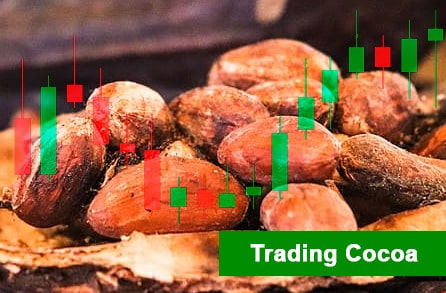
Trading cocoa has been one of the more interesting commodities I’ve followed closely over the past year. Unlike stocks or crypto, cocoa futures are very much driven by real world agriculture, weather in West Africa, export logistics out of Europe, and demand from major chocolate producers.
Cocoa futures contracts buy or sell a cocoa beans at a future agreed on price and date. These contracts are traded on exchanges like ICE Futures US in New York and ICE Futures Europe in London. In my experience, most traders never intend to take delivery of the physical beans. Instead, we’re speculating on price changes based on supply reports, currency moves, and seasonal harvest issues.
For example, in January 2026, I watched the March cocoa contract on ICE Futures US (ticker CC) rally from around $2850 per metric ton to nearly $3100 in just two weeks. This jump happened after a series of dry weather reports from Côte d’Ivoire and Ghana, which together produce more than half of the world’s cocoa. When those reports hit newswires traders quickly bid up the front month contract, anticipating a tighter supply. I entered a long position at roughly $2900 on January 14 and closed it out at $3050 on January 26 for a solid intraday gain.
Another recent trade was in December 2025 during technical resistance around the $2800 area. Late November’s export data from Europe came in weaker than expected, pushing prices down. I had shorted the May 2026 contract near $2780 expecting follow through selling, but the market found support near $2725 as global chocolate demand stayed strong heading into the holidays. That experience reminded me that fundamentals can be contradicting in cocoa, strong demand can offset supply concerns, and you have to watch both.
What I’ve learned personally is that cocoa trading often hinges on a handful of key reports. Weather updates, midcrop assessments from the International Cocoa Organization, and weekly export figures from European ports can all move prices sharply. For instance, a late January forecast that expanded rainfall in West Africa led to a quick pullback in cocoa prices from $3100 back to $2960 in just a couple of sessions, erasing much of the earlier rally. Traders who weren’t watching those weather models got caught wrong sided.
Because cocoa futures are tied to designated delivery points, usually ports in New York or Europe, changes in shipping costs and freight availability can subtly influence spreads between nearby and deferred contracts. In my own trading, I’ve noticed the July to December spread widen in late 2025 when freight disruptions raised concerns about getting beans to market on time. That spread widening was a signal that the market was pricing in logistical risk, even before the front month contract moved significantly.
Overall, trading cocoa requires staying plugged into both fundamental news and technical levels. Prices are quoted in dollars per metric ton on ICE, and because the market isn’t as liquid as crude oil or gold, big moves can happen quickly. It’s been one of the commodities where keeping a live feed and a weather calendar has paid off more than just watching chart patterns alone.

Cocoa: From Bean to Chocolate
Cocoa is derived from the seeds of the Theobroma cacao tree, which are processed into cocoa solids and cocoa butter key ingredients in chocolate production. Major cocoa producers include Côte d'Ivoire, Ghana, Indonesia, Nigeria, and Ecuador, with Côte d'Ivoire and Ghana together accounting for over 60% of global output. The harvest occurs twice a year, with the main season from October to March and a secondary harvest from April to September. Cocoa's nutritional benefits, including antioxidants and healthy fats, contribute to the growing global demand for chocolate and other cocoa products.
Key Drivers Influencing Cocoa Market Prices
The price of cocoa is shaped by a range of macroeconomic and sector specific factors, including:
Supply and Demand Dynamics: Cocoa prices are heavily affected by the balance between supply and demand. Variables such as weather patterns, crop diseases, and the political environment in major producing regions (particularly West Africa) influence the availability of cocoa. Simultaneously, rising demand for chocolate and related products drives market activity.
Impact of Climate Variability: Long term climate changes, including droughts, shifting rainfall patterns, and temperature fluctuations, pose significant risks to cocoa production, especially in key exporting countries. These environmental factors can lead to reduced yields, thereby influencing global pricing trends.
Currency Exchange Rate Fluctuations: Cocoa is traded on a global scale, and shifts in currency exchange rates between cocoa producing nations and importing countries have a direct impact on pricing. Exchange rate volatility adds another layer of complexity to cocoa trading.
Governmental Interventions: Policies such as export duties, subsidies, and regulatory frameworks in cocoa exporting countries can play a crucial role in determining market supply and, by extension, cocoa prices on international exchanges.
Ethical and Sustainable Sourcing Demands: The increasing consumer preference for ethically sourced cocoa (e.g., fair trade, organic) has implications for pricing. Ethical production practices often command premium prices, as consumers are willing to pay more for sustainable and socially responsible products.

Advanced Cocoa Trading: Strategies and Methodologies
Traders participating in the cocoa market have access to a variety of sophisticated strategies beyond basic buying and selling, enabling them to capitalize on price movements. These techniques include:
Spread Trading: Involves taking offsetting positions in cocoa contracts, typically by purchasing and selling contracts for different delivery months or on different exchanges. This strategy seeks to profit from fluctuations in the price differential between the contracts.
Options Based Trading Strategies: Cocoa options offer the opportunity to hedge or speculate on price movements without the obligation to execute. Popular strategies include purchasing call or put options to gain from price swings with limited exposure. More advanced strategies, such as straddles or vertical spreads, provide traders with a way to profit from market volatility.
Arbitrage Opportunities: Arbitrage in cocoa trading involves exploiting price discrepancies between different markets or exchanges. This technique is typically utilized by institutional traders who can execute simultaneous trades to lock in risk free profits from price inefficiencies.
Carry Trade Strategy: In cocoa markets, carry trades involve borrowing funds at a lower interest rate to invest in higher yielding cocoa futures contracts. The profitability of this strategy hinges on the differential between the interest cost and the return generated from holding the futures position.
Cocoa CFD Trading Example
Here is a basic example of a cocoa CFD trade:

Understanding CFDs
In the case of cocoa CFD trading, traders can profit from both rising and falling cocoa prices by speculating on Cocoa price only against your broker, with no ownership of real cocoa assets..
Cococa CFD Trading Example:
Scenario:
- Cocoa Price: $7,190 per contract
- Trading Capital: $10,000
- Leverage: 10:1
- Position Size: $100,000 (10 times your trading capital)
- Contracts Purchased: 13 (rounded from 13.9)
If cocoa prices rise to $7,300:
- Profit: $110 per contract
- Total Profit: $110 × 13 = $1,430
If prices fall to $7,100:
- Loss: $90 per contract
- Total Loss: $90 × 13 = $1,170
Advantages of CFD Trading:
- Leverage: Allows traders to control larger positions with a smaller initial investment.
- Short Selling: Enables traders to profit from falling prices.
- 24 Hour Trading: CFDs can be traded around the clock.
Risks of CFD Trading:
- Leverage: Can amplify both gains and losses.
- Margin Calls: If the market moves against your position, you may be required to deposit additional funds to maintain your position.
- High Volatility: Cocoa prices can be highly volatile, increasing the risk of significant losses.
Risk Management in Cocoa Trading
Effective risk management is crucial when trading commodities like cocoa. The use of leverage, as in the example above, can amplify both gains and losses. To mitigate risks, traders should employ specific strategies:
- Stop Loss Orders: A stop loss automatically sells your position when the price reaches a predetermined level, limiting your losses.
- Position Sizing: Limiting the size of your trade relative to your total capital reduces the risk of significant losses.
- Trailing Stops: A trailing stop adjusts the stop loss level as the price moves in your favor, locking in profits while minimizing losses.
- Hedging with Options: Traders can use options contracts to hedge their positions against unfavorable price movements.
- Portfolio Diversification: Investing in a variety of assets, including other commodities, stocks, and bonds, can help reduce overall risk.
Technical Analysis in Cocoa Trading
Technical analysis involves studying past price data and patterns to identify potential future price movements. Common tools used in cocoa trading include:
- Moving Averages: These are calculated by averaging the closing prices over a specific period. They can help identify trends and potential support or resistance levels.
- Bollinger Bands: These are bands that fluctuate around a moving average, indicating volatility and potential overbought or oversold conditions.
- Relative Strength Index (RSI): This indicator measures the speed and change of price movements, helping to identify overbought or oversold conditions.

Cocoa Trading Case Studies
Case Study Cocoa Successful Spread Trading
In 2016, a London based trader successfully used a spread trading strategy by exploiting the seasonal price difference between cocoa futures contracts. The trader anticipated that prices would rise for March contracts due to early harvest delays and fall for May contracts as fresh supplies entered the market. By taking long and short positions on the respective contracts, the trader profited from the widening price differential between the two, demonstrating the effectiveness of understanding seasonal trends in cocoa production.
Case Study Cocoa Effective Risk Management
In 2017, a New York based trader effectively managed risk during a market downturn by using stop loss orders and limiting position sizes. As global cocoa prices plummeted by over 30% due to oversupply, the traders stop loss orders were triggered, minimizing losses to just 5% of their total capital. This disciplined approach to risk management preserved the traders capital, allowing them to avoid larger losses and reinvest when market conditions improved.
Cocoa Trading Psychology
Emotional responses can significantly impair decision making in Cocoa trading. It is crucial to implement structured techniques to manage psychological influences and uphold trading discipline:
Establish a Comprehensive Trading Framework: A robust trading framework defines specific objectives, acceptable risk parameters, and precise entry and exit strategies tailored for Cocoa market volatility.
Utilize Cognitive Behavioral Techniques: Applying advanced mindfulness and cognitive behavioral strategies ensures traders maintain focus, effectively handle stress, and approach Cocoa trading decisions with enhanced objectivity.
Mitigate the Risk of Overtrading: Strategic restraint is essential in Cocoa trading to avoid the detrimental effects of overtrading, which often stem from impulsive actions and can elevate exposure to unnecessary risks.

Cocoa Regulatory Considerations
Speaking from my own experience trading cocoa futures over the past year I’ve learned that regulatory requirements are not abstract things written in a manual they actively shape how you can trade and when you might get stopped out or hit with unexpected costs. For example earlier this February I was looking at the March ICE Cocoa contract which at one point was trading around four thousand two hundred US dollars per tonne and had recently dipped from higher levels reflecting abundant supply. Because the contract size for cocoa futures is ten metric tonnes on ICE in the US this means a full contract represented over forty two thousand US dollars in underlying value which directly informs how much margin your broker and the exchange will ask you to post. Exchanges like ICE set margin requirements that can be quite hefty especially when volatility rises so at times I’ve been asked to post over seven thousand US dollars just to maintain a position. Those margin calls are not something you can ignore because if you fail to bring in the required funds the exchange will automatically close your position to protect itself and everyone else in the market which crystallizes losses for you.
Tax implications are another reality that many new traders underestimate. In the UK profits from trading commodity futures including cocoa are normally treated as capital gains meaning you must account for gains on your tax return in the tax year you close a profitable position and be prepared to pay the appropriate capital gains tax rate on those profits rather than income tax. I’ve had years where I was very profitable on soft commodity trades only to find my tax bill was significantly higher than expected because I hadn’t factored in the capital gains rules and allowances early in the year. And this isn’t only about paying tax it affects how you plan your trades for the year if you want to optimise your tax position by timing disposals.
Compliance with exchange rules is something that becomes second nature after a few trades but it can still bite you if you’re not paying attention. When trading London cocoa futures I recall a situation where the exchange updated expiration and first notice dates for a May contract and several traders who hadn’t checked the calendar were suddenly holding a position that was about to be called for delivery. Because they hadn’t arranged for physical delivery they were forced to liquidate at unfavourable prices near a session low around three thousand fifty pounds per tonne. Exchanges like ICE and the London ICE/EU arm enforce their rules strictly so understanding delivery months trading hours and settlement procedures is essential to avoid these kinds of costly mistakes.

Trading Cocoa Verdict
Trading cocoa has never felt passive to me and that’s something I understood very quickly once I started putting real money behind my ideas. I’ve had weeks where I felt completely in sync with the market after correctly reading weather models out of Côte d’Ivoire or spotting tightening export flows from European ports and then within a few sessions everything shifted and forced me to react fast. I remember one trade where I went long after prices held above a key support level only to wake up to updated rainfall forecasts that sent cocoa down sharply before the New York open. That single move wiped out days of unrealised gains and was a clear reminder that in cocoa you are always trading live information not static charts.
What keeps cocoa compelling for me is that the price rarely moves without a reason you can trace back to the real world. I’ve adjusted positions mid trade because of shipping delays rising freight costs or changes to first notice dates that suddenly made holding a contract riskier than I had planned. I’ve also been caught underestimating seasonality by holding a position too close to delivery and having to exit at an unfavourable price simply to avoid physical settlement. Over time those experiences shaped how I trade cocoa today with tighter risk controls smaller position sizes and a constant awareness that fundamentals can override any technical setup at short notice. Cocoa has taught me patience discipline and respect for risk more than almost any other commodity I’ve traded.
We have conducted extensive research and analysis on over multiple data points on Trading Cocoa on Financial Markets to present you with a comprehensive guide that can help you find the most suitable Trading Cocoa on Financial Markets. Below we shortlist what we think are the best trading cocoa after careful consideration and evaluation. We hope this list will assist you in making an informed decision when researching Trading Cocoa on Financial Markets.
Reputable Cocoa brokerage Checklist
Selecting a reliable and reputable online Trading Cocoa trading brokerage involves assessing their track record, regulatory status, customer support, processing times, international presence, and language capabilities. Considering these factors, you can make an informed decision and trade Trading Cocoa more confidently.
Selecting the right online Trading Cocoa trading brokerage requires careful consideration of several critical factors. Here are some essential points to keep in mind:
- Ensure your chosen Trading Cocoa broker has a solid track record of at least two years in the industry.
- Verify that the Trading Cocoa broker has a customer support team of at least 15 members responsive to queries and concerns.
- Check if the Trading Cocoa broker operates under the regulatory framework of a jurisdiction that can hold it accountable for any misconduct or resolve disputes fairly and impartially.
- Ensure that the Trading Cocoa broker can process deposits and withdrawals within two to three days, which is crucial when you need to access your funds quickly.
- Look for Trading Cocoa brokers with an international presence in multiple countries, offering its clients local seminars and training programs.
- Ensure the Trading Cocoa broker can hire staff from diverse locations worldwide who can communicate fluently in your local language.
Our team have listed brokers that match your criteria for you below. All brokerage data has been summarised into a comparison table. Scroll down.
Compare Key Features of Trading Cocoa in Our Brokerage Comparison Table
When choosing a broker for trading cocoa trading, it's essential to compare the different options available to you. Our trading cocoa brokerage comparison table below allows you to compare several important features side by side, making it easier to make an informed choice.
- Minimum deposit requirement for opening an account with each trading cocoa broker.
- The funding methods available for trading cocoa with each broker.
- The types of instruments you can trade with each trading cocoa broker, such as forex, stocks, commodities, and indices.
- The trading platforms each trading cocoa broker provides, including their features, ease of use, and compatibility with your devices.
- The spread type (if applicable) for each trading cocoa broker affects the cost of trading.
- The level of customer support each trading cocoa broker offers, including their availability, responsiveness, and quality of service.
- Whether each trading cocoa broker offers Micro, Standard, VIP, or Islamic accounts to suit your trading style and preferences.
By comparing these essential features, you can choose a trading cocoa broker that best suits your needs and preferences for trading cocoa. Our trading cocoa broker comparison table simplifies the process, allowing you to make a more informed decision.
Top 15 Trading Cocoa of 2026 compared
Here are the top Trading Cocoa.
Compare trading cocoa brokers for min deposits, funding, used by, benefits, account types, platforms, and support levels. When searching for a trading cocoa broker, it's crucial to compare several factors to choose the right one for your trading cocoa needs. Our comparison tool allows you to compare the essential features side by side.
All brokers below are trading cocoa. Learn more about what they offer below.
You can scroll left and right on the comparison table below to see more trading cocoa that accept trading cocoa clients.
| Broker |
IC Markets

|
Roboforex

|
eToro

|
XTB
|
XM

|
Pepperstone

|
AvaTrade

|
FP Markets

|
SpreadEx

|
EasyMarkets

|
FXPro

|
|---|---|---|---|---|---|---|---|---|---|---|---|
| Rating | |||||||||||
| Regulation | International Capital Markets Pty Ltd (Australia) (ASIC) Australian Securities & Investments Commission Licence No. 335692, Seychelles Financial Services Authority (FSA) (SD018), IC Markets (EU) Ltd (CySEC) Cyprus Securities and Exchange Commission with License No. 362/18, Capital Markets Authority(CMA) Kenya IC Markets (KE) Ltd, Securities Commission of The Bahamas (SCB) IC Markets (Bahamas) Ltd | RoboForex Ltd is authorised and regulated by the Financial Services Commission (FSC) of Belize under licence No. 000138/32, under the Securities Industry Act 2021, RoboForex Ltd is an (A category) member of The Financial Commission, also RoboForex Ltd is a participant of the Financial Commission Compensation Fund | FCA (Financial Conduct Authority) eToro (UK) Ltd (FCA reference 583263), eToro (Europe) Ltd CySEC (Cyprus Securities Exchange Commission), ASIC (Australian Securities and Investments Commission) eToro AUS Capital Limited ASIC license 491139, CySec (Cyprus Securities and Exchange Commission under the license 109/10), FSAS (Financial Services Authority Seychelles) eToro (Seychelles) Ltd license SD076, eToro (ME) Limited (ADGM) Abu Dhabi (UAE) number 220073, eToro (Europe) Ltd (AMF) Autorité des marchés financiers as a digital assets provider France | FCA (Financial Conduct Authority reference 522157) XTB Limited, CySEC (Cyprus Securities and Exchange Commission reference 169/12), DFSA (Dubai Financial Services Authority XTB MENA Limited licensed 8 July 2021), FSA (Financial Services Authority Seychelles license number SD148), FSCA (Financial Sector Conduct Authority XTB Africa (Pty) Ltd licensed 10 August 2021), KNF (Komisja Nadzoru Finansowego Polish Financial Supervision Authority) | Financial Sector Conduct Authority (FSCA) (49976) XM ZA (Pty) Ltd, Financial Services Commission (FSC) (000261/27) XM Global Limited, Cyprus Securities and Exchange Commission (CySEC) (license 120/10) Trading Point of Financial Instruments Ltd, Australian Securities and Investments Commission (ASIC) (number 443670) Trading Point of Financial Instruments Pty Ltd | Financial Conduct Authority (FCA), Australian Securities and Investments Commission (ASIC), Cyprus Securities and Exchange Commission (CySEC), Federal Financial Supervisory Authority (BaFin), Dubai Financial Services Authority (DFSA), Capital Markets Authority of Kenya (CMA), Pepperstone Markets Limited is incorporated in The Bahamas (number 177174 B), Licensed by the Securities Commission of The Bahamas (SCB) number SIA-F217 | Australian Securities and Investments Commission (ASIC) Ava Capital Markets Australia Pty Ltd (406684), South African Financial Sector Conduct Authority (FSCA) Ava Capital Markets Pty Ltd (45984), Financial Services Agency (Japan FSA) Ava Trade Japan K.K. (1662), Financial Futures Association of Japan (FFAJ) Ava Trade Japan K.K. (1574), Abu Dhabi Global Markets (ADGM) / Financial Regulatory Services Authority (FRSA) Ava Trade Middle East Ltd (190018), Central Bank of Ireland (C53877) AVA Trade EU Ltd, Polish Financial Supervision Authority (KNF) AVA Trade EU Ltd (branch authorisation), British Virgin Islands Financial Services Commission (BVI) Ava Trade Markets Ltd (SIBA/L/13/1049), Israel Securities Authority (ISA) ATrade Ltd (514666577), Financial Superintendence of Colombia (SFC 0261 of 2024), Investment Industry Regulatory Organization of Canada through Friedberg Direct (IIROC) | CySEC (Cyprus Securities and Exchange Commission) (371/18), ASIC AFS (Australian Securities and Investments Commission) (286354), FSP (Financial Sector Conduct Authority in South Africa) (50926), Financial Services Authority Seychelles (FSA) (SD 130) | FCA (Financial Conduct Authority) (190941), Gambling Commission (Great Britain) (8835), licence in Ireland as remote bookmaker for fixed odds betting licence number 1016176 | Easy Forex Trading Ltd is regulated by CySEC (License 079/07). This is the only entity that onboards EU clients. easyMarkets Pty Ltd is regulated by ASIC (AFS License 246566), EF Worldwide Ltd (Seychelles) is regulated by FSA (License SD056), EF Worldwide Ltd (British Virgin Islands) is regulated by FSC (License SIBA/L/20/1135), EF Worldwide (PTY) Ltd is regulated by FSCA (License 54018) | FCA (Financial Conduct Authority) (509956), CySEC (Cyprus Securities and Exchange Commission) (078/07), FSCA (Financial Sector Conduct Authority) (45052), SCB (Securities Commission of The Bahamas) (SIA-F184), FSA (Financial Services Authority of Seychelles) (SD120) |
| Min Deposit | 200 | 10 | 50 | No minimum deposit | 5 | No minimum deposit | 100 | 100 | No minimum deposit | 25 | 100 |
| Funding |
|
|
|
|
|
|
|
|
|
|
|
| Used By | 200,000+ | 730,000+ | 40,000,000+ | 2,000,000+ | 15,000,000+ | 830,000+ | 400,000+ | 200,000+ | 60,000+ | 250,000+ | 11,200,000+ |
| Benefits |
|
|
|
|
|
|
|
|
|
|
|
| Accounts |
|
|
|
|
|
|
|
|
|
|
|
| Platforms | MT5, MT4, MetaTrader WebTrader, Mobile Apps, iOS (App Store), Android (Google Play), MetaTrader iPhone/iPad, MetaTrader Android Google Play, MetaTrader Mac, cTrader, cTrader Web, cTrader iPhone/iPad, cTrader iMac, cTrader Android Google Play, cTrader Automate, cTrader Copy Trading, TradingView, Virtual Private Server, Trading Servers, MT4 Advanced Trading Tools, IC Insights, Trading Central | MT4, MT5, R Mobile Trader, R StocksTrader, WebTrader, Mobile Apps, iOS (App Store), Android (Google Play), Windows | eToro Trading App, Mobile Apps, iOS (App Store), Android (Google Play), CopyTrading, Web | MT4, Mirror Trader, Web Trader, Tablet, Mobile Apps, iOS (App Store), Android (Google Play) | MT5, MT5 WebTrader, XM Apple App for iPhone, XM App for Android Google Play, Tablet: MT5 for iPad, MT5 for Android Google Play, XM App for iPad, XM App for iOS (App Store), Android (Google Play), Mobile Apps | MT4, MT5, cTrader,WebTrader, TradingView, Windows, Mobile Apps, iOS (App Store), Android (Google Play) | MT4, MT5, Web Trading, AvaTrade App, AvaOptions, Mac Trading, AvaSocial, Mobile Apps, iOS (App Store), Android (Google Play) | MT4, MT5, TradingView, cTrader, WebTrader, Mobile Trader, Mobile Apps, iOS (App Store), Android (Google Play) | Web, Mobile Apps, iOS (App Store), Android (Google Play), iPad App, iPhone App, TradingView | easyMarkets App, Mobile Apps, iOS (App Store), Android (Google Play), Web Platform, TradingView, MT4, MT5 | MT4, MT5, cTrader, FxPro WebTrader, FxPro Mobile Apps, iOS (App Store), Android (Google Play) |
| Support |
|
|
|
|
|
|
|
|
|
|
|
| Learn More |
Sign
Up with icmarkets |
Sign
Up with roboforex |
Sign
Up with etoro |
Sign
Up with xtb |
Sign
Up with xm |
Sign
Up with pepperstone |
Sign
Up with avatrade |
Sign
Up with fpmarkets |
Sign
Up with spreadex |
Sign
Up with easymarkets |
Sign
Up with fxpro |
| Risk Warning | Losses can exceed deposits | Losses can exceed deposits | 52% of retail investor accounts lose money when trading CFDs with this provider. | 69% - 80% of retail investor accounts lose money when trading CFDs with this provider. You should consider whether you understand how CFDs work and whether you can afford to take the high risk of losing your money. | CFDs are complex instruments and come with a high risk of losing money rapidly due to leverage. 74.48% of retail investor accounts lose money when trading CFDs with this provider. You should consider whether you understand how CFDs work and whether you can afford to take the high risk of losing your money. | 75-95 % of retail investor accounts lose money when trading CFDs | 57% of retail investor accounts lose money when trading CFDs with this provider | Losses can exceed deposits | 62% of retail CFD accounts lose money | 76% of retail investor accounts lose money when trading CFDs with this provider. | 74% of retail investor accounts lose money when trading CFDs and Spread Betting with this provider |
| Demo |
IC Markets Demo |
Roboforex Demo |
eToro Demo |
XTB Demo |
XM Demo |
Pepperstone Demo |
AvaTrade Demo |
FP Markets Demo |
SpreadEx Demo |
easyMarkets Demo |
FxPro Demo |
| Excluded Countries | US, IR, CA, NZ, JP | AU, BE, BQ, BR, CA, CW, CZ, DE, ES, EE, EU, FM, FR, FI, GW, ID, IR, JP, LR, MP, NL, PF, PL, RU, SE, SJ, SS, SL, SI, TL, TR, DO, US, IT, AT, PT, BG, HR, CY, DK, FL, GR, IE, LV, LT, MT, RO, SK, CH | ZA, ID, IR, KP, BE, CA, JP, SY, TR, IL, BY, AL, MD, MK, RS, GN, CD, SD, SA, ZW, ET, GH, TZ, LY, UG, ZM, BW, RW, TN, SO, NA, TG, SL, LR, GM, DJ, CI, PK, BN, TW, WS, NP, SG, VI, TM, TJ, UZ, LK, TT, HT, MM, BT, MH, MV, MG, MK, KZ, GD, FJ, PT, BB, BM, BS, AG, AI, AW, AX, LB, SV, PY, HN, GT, PR, NI, VG, AN, CN, BZ, DZ, MY, KH, PH, VN, EG, MN, MO, UA, JO, KR, AO, BR, HR, GL, IS, IM, JM, FM, MC, NG, SI, | US, IN, PK, BD, NG , ID, BE, AU | US, CA, IL, IR | AF, AS, AQ, AM, AZ, BY, BE, BZ, BT, BA, BI, CM, CA, CF, TD, CG, CI, ER, GF, PF, GP, GU, GN, GW, GY, HT, VA, IR, IQ, JP, KZ, LB, LR, LY, ML, MQ, YT, MZ, MM, NZ, NI, KP, PS, PR, RE, KN, LC, VC, WS, SO, GS, KR, SS, SD, SR, SY, TJ, TN, TM, TC, US, VU, VG, EH, ES, YE, ZW, ET | BE, BR, KP, NZ, TR, US, CA, SG | US, JP, NZ | US, TR | US, IL, BC, MB, QC, ON, AF, BY, BI, KH, KY, TD, KM, CG, CU, CD, GQ, ER, FJ, GN, GW, HT, IR, IQ, LA, LY, MZ, MM, NI, KP, PW, PA, RU, SO, SS, SD, SY, TT, TM, VU, VE, YE | US, CA, IR |
All Trading cocoa in more detail
You can compare Trading Cocoa ratings, min deposits what the the broker offers, funding methods, platforms, spread types, customer support options, regulation and account types side by side.
We also have an indepth Top Trading Cocoa for 2026 article further below. You can see it now by clicking here
We have listed top Trading cocoa below.
Cocoa brokerage Table of Contents
- Cocoa brokerage Explained
- 6 Factors to Consider when Choosing Cocoa brokerage
- Are Your Cocoa brokerage Trusted And Established?
- Are The Cocoa brokerage World Leading?
- What are the Cocoa brokerage Commissions and Fees?
- What are the Cocoa brokerage Funding and Withdrawl Methods?
- Find Cocoa brokerage with Round-the-clock support?
- Make sure the Cocoa brokerage Offer Comprehensive Trader resources?
- Why Cocoa brokerage needs to be regulated?
- Cocoa brokerage FAQ
- What are the best Trading cocoa brokers?
- What is the best Trading cocoa broker?
- Related Cocoa brokerage Reviews
- Related Cocoa brokerage Alternatives
- Related Cocoa brokerage Comparisons
Cocoa brokerage Explained
Trading volatile financial markets with Cocoa brokerage can be challenging, even for experienced traders. In addition to the online educational resources available, traders should consider the platform offered by Cocoa brokerage to ensure a successful trading experience.
Selecting Cocoa brokerage at the forefront of innovation and considered an industry leader is crucial. Doing so will ensure you are equipped with the tools and features to navigate volatile Cocoa brokerage markets effectively.
Reliability is key to gaining access to financial markets. Look for Cocoa brokerage that you can rely on to provide a stable and secure trading environment, allowing you to execute trades with Cocoa brokerage confidently.
6 Factors to Consider when Choosing Cocoa brokerage
Follow these five rules for selecting Cocoa brokerage that are right for you:
Are Your Cocoa brokerage Trusted And Established?
Search for a reputable Cocoa brokerage with a extensive proven track record for Cocoa brokerage, enabling you to focus solely on implementing your trading strategy and navigating the markets with confidence. The top rated Cocoa brokerage broker is IC Markets. Established in 2007, and in operation for 19 years IC Markets have a head office in Australia.
IC Markets is regulated. This means IC Markets are supervised by and is checked for conduct by International Capital Markets Pty Ltd (Australia) (ASIC) Australian Securities & Investments Commission Licence No. 335692, Seychelles Financial Services Authority (FSA) (SD018), IC Markets (EU) Ltd (CySEC) Cyprus Securities and Exchange Commission with License No. 362/18, Capital Markets Authority(CMA) Kenya IC Markets (KE) Ltd, Securities Commission of The Bahamas (SCB) IC Markets (Bahamas) Ltd regulatory bodies.
Another top rated broker is Roboforex.
Roboforex was established 2009, and in operation for 17 years Roboforex have a head office in Belize.
Roboforex is regulated. This means Roboforex are supervised by and is checked for conduct by International Capital Markets Pty Ltd (Australia) (ASIC) Australian Securities & Investments Commission Licence No. 335692, Seychelles Financial Services Authority (FSA) (SD018), IC Markets (EU) Ltd (CySEC) Cyprus Securities and Exchange Commission with License No. 362/18, Capital Markets Authority(CMA) Kenya IC Markets (KE) Ltd, Securities Commission of The Bahamas (SCB) IC Markets (Bahamas) Ltd regulatory bodies.
| Broker |
IC Markets
|
Roboforex
|
eToro
|
XTB
|
XM
|
Pepperstone
|
AvaTrade
|
FP Markets
|
|---|---|---|---|---|---|---|---|---|
| Year Established | 2007 | 2009 | 2007 | 2002 | 2009 | 2010 | 2006 | 2005 |
| Head Office | Australia | Belize | Cyprus, UK | Poland | Cyprus | Australia | Ireland | Australia |
| Regulation | International Capital Markets Pty Ltd (Australia) (ASIC) Australian Securities & Investments Commission Licence No. 335692, Seychelles Financial Services Authority (FSA) (SD018), IC Markets (EU) Ltd (CySEC) Cyprus Securities and Exchange Commission with License No. 362/18, Capital Markets Authority(CMA) Kenya IC Markets (KE) Ltd, Securities Commission of The Bahamas (SCB) IC Markets (Bahamas) Ltd | RoboForex Ltd is authorised and regulated by the Financial Services Commission (FSC) of Belize under licence No. 000138/32, under the Securities Industry Act 2021, RoboForex Ltd is an (A category) member of The Financial Commission, also RoboForex Ltd is a participant of the Financial Commission Compensation Fund | FCA (Financial Conduct Authority) eToro (UK) Ltd (FCA reference 583263), eToro (Europe) Ltd CySEC (Cyprus Securities Exchange Commission), ASIC (Australian Securities and Investments Commission) eToro AUS Capital Limited ASIC license 491139, CySec (Cyprus Securities and Exchange Commission under the license 109/10), FSAS (Financial Services Authority Seychelles) eToro (Seychelles) Ltd license SD076, eToro (ME) Limited (ADGM) Abu Dhabi (UAE) number 220073, eToro (Europe) Ltd (AMF) Autorité des marchés financiers as a digital assets provider France | FCA (Financial Conduct Authority reference 522157) XTB Limited, CySEC (Cyprus Securities and Exchange Commission reference 169/12), DFSA (Dubai Financial Services Authority XTB MENA Limited licensed 8 July 2021), FSA (Financial Services Authority Seychelles license number SD148), FSCA (Financial Sector Conduct Authority XTB Africa (Pty) Ltd licensed 10 August 2021), KNF (Komisja Nadzoru Finansowego Polish Financial Supervision Authority) | Financial Sector Conduct Authority (FSCA) (49976) XM ZA (Pty) Ltd, Financial Services Commission (FSC) (000261/27) XM Global Limited, Cyprus Securities and Exchange Commission (CySEC) (license 120/10) Trading Point of Financial Instruments Ltd, Australian Securities and Investments Commission (ASIC) (number 443670) Trading Point of Financial Instruments Pty Ltd | Financial Conduct Authority (FCA), Australian Securities and Investments Commission (ASIC), Cyprus Securities and Exchange Commission (CySEC), Federal Financial Supervisory Authority (BaFin), Dubai Financial Services Authority (DFSA), Capital Markets Authority of Kenya (CMA), Pepperstone Markets Limited is incorporated in The Bahamas (number 177174 B), Licensed by the Securities Commission of The Bahamas (SCB) number SIA-F217 | Australian Securities and Investments Commission (ASIC) Ava Capital Markets Australia Pty Ltd (406684), South African Financial Sector Conduct Authority (FSCA) Ava Capital Markets Pty Ltd (45984), Financial Services Agency (Japan FSA) Ava Trade Japan K.K. (1662), Financial Futures Association of Japan (FFAJ) Ava Trade Japan K.K. (1574), Abu Dhabi Global Markets (ADGM) / Financial Regulatory Services Authority (FRSA) Ava Trade Middle East Ltd (190018), Central Bank of Ireland (C53877) AVA Trade EU Ltd, Polish Financial Supervision Authority (KNF) AVA Trade EU Ltd (branch authorisation), British Virgin Islands Financial Services Commission (BVI) Ava Trade Markets Ltd (SIBA/L/13/1049), Israel Securities Authority (ISA) ATrade Ltd (514666577), Financial Superintendence of Colombia (SFC 0261 of 2024), Investment Industry Regulatory Organization of Canada through Friedberg Direct (IIROC) | CySEC (Cyprus Securities and Exchange Commission) (371/18), ASIC AFS (Australian Securities and Investments Commission) (286354), FSP (Financial Sector Conduct Authority in South Africa) (50926), Financial Services Authority Seychelles (FSA) (SD 130) |
| Used By | 200,000+ | 730,000+ | 40,000,000+ | 2,000,000+ | 15,000,000+ | 830,000+ | 400,000+ | 200,000+ |
| Negative balance protection | Yes | Yes | Yes | Yes | Yes | Yes | Yes | Yes |
| Guaranteed Stop Loss | No | No | No | No | No | Yes | No | No |
| Learn More | Visit IC Markets | Visit Roboforex | Visit eToro | Visit XTB | Visit XM | Visit Pepperstone | Visit AvaTrade | Visit FP Markets |
| Risk Warning | Losses can exceed deposits | Losses can exceed deposits | 52% of retail investor accounts lose money when trading CFDs with this provider. | 69% - 80% of retail investor accounts lose money when trading CFDs with this provider. You should consider whether you understand how CFDs work and whether you can afford to take the high risk of losing your money. | CFDs are complex instruments and come with a high risk of losing money rapidly due to leverage. 74.48% of retail investor accounts lose money when trading CFDs with this provider. You should consider whether you understand how CFDs work and whether you can afford to take the high risk of losing your money. | 75-95 % of retail investor accounts lose money when trading CFDs | 57% of retail investor accounts lose money when trading CFDs with this provider | Losses can exceed deposits |
Are The Cocoa brokerage World Leading?
Opt for Cocoa brokerage that set themselves apart as an industry leader by actively embracing innovation. Take IC Markets as an example, which is renowned for Segregates clients funds and boasts an extensive array of 2850 tradable instruments. Moreover, IC Markets caters to the needs of its clients with both an online trading platform and a mobile application, making it incredibly convenient to access the markets from anywhere, at any time.
In addition, the IC Markets platform enables access to a variety of financial markets worldwide. IC Markets is a world-leader when it comes to innovation and they are always looking at ways to improve and to maintain their competitive advantage.
Another good choice when looking for Cocoa brokerage is Roboforex. Roboforex Segregates clients funds and offers over 12000 instruments.
| Broker |
IC Markets
|
Roboforex
|
eToro
|
XTB
|
XM
|
Pepperstone
|
AvaTrade
|
FP Markets
|
|---|---|---|---|---|---|---|---|---|
| Instruments Available | 2850 | 12000 | 7000 | 10900 | 1464 | 2700 | 1250 | 10000 |
| Platforms | MT5, MT4, MetaTrader WebTrader, Mobile Apps, iOS (App Store), Android (Google Play), MetaTrader iPhone/iPad, MetaTrader Android Google Play, MetaTrader Mac, cTrader, cTrader Web, cTrader iPhone/iPad, cTrader iMac, cTrader Android Google Play, cTrader Automate, cTrader Copy Trading, TradingView, Virtual Private Server, Trading Servers, MT4 Advanced Trading Tools, IC Insights, Trading Central | MT4, MT5, R Mobile Trader, R StocksTrader, WebTrader, Mobile Apps, iOS (App Store), Android (Google Play), Windows | eToro Trading App, Mobile Apps, iOS (App Store), Android (Google Play), CopyTrading, Web | MT4, Mirror Trader, Web Trader, Tablet, Mobile Apps, iOS (App Store), Android (Google Play) | MT5, MT5 WebTrader, XM Apple App for iPhone, XM App for Android Google Play, Tablet: MT5 for iPad, MT5 for Android Google Play, XM App for iPad, XM App for iOS (App Store), Android (Google Play), Mobile Apps | MT4, MT5, cTrader,WebTrader, TradingView, Windows, Mobile Apps, iOS (App Store), Android (Google Play) | MT4, MT5, Web Trading, AvaTrade App, AvaOptions, Mac Trading, AvaSocial, Mobile Apps, iOS (App Store), Android (Google Play) | MT4, MT5, TradingView, cTrader, WebTrader, Mobile Trader, Mobile Apps, iOS (App Store), Android (Google Play) |
| Excluded Countries | US, IR, CA, NZ, JP | AU, BE, BQ, BR, CA, CW, CZ, DE, ES, EE, EU, FM, FR, FI, GW, ID, IR, JP, LR, MP, NL, PF, PL, RU, SE, SJ, SS, SL, SI, TL, TR, DO, US, IT, AT, PT, BG, HR, CY, DK, FL, GR, IE, LV, LT, MT, RO, SK, CH | ZA, ID, IR, KP, BE, CA, JP, SY, TR, IL, BY, AL, MD, MK, RS, GN, CD, SD, SA, ZW, ET, GH, TZ, LY, UG, ZM, BW, RW, TN, SO, NA, TG, SL, LR, GM, DJ, CI, PK, BN, TW, WS, NP, SG, VI, TM, TJ, UZ, LK, TT, HT, MM, BT, MH, MV, MG, MK, KZ, GD, FJ, PT, BB, BM, BS, AG, AI, AW, AX, LB, SV, PY, HN, GT, PR, NI, VG, AN, CN, BZ, DZ, MY, KH, PH, VN, EG, MN, MO, UA, JO, KR, AO, BR, HR, GL, IS, IM, JM, FM, MC, NG, SI, | US, AU, CA, JP, KR, KP, SG, MU, IL, TR, IN, PK, BA, ET, UG, CU, SY, BD, NG, ID, BE, LY, MO, KE, YE, VU, GY, CD, CG, AF, LA, MZ, IQ, IR | US, CA, IL, IR | AF, AS, AQ, AM, AZ, BY, BE, BZ, BT, BA, BI, CM, CA, CF, TD, CG, CI, ER, GF, PF, GP, GU, GN, GW, GY, HT, VA, IR, IQ, JP, KZ, LB, LR, LY, ML, MQ, YT, MZ, MM, NZ, NI, KP, PS, PR, RE, KN, LC, VC, WS, SO, GS, KR, SS, SD, SR, SY, TJ, TN, TM, TC, US, VU, VG, EH, ES, YE, ZW, ET | BE, BR, KP, NZ, TR, US, CA, SG | US, JP, NZ |
| Forex pairs offered | 65 | 40 | 65 | 69 | 55 | 93 | 53 | 70 |
| Major forex pairs | Yes | Yes | Yes | Yes | Yes | Yes | Yes | Yes |
| Minor forex pairs | Yes | Yes | Yes | Yes | Yes | Yes | Yes | Yes |
| Exotic forex pairs | Yes | Yes | Yes | Yes | Yes | Yes | Yes | Yes |
| Cryptocurrencies (availability subject to regulation) | Yes | Yes | Yes | No | No | Yes | Yes | Yes |
| Commodities Offered | 28 | 100 | 67 | 27 | 8 | 40 | 19 | 29 |
| Metals | Yes | Yes | Yes | Yes | Yes | Yes | Yes | Yes |
| Energies | Yes | No | Yes | Yes | Yes | Yes | Yes | Yes |
| Agricultural | Yes | No | Yes | Yes | No | Yes | Yes | Yes |
| Stocks Offered | 2100 | 8484 | 7246 | 6617 | 1350 | 1100 | 647 | 10000 |
| UK Shares | Yes | Yes | Yes | Yes | Yes | Yes | Yes | Yes |
| US Shares | Yes | Yes | Yes | Yes | Yes | Yes | Yes | Yes |
| German Shares | Yes | Yes | Yes | Yes | Yes | Yes | Yes | Yes |
| Japanese Shares | Yes | Yes | Yes | Yes | Yes | Yes | Yes | Yes |
What are the Cocoa brokerage Commissions and Fees?
Ensure that your broker is transparent with fees and those dues are competitive.
The best rated Cocoa brokerage broker IC Markets offers competitive offers for Forex, CFDs, Spread Betting, Share dealing, Cryptocurrencies. IC Markets minimum deposit is 200.
Another top rated Cocoa brokerage broker Roboforex offers Forex, CFDs. Roboforex minimum deposit is 10. Please note that any cryptocurrency availability with any broker is subject to regulation.
| Broker |
IC Markets
|
Roboforex
|
eToro
|
XTB
|
XM
|
Pepperstone
|
AvaTrade
|
FP Markets
|
|---|---|---|---|---|---|---|---|---|
| Min Deposit | 200 | 10 | 50 | 0 | 5 | 0 | 100 | 100 |
| Withdrawl Fees | No | No | Yes | Yes | No | No | No | No |
| Inactivity Fees | No | No | Yes | Yes | Yes | No | Yes | No |
| Deposit Fees | No | No | No | No | No | No | No | No |
| CFD Commission Fees | Yes | No | Yes | Yes | No | Yes | No | Yes |
What are the Cocoa brokerage Funding and Withdrawal Methods?
Efficient and hassle-free funding and withdrawal facilities can significantly improve your overall trading experience when dealing with Cocoa brokerage. It streamlines the trading process and helps you focus on making informed decisions rather than worrying about deposit and withdrawal matters with Cocoa brokerage.
| Broker |
IC Markets
|
Roboforex
|
eToro
|
XTB
|
XM
|
Pepperstone
|
AvaTrade
|
FP Markets
|
|---|---|---|---|---|---|---|---|---|
| Bank transfer | Yes | Yes | Yes | Yes | Yes | Yes | Yes | Yes |
| Credit Cards | Yes | Yes | Yes | Yes | Yes | Yes | Yes | Yes |
| Paypal | Yes | No | Yes | Yes | No | Yes | Yes | Yes |
| Skrill | Yes | No | Yes | Yes | No | Yes | No | Yes |
| Payoneer | No | Yes | No | Yes | No | Yes | Yes | No |
| Neteller | Yes | Yes | Yes | Yes | Yes | Yes | Yes | Yes |
Find Cocoa brokerage with Round-the-clock support?
Effective customer service is an essential factor to consider when dealing with Cocoa brokerage.
Cocoa brokerage customer service entails various support services to aid customers in making the most cost-effective and appropriate use of the brokers' services.
The customer support options offered by Cocoa brokerage can include phone answering services, live chat support, and email customer service support.
IC Markets support a wide range of languages including English, Japanese, Chinese, Polish, Afrikans, Danish, Dutch, German and more
Roboforex support a wide range of languages including English, Chinese Simplified, Chinese Traditional, Indonesian, Malaysian, Portuguese, Spanish, Italian, Polish, Arabic, Thai, Russian, and Ukrainian
IC Markets and Roboforex offer support where clients are able to call or contact the helpdesk via email or a chat service.
| Broker |
IC Markets
|
Roboforex
|
eToro
|
XTB
|
XM
|
Pepperstone
|
AvaTrade
|
FP Markets
|
|---|---|---|---|---|---|---|---|---|
| Support |
|
|
|
|
|
|
|
|
| Languages | English, Japanese, Chinese, Polish, Afrikans, Danish, Dutch, German and more | English, Chinese Simplified, Chinese Traditional, Indonesian, Malaysian, Portuguese, Spanish, Italian, Polish, Arabic, Thai, Russian, and Ukrainian | English, German, Spanish, French, Italian | English, Spanish, Czech, Chinese, German, French, Italian, Polish, Portuguese, Romanian, Slovenian, and Turkish | Arabic, Chinese, English, French, German, Greek, Hindi, Hungarian, Indonesian, Italian, Japanese, Korean, Malay, Polish, Portuguese, Russian, Spanish, Swedish, Thai, and Turkish | English, Spanish, Portuguese, Thai, Russian, Italian, French, German, Polish, Chinese, Vietnamese, and Arabic | Arabic, Simplified Chinese, Traditional Chinese, Dutch, English, Finnish, French, German, Hungarian, Italian, Indonesian, Japanese, Mongolian, Polish, Portuguese, Russian, Spanish, Swedish, Thai, Malay, Korean and Turkish | English, Arabic, Indonesian, Italian, Spanish, French, Russian, Chinese, Japanese, German, Portuguese, Thai, French, Malay, Greek, Vietnamese, Romanian, Turkish, Slovenian, Dutch, Polish, Finnish, Norwegian, Swedish, Serbian, Lithuanian, Hungarian, Galician, Estonian, Danish, Czech, Croatian, Bulgarian, Basque |
| Learn More | Visit IC Markets | Visit Roboforex | Visit eToro | Visit XTB | Visit XM | Visit Pepperstone | Visit AvaTrade | Visit FP Markets |
| Risk Warning | Losses can exceed deposits | Losses can exceed deposits | 52% of retail investor accounts lose money when trading CFDs with this provider. | 69% - 80% of retail investor accounts lose money when trading CFDs with this provider. You should consider whether you understand how CFDs work and whether you can afford to take the high risk of losing your money. | CFDs are complex instruments and come with a high risk of losing money rapidly due to leverage. 74.48% of retail investor accounts lose money when trading CFDs with this provider. You should consider whether you understand how CFDs work and whether you can afford to take the high risk of losing your money. | 75-95 % of retail investor accounts lose money when trading CFDs | 57% of retail investor accounts lose money when trading CFDs with this provider | Losses can exceed deposits |
Make sure the Cocoa brokerage Offer Comprehensive Trader resources?
It's important to ensure your Cocoa brokerage provide complimentary resources such as analysis, education, and risk management tools. IC Markets and Roboforex collaborate with top analysts to bring the most up-to-date news and insights to traders.
Sound risk and money management are vital to financial market navigation with Cocoa brokerage. However, selecting the best broker to access the markets is a critical step that traders should not overlook as they embark on trading live financial markets with Cocoa brokerage.
Why Cocoa brokerage needs to be regulated?
Regulated Cocoa brokerage lowers your risk of loss of deposited trading funds.
Lowering your risk is one of the benefits of working with a properly regulated Cocoa brokerage.
Consumers are protected by Cocoa brokerage regulation, critical to preventing inadequate services and potential financial harm.
Regulation of Cocoa brokerage is necessary to prevent fraud. The Cocoa brokerage working capital and client-funded accounts must be kept separate to avoid conducting business with client funds. Any fraudulent behaviour with Cocoa brokerage is monitored by financial regulators in the jurisdictions brokers are allowed to operate.
Cocoa brokerage List
Funding methods
Bank transfer Credit Card PaypalPlatforms
MT5, MT4, MetaTrader WebTrader, Mobile Apps, iOS (App Store), Android (Google Play), MetaTrader iPhone/iPad, MetaTrader Android Google Play, MetaTrader Mac, cTrader, cTrader Web, cTrader iPhone/iPad, cTrader iMac, cTrader Android Google Play, cTrader Automate, cTrader Copy Trading, TradingView, Virtual Private Server, Trading Servers, MT4 Advanced Trading Tools, IC Insights, Trading CentralCustomer support
Live chat Phone support Email supportAccount Types
Micro account Standard account ECN accountIslamic account VIP account
Funding methods
Bank transfer Credit Card PaypalPlatforms
MT4, MT5, R Mobile Trader, R StocksTrader, WebTrader, Mobile Apps, iOS (App Store), Android (Google Play), WindowsCustomer support
Live chat Phone support Email supportAccount Types
Micro account Standard account ECN accountIslamic account VIP account
eToro is a multi-asset platform which offers both investing in stocks and cryptoassets, as well as trading CFDs.
Please note that CFDs are complex instruments and come with a high risk of losing money rapidly due to leverage. 52% of retail investor accounts lose money when trading CFDs with this provider. You should consider whether you understand how CFDs work, and whether you can afford to take the high risk of losing your money.
This communication is intended for information and educational purposes only and should not be considered investment advice or investment recommendation. Past performance is not an indication of future results.
Copy Trading does not amount to investment advice. The value of your investments may go up or down. Your capital is at risk.
Crypto investments are risky and may not suit retail investors; you could lose your entire investment. Understand the risks here.
Don't invest unless you're prepared to lose all the money you invest. This is a high-risk investment, and you should not expect to be protected if something goes wrong. Take 2 mins to learn more.
eToro USA LLC does not offer CFDs and makes no representation and assumes no liability as to the accuracy or completeness of the content of this publication, which has been prepared by our partner utilizing publicly available non-entity specific information about eToro.
Funding methods
Bank transfer Credit Card PaypalPlatforms
eToro Trading App, Mobile Apps, iOS (App Store), Android (Google Play), CopyTrading, WebCustomer support
Live chat Phone support Email supportAccount Types
Micro account Standard account ECN accountIslamic account VIP account
Funding methods
Bank transfer Credit Card PaypalPlatforms
MT4, Mirror Trader, Web Trader, Tablet, Mobile Apps, iOS (App Store), Android (Google Play)Customer support
Live chat Phone support Email supportAccount Types
Micro account Standard account ECN accountIslamic account VIP account
Funding methods
Bank transfer Credit Card PaypalPlatforms
MT5, MT5 WebTrader, XM Apple App for iPhone, XM App for Android Google Play, Tablet: MT5 for iPad, MT5 for Android Google Play, XM App for iPad, XM App for iOS (App Store), Android (Google Play), Mobile AppsCustomer support
Live chat Phone support Email supportAccount Types
Micro account Standard account ECN accountIslamic account XM Swap-Free account (XM Ultra Low Account) VIP account
Funding methods
Bank transfer Credit Card PaypalPlatforms
MT4, MT5, cTrader,WebTrader, TradingView, Windows, Mobile Apps, iOS (App Store), Android (Google Play)Customer support
Live chat Phone support Email supportAccount Types
Micro account Standard account ECN accountIslamic account Pro Account VIP account
Funding methods
Bank transfer Credit Card PaypalPlatforms
MT4, MT5, Web Trading, AvaTrade App, AvaOptions, Mac Trading, AvaSocial, Mobile Apps, iOS (App Store), Android (Google Play)Customer support
Live chat Phone support Email supportAccount Types
Micro account Standard account ECN accountIslamic account VIP account
Funding methods
Bank transfer Credit Card PaypalPlatforms
MT4, MT5, TradingView, cTrader, WebTrader, Mobile Trader, Mobile Apps, iOS (App Store), Android (Google Play)Customer support
Live chat Phone support Email supportAccount Types
Micro account Standard account ECN accountIslamic account VIP account
Funding methods
Bank transfer Credit Card PaypalPlatforms
Web, Mobile Apps, iOS (App Store), Android (Google Play), iPad App, iPhone App, TradingViewCustomer support
Live chat Phone support Email supportAccount Types
Micro account Standard account ECN accountIslamic account VIP account
Funding methods
Bank transfer Credit Card PaypalPlatforms
easyMarkets App, Mobile Apps, iOS (App Store), Android (Google Play), Web Platform, TradingView, MT4, MT5Customer support
Live chat Phone support Email supportAccount Types
Micro account Standard account ECN accountIslamic account VIP account
Funding methods
Bank transfer Credit Card PaypalPlatforms
MT4, MT5, cTrader, FxPro WebTrader, FxPro Mobile Apps, iOS (App Store), Android (Google Play)Customer support
Live chat Phone support Email supportAccount Types
Micro account Standard account ECN accountIslamic account VIP account

Learn more
Losses can exceed deposits

Losses can exceed deposits