Elon Musk Stock Portfolio for 2026
We found 11 online brokers that are appropriate for Trading Elon Musk Stock Portfolio Investment Platforms.
Elon Musk Stock Portfolio Guide
Analysis by Andrew Blumer, Updated and fact-checked by Senad Karaahmetovic, Last updated – October 06, 2026
Elon Musk Stocks
-
Tesla, Inc. (NASDAQ: TSLA)
Tesla has revolutionized the automotive industry with its electric vehicles and commitment to sustainable energy. Under Elon Musk's leadership, Tesla's stock has shown both high growth and volatility. As of December 2024, Tesla's stock traded at approximately $400 per share, and as of March 2025 and 406.43 USD 15th June 2026, it trades at approximately $313 per share as of July 24, 2026. From my personal experience following the stock closely, Tesla continued to experience strong momentum through late 2025, reaching levels close to $489 during December 2025 as enthusiasm around AI, autonomous driving, and robotics increased.
As of early 2026, Tesla stock peaked at $430.41 in January 2026 before declining to $371.75 in March 2026, then recovering to $435.79 in May 2026. However, by July 2026, the stock had fallen sharply to around $313 per share, down 31.6 percent for the year. The 52 week range stands at $297.82 to $498.83, with a market capitalization of $1.23 trillion and a price to earnings ratio of 296.01. From what I have observed as an investor and market follower, the volatility has been influenced by several recent developments. Tesla continues to push its Full Self Driving software, expand its energy storage business, and invest heavily in AI technologies such as the Optimus robot and autonomous robotaxi services. Analysts recently highlighted the company's robotaxi plans as a potential major driver of future valuation.
In Q2 2026, Tesla delivered 480,000 vehicles against about 452,000 produced, plus 13.5 GWh of energy storage deployments. European registrations for Tesla more than doubled in May 2026 to 28,610 cars, driving 57.2 percent year on year growth to 118,068 units in the first five months of 2026. The robotaxi service is now live in Miami, with Cybercab engineering tests running in Austin. Tesla's January 2026 update lists Dallas, Houston, Phoenix, Orlando, Tampa, and Las Vegas as first half 2026 targets. In January 2026, the first unsupervised robotaxi rides were completed in Austin, marking a historic milestone for the company.
At the same time, the stock has reacted to broader market events in 2026, including global economic uncertainty and rising oil prices linked to geopolitical tensions, which have affected technology stocks and overall market sentiment. On July 2, 2026, Tesla shares declined by 6.83 percent despite the strong delivery numbers, as analysts focused on margin pressure from inventory liquidation and promotional pricing. Tesla also announced it would stop selling Full Self Driving on February 14, 2026, offering it only as a $99 per month subscription after that date. The Spring 2026 software update deployed a robotaxi user interface to customer vehicles and introduced interactive rear maps for Model S, X, 3, Y, and Cybertruck. Despite this volatility, Tesla remains one of the most watched companies in the stock market, with investors continuing to debate whether its future growth will come mainly from electric vehicles, artificial intelligence, robotics, or energy infrastructure. The company's balance sheet remains solid with roughly $44.7 billion in cash and short term investments, though capital expenditure is planned to exceed $25 billion in 2026, tripling 2025 levels, as Tesla invests in Dojo infrastructure, FSD neural network development, and advanced robotics.


Price volatility in 2026 could arise from increased competition in the EV market and ongoing regulatory changes affecting electric vehicle incentives. From personal experience following Tesla for years, the stock has always been highly reactive to news about innovation, vehicle deliveries, and Elon Musk’s long term vision. While earlier estimates suggested Tesla could trade between $200 and $650 per share, more recent 2026 analyst forecasts place the range closer to about $330 to $600 depending on growth in EV demand and profitability. The average analyst target is now roughly around $400 to $415 per share, with Tesla trading near the $400 level in early 2026.
Recent events have also influenced investor sentiment. Tesla shares have been moving around the $400 range in 2026 after analysts highlighted new growth opportunities tied to robotaxi networks, Full Self Driving subscriptions, and AI driven robotics such as the Optimus project. Some analysts recently raised price targets toward about $460 as Tesla expands autonomous driving programs and prepares to scale robotaxi services to additional cities.
At the same time, competition from Chinese EV manufacturers and slowing global EV demand has created uncertainty. Reports in early 2026 showed declining EV sales in parts of the Chinese market and increasing competition from companies like BYD, which could pressure Tesla’s margins in the coming years. Because of these factors, the share price could remain volatile, especially if vehicle deliveries fluctuate or if new technology initiatives take longer than expected to monetize.
Expansion into new markets such as India and Southeast Asia, along with growth in Tesla’s energy storage and AI businesses, could still significantly influence the long term trajectory. If these initiatives scale successfully, Tesla’s valuation could move toward the higher end of analyst expectations, but if competition intensifies or global EV demand slows, the stock may continue trading within a broad and volatile range.

Pros: Tesla leads the electric vehicle market with innovative technology and a strong brand presence.
Cons: High stock valuation and increasing competition in the EV market may impact future growth.
SpaceX
SpaceX's advancements in reusable rockets, global satellite connectivity, and Mars colonization have solidified it as an absolute powerhouse in modern technology. Following years of dominating the private venture backed startup markets, the company made financial history on June 12, 2026, by launching the largest Initial Public Offering (IPO) in world history, debuting on the Nasdaq under the ticker symbol SPCX.
As of mid 2026, public markets have valued SpaceX at an unprecedented $1.75 trillion to $2.1 trillion. This valuation is underpinned by a highly profitable Starlink business model, which surpassed 10 million subscribers globally in early 2026 and functions effectively as a high margin subscription internet utility. The capital raised from the IPO is actively fueling the company’s heavy infrastructure layout, including ongoing Starship orbital flight tests and the deployment of next generation satellite shells. However, public market investors face steep premiums, with critics pointing out high capital expenditures and heavy reliance on longer term 'moonshot' goals like orbital data centers and eventual Mars exploration to justify its historic market cap.

Pros: Boasts an absolute monopoly on commercial payload delivery with a reusable Falcon 9 fleet flying at a rapid fire pace, paired with highly stable, recurring subscription revenues from global Starlink broadband expansion.
Cons: Public market entry means the company trades at an incredibly aggressive valuation premium (over 70x price to sales), making the stock subject to intense volatility if aggressive space infrastructure or AI integration goals experience delays.
X (formerly Twitter)
Since acquiring Twitter, now called X, Elon Musk has aggressively pushed to transform the platform into what he describes as an everything app. From personal observation of the platform and its evolving features, the shift toward subscriptions, creator monetization, and artificial intelligence integration has been a massive focus. In a major corporate consolidation, X became a subsidiary under X.AI Holdings Corp., tightly weaving its ecosystem with Musk's AI venture, xAI.


As of mid 2026, audited financial disclosures revealed the platform's core metrics to the public for the first time in years, tracking approximately 550 million Monthly Active Users (MAUs). While some institutional asset managers have marked down the standalone social network's valuation to under $15 billion due to halved advertising revenues compared to pre acquisition peaks, broader corporate restructuring and all stock financing rounds place the combined parent entity's valuation near $44 billion to $45 billion. This is anchored heavily by X's position as the primary data engine training the Grok AI ecosystem. Furthermore, growth speculations are now tied to the early 2026 public rollout of X Money an integrated, peer to peer financial platform backed by Visa Direct which aims to shift X from a traditional social network into a global fintech provider.

Pros: Massive utility pivot via X Money peer to peer financial services with money transmitter licenses in nearly all US states, backed by a strong foundation of millions of premium subscribers and irreplaceable live data for AI training.
Cons: Legacy advertising revenues remain deeply depressed at roughly half of pre acquisition scales, and the AI/Fintech integration segments require massive, ongoing capital expenditure that heavily offsets active margins.
The Boring Company
The Boring Company focuses on reducing urban congestion through high-speed underground transportation networks using specialized tunnel boring machines. The Las Vegas Convention Center (LVCC) Loop remains its primary proof-of-concept. Over the past few years, it has scaled beyond a simple convention center shuttle into a broader transit grid, moving over 4 million lifetime passengers using standard human-driven Tesla fleets.
While early 2024 speculations hoped the venture would scale toward a $10 billion valuation, private secondary market transactions and index data as of mid-2026 indicate a market correction, pricing the company between $5.7 billion and $7.0 billion. This adjustment reflects a more conservative stance from private equity regarding the operational timeline for automated platooning. However, infrastructure expansion is accelerating outside of Nevada; the company secured a $34 million deal for a Music City Loop in Nashville, signed an international design contract for a pilot phase of the Dubai Loop, and is actively boring connectors to the Harry Reid International Airport and downtown Las Vegas.

Pros: Proprietary Prufrock boring tech slashes traditional excavation costs by entering directly from the surface, while recent expansion contracts in Nashville and Dubai prove municipal appetite for the Loop layout exists outside of Las Vegas.
Cons: Revenue generation is highly dependent on localized resort-funded stations, and the fleet still relies on human drivers limited to 35–45 mph rather than the fully autonomous, high-speed tracking originally promised.
Neuralink
Neuralink is developing brain computer interface technology designed to connect the human brain with computers. The company made major headlines after receiving FDA approval for human clinical trials and successfully implanting its first device in a human patient in 2024. Following these breakthroughs, interest in the company increased dramatically.
Earlier projections suggested Neuralink might reach a valuation of around $3 billion. However, after successful early trial results and new investment interest during 2025, private market estimates place the company closer to $5 billion to $7 billion as of early 2026. From my experience tracking emerging medical technology companies, breakthroughs in human trials often attract major funding rounds which could push valuations even higher if results continue to be positive.

Pros: Neuralink has the potential to transform neurological medicine, including treatments for paralysis, brain injuries, and communication disorders.
Cons: Significant ethical concerns, strict medical regulations, and long clinical testing timelines may delay large scale adoption.
Elon Musk: Visionary Entrepreneur and Investor
Elon Musks journey really is totally not normal, born June 28, 1971, in Pretoria, South Africa, has transformed industries including technology, energy, and transportation. From co-founding Zip2 and PayPal to leading Tesla and SpaceX, his influence continues to shape the future of innovation.

Elon Musk's Companies and Initiatives
Here's an overview of Elon Musk's major ventures where he holds a significant stake.
SpaceX (Space Exploration Technologies Corp.) (Founded in 2002): Musk's aerospace manufacturer and space transport services company. It designs, manufactures, and launches advanced rockets and spacecraft with the goal of enabling human colonization of Mars and reducing space travel costs.
Tesla, Inc. (Joined in 2004): An electric vehicle and clean energy company. Under Musk's leadership, Tesla has become a leading manufacturer of electric vehicles, solar panels, and energy storage solutions. The company is known for its innovative technology, including the Autopilot feature for semi-autonomous driving.
Neuralink (Founded in 2016): A neurotechnology company focused on developing brain-computer interface technologies to merge the human brain with artificial intelligence to enhance cognitive abilities and treat neurological disorders.
The Boring Company (Founded in 2016): Aims to revolutionize tunneling technology to reduce traffic congestion and provide high-speed transportation solutions, such as the Hyperloop. The company is currently working on tunneling projects in various cities.
SolarCity (now part of Tesla) (Co-founded in 2006): A solar energy services company previously focused on providing solar panel installation and energy storage solutions. It was acquired by Tesla in 2016 and integrated into Tesla's energy division.
X (formerly Twitter) (Acquired in 2022): The social media platform X was taken private by Elon Musk. While Musk controls X, he doesn't fully own the business.
xAI (formerly X.AI) (Founded in March 2023): An American startup focusing on artificial intelligence with the ambitious goal of understanding the nature of the universe. Musk previously co-chaired OpenAI, a non-profit AI research company, but stepped down in 2018.
Elon Musk and the US Government Post-Trump Presidency
Elon Musk's relationship with the US government has played a significant role in shaping the trajectory of his companies. With changing administrations and policies, the potential impact on Musk's ventures in 2026 is worth examining.
Overall Impact on Musk's Stock Portfolio
The political environment in 2026 is likely to influence Musk's companies and, consequently, his stock portfolio. Key factors include the continuation or modification of EV tax credits, renewable energy funding, and government contracts for SpaceX. Traders should monitor these developments closely, as they may create opportunities or risks within Musk's stock portfolio.
For example, if federal EV incentives are extended, Tesla's revenue could grow by an estimated 20% in 2025, increasing its stock value. Conversely, policy restrictions on lithium imports might raise production costs, leading to a potential 10-15% decline in profitability.
SpaceX and Government Contracts
SpaceX continues to secure major contracts from NASA and the U.S. Department of Defense, making government partnerships a critical part of the company’s revenue in 2026. The company remains a key provider of launch services for national security missions, satellite deployments, and human spaceflight. SpaceX has also continued expanding its role in NASA programs, including cargo and crew missions to the International Space Station.
One of the most important contracts remains NASA’s Artemis lunar program, where Starship is expected to serve as the human landing system for future moon missions. The Artemis program carries a multi billion dollar budget and continues to evolve as timelines shift and funding priorities change. From following the space industry closely, it is clear that each successful Starship test flight strengthens SpaceX’s position as a leading contractor for future exploration missions.

EV Subsidies and Tesla
Tesla continues to benefit from government incentives for electric vehicles in several markets. In the United States, the federal EV tax credit of up to $7,500 introduced through clean energy legislation remains a major factor influencing buyer demand in 2026. These incentives help make electric vehicles more affordable and encourage wider adoption.
However, the structure of these incentives has evolved, with stricter requirements related to battery sourcing and domestic manufacturing. Some Tesla models qualify fully while others depend on supply chain rules. Based on recent EV market trends, incentives continue to play a large role in pricing competition as automakers race to expand their electric vehicle lineups.
Renewable Energy Policies
Tesla’s energy division, which includes solar installations and large scale battery storage products like the Megapack, has grown significantly by 2026. Government policies supporting renewable energy projects and grid storage remain important drivers for this segment. Programs created under earlier clean energy legislation continue to provide tax incentives for solar and battery deployment.
The global push for energy storage and grid stability has also increased demand for large battery projects. In recent years Tesla has announced several large scale battery installations around the world, and policy support for renewable infrastructure continues to influence the pace of this growth.
Potential Risks to Neuralink
Neuralink entered a new phase in recent years after receiving approval to begin limited human clinical trials for its brain computer interface technology. By 2026, the company is still in the early stages of testing devices designed to help patients with severe paralysis communicate using neural signals.
Because the technology involves direct interaction with the human brain, it remains under strict oversight from medical regulators such as the U.S. Food and Drug Administration. Ethical concerns, safety testing, and long term clinical results will continue to influence how quickly Neuralink can expand its trials and eventually bring products to market.

Trade Policies and Supply Chains
Many of Elon Musk’s companies rely on global supply chains, especially Tesla’s manufacturing operations. Electric vehicles depend on materials such as lithium, nickel, and cobalt, which are sourced from several regions around the world. Changes in trade policies, tariffs, or geopolitical tensions can influence the availability and cost of these resources.
Tesla has responded by investing more heavily in local battery production and supply agreements in North America and other regions. From watching how the EV industry has evolved, it is clear that securing stable battery supply chains has become one of the most important strategic priorities for automakers competing in the rapidly expanding electric vehicle market.
Elon Musk's Investment Strategy
While specific details about Musk's entire investment strategy are not publicly available, it's known that he has held long-term investments in some companies he is involved with, such as Tesla. He has also invested in various financial instruments, including exchange-traded funds and cryptocurrency.
It's important to note that Musk's investment strategies have also attracted controversy, such as a situation where he faced an SEC rule violation.
Crypto Investments

The recent surge in Bitcoin's value has sparked concerns about its potential impact on government control of money. While cryptocurrencies present new challenges, governments still have tools to manage their economies.
Elon Musk, a vocal proponent of Dogecoin, has undoubtedly influenced its popularity. But it's important to remember that the media might delve deeper, asking him about the reasons behind his support. They might explore the potential risks and underlying factors affecting Dogecoin's value. Cryptocurrency investments are very volatile and you must not blinding trade crypto based on Elon Musk.
By now, most investors are aware of Musk's association with Dogecoin. However, attributing its entire rise to his tweets is an oversimplification. Other factors contribute to its value, such as market trends, technological advancements, and investor confidence.
The Effect of Trump’s Election and Musk’s Role in the Administration


In 2024, following Donald Trump’s re-election as President and Elon Musk's appointment to a prominent role in the administration, Dogecoin experienced another significant surge. The association between Musk and the government fueled speculative buying, pushing Dogecoin's price to $0.40 USD in December 2024. At the time, I remember many traders believing that Musk’s growing influence in technology and politics could bring broader adoption for the meme cryptocurrency.
Throughout 2022 and 2023, Dogecoin's price fluctuated between $0.05 and $0.15 USD, reflecting general market trends and declining enthusiasm in the cryptocurrency sector. However, Musk's consistent mentions of Dogecoin in various contexts continued to inject periodic spikes in its value and interest in trading Dogecoin. From personal experience following the market, even small references to Dogecoin from Musk were often enough to trigger sudden trading volume and speculative buying.
In 2025, Dogecoin saw renewed attention when the first Dogecoin ETF was launched in the United States, allowing traditional investors to gain exposure to the cryptocurrency through regulated financial markets. During the excitement around the ETF launch, Dogecoin briefly traded close to $0.28 USD, although the momentum did not last and the price gradually cooled afterward.
By early 2026, the market sentiment shifted again. Dogecoin is currently trading around $0.09 USD, far below the late 2024 surge but still actively traded by retail investors and speculative traders. The price has struggled to stay above the $0.10 resistance level, showing how quickly hype cycles can fade in the cryptocurrency market. Many traders who entered during the previous rally are now more cautious, focusing on short term trades rather than long term holding.
Musk's influence on Dogecoin has remained consistent, with tweets such as 'Dogecoin is the people's crypto' and ongoing references to memes and internet culture. These comments regularly create short bursts of volatility. From personal observation, these events often attract traders looking for quick momentum trades rather than investors seeking long term stability.
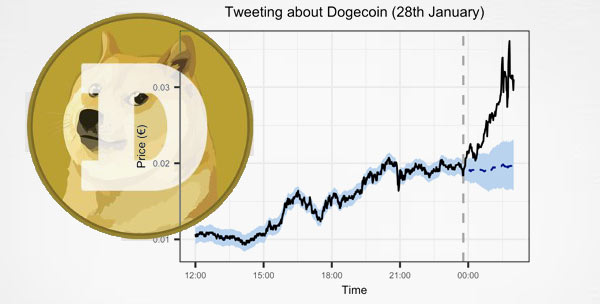
Dogecoin's Volatility: Opportunities and Risks
Traders should be aware that Dogecoin’s value is highly reactive to Musk’s statements and broader crypto narratives. For example, in late 2024 a single tweet from Musk referencing Dogecoin in a joke about the Federal Reserve triggered a 25% price spike within hours. These kinds of rapid moves still occur in 2025 and 2026 whenever social media hype increases.
Recent Example: In early 2026, Dogecoin has been trading around $0.09 USD, after falling sharply from the $0.40 peak in December 2024. This dramatic difference highlights how speculative sentiment drives the coin’s price cycles. Traders considering Dogecoin should weigh the potential for short term gains against the significant volatility and risk associated with meme based cryptocurrencies.
As Musk continues to influence online discussions around Dogecoin, its price trajectory in 2026 and beyond will likely remain tied to social media sentiment, retail trader enthusiasm, and broader cryptocurrency adoption. For many traders, Dogecoin remains less of a traditional investment and more of a high volatility asset driven by internet culture and speculation.
Elon Musk's Investment Focus

Elon Musk's primary investment focus seems to be on the companies he leads and has significant control over. While the full details of his investment portfolio are not publicly available, it's clear that a large portion of his holdings are in these companies.
It's important to note that as a private investor, Musk is not obligated to disclose all his holdings. There's a possibility he might have smaller investments in publicly traded stocks outside his own companies.
Some of Elon Musk's investment strategies might be considered risky and may not be suitable for all investors.
Elon Musk's Investment Insights (Shared Publicly)
Elon Musk has shared some investment-related advice on social media but understand these are just his opinions. Here are some key points:
Diversification
Musk has encouraged diversification through tweets, suggesting investors choose companies offering products or services they understand. Spreading investments across different sectors helps mitigate risk if one company underperforms.
Owning Assets
During periods of high inflation, Musk has advocated for owning physical assets like real estate or stocks in companies with valuable products, rather than just holding cash. He has also publicly stated his intention to hold onto his cryptocurrency investments.
Staying Calm
Musk suggests that selling an investment should only be considered if a company's products or services decline significantly. He advises investors to stay calm during market volatility and avoid panic selling.
Ignoring Negativity
Musk emphasizes the importance of not succumbing to negativity. Despite encountering criticism for his investments and futuristic ventures, he believes that focusing on negativity can hinder success. His strong investment portfolio serves as evidence for this approach.
Investing for the Greater Good
Musk has demonstrated a commitment to social good. For instance, he helped restore power to a hospital during a hurricane in Puerto Rico. His actions highlight the importance of collaborating with local authorities when investing in public welfare projects.
Elon Musk Net Worth

Elon Musk's net worth continues to attract global attention in 2026, largely because it reflects the performance of his major companies and the ongoing volatility of technology stocks. As of early 2026, Musk’s estimated net worth is roughly $220 billion to $240 billion, depending on daily market movements. While this still places him among the richest people in the world, his ranking on indexes such as the Bloomberg Billionaires Index frequently changes as the share prices of major companies rise and fall.
The value of Musk’s holdings in Tesla, SpaceX, xAI, and X (formerly Twitter) plays a direct role in determining his wealth. Tesla stock, which traded near $250 to $270 per share in 2026, remains the largest contributor to his net worth. SpaceX has also seen its valuation grow significantly, with private funding rounds in recent years valuing the company at around $180 billion. From personal experience following these markets, it is clear that even small shifts in Tesla’s share price can move Musk’s net worth by billions of dollars in a single day.
Recent developments have also influenced his financial standing. Tesla continues expanding its AI driven autonomous driving technology, while SpaceX has made further progress with Starship test launches and global satellite coverage through Starlink. At the same time, Musk’s artificial intelligence company xAI has drawn major investor attention as the race for advanced AI systems intensifies. These events have kept Musk at the center of both the technology sector and the global business conversation.
Musk’s ability to disrupt industries and push technological boundaries continues to ensure he remains one of the most influential entrepreneurs in the world. Whether it is electric vehicles, space exploration, artificial intelligence, or satellite internet, his projects consistently shape markets and keep his wealth and influence firmly in the spotlight.
Elon Musk Stock Portfolio Verdict
Elon Musk's financial achievements are undeniable. However, his focus extends beyond personal wealth accumulation. He has repeatedly stated that his primary motivation lies in improving the future through technological advancements. When all is said and done, the value he places on risk-taking, boldness, and focusing on significant issues sets an example for aspiring entrepreneurs.
Elon Musk's Elon Musk stock portfolio is unlike anything in the history of personal wealth a concentrated collection of ownership stakes in companies he founded and controls that has produced the largest individual fortune ever recorded, crossing $1.3 trillion following the SpaceX Nasdaq IPO in June 2026. Unlike traditional investors such as those explored in comparisons of Warren Buffett vs Elon Musk, who built wealth by buying stakes in other people's businesses, Musk's portfolio is almost entirely composed of companies he created himself Tesla, SpaceX, xAI, X, Neuralink, and The Boring Company a founder-led model that has redefined what a personal investment portfolio can look like. Tesla remains the most widely held of his publicly traded assets and the one most accessible to retail investors through any regulated Elon Musk trading platform or licensed stockbroker, while SpaceX now publicly traded following its record-breaking IPO has become the single largest component of his net worth, answering once and for all the question of how rich is Elon Musk with a figure that exceeds the GDP of most nations. His Elon Musk investments also extend into digital assets SpaceX holds 8,285 Bitcoin on its balance sheet as a strategic treasury reserve, and his personal influence over Elon Musk cryptocurrency markets has been among the most dramatic examples of how a single portfolio holder can move global asset prices. No discussion of his holdings is complete without examining Elon Musk Dogecoin and the market-shaking story of why Elon Musk tweeted Doge, which sent the meme coin to all-time highs and introduced millions of retail traders to crypto. His portfolio's scale becomes clearest in wealth comparisons analysis showing that Elon Musk is richer than the top 20 Hollywood actors combined barely scratches the surface, and head-to-head breakdowns of Jeff Bezos vs Elon Musk and Mark Zuckerberg vs Elon Musk confirm that no other individual portfolio comes remotely close. Beyond equities and crypto, his commentary on Elon Musk NFT and digital collectibles has also shaped sentiment in those markets, rounding out a portfolio whose influence extends far beyond its balance sheet value into the very direction of global technology and financial markets.
We have conducted extensive research and analysis on over multiple data points on Elon Musk Stock Portfolio to present you with a comprehensive guide that can help you find the most suitable Elon Musk Stock Portfolio. Below we shortlist what we think are the best Elon Musk Stock Portfolio Investment Platforms after careful consideration and evaluation. We hope this list will assist you in making an informed decision when researching Elon Musk Stock Portfolio.
Reputable Elon Musk Stock Portfolio Checklist
Selecting a reliable and reputable online Elon Musk Stock Portfolio Investment Platforms trading brokerage involves assessing their track record, regulatory status, customer support, processing times, international presence, and language capabilities. Considering these factors, you can make an informed decision and trade Elon Musk Stock Portfolio Investment Platforms more confidently.
Selecting the right online Elon Musk Stock Portfolio Investment Platforms trading brokerage requires careful consideration of several critical factors. Here are some essential points to keep in mind:
- Ensure your chosen Elon Musk Stock Portfolio Investment Platforms broker has a solid track record of at least two years in the industry.
- Verify that the Elon Musk Stock Portfolio Investment Platforms broker has a customer support team of at least 15 members responsive to queries and concerns.
- Check if the Elon Musk Stock Portfolio Investment Platforms broker operates under the regulatory framework of a jurisdiction that can hold it accountable for any misconduct or resolve disputes fairly and impartially.
- Ensure that the Elon Musk Stock Portfolio Investment Platforms broker can process deposits and withdrawals within two to three days, which is crucial when you need to access your funds quickly.
- Look for Elon Musk Stock Portfolio Investment Platforms brokers with an international presence in multiple countries, offering its clients local seminars and training programs.
- Ensure the Elon Musk Stock Portfolio Investment Platforms broker can hire staff from diverse locations worldwide who can communicate fluently in your local language.
Our team have listed brokers that match your criteria for you below. All brokerage data has been summarised into a comparison table. Scroll down.
Compare Key Features of Elon Musk Stock Portfolio Investment Platforms in Our Brokerage Comparison Table
When choosing a broker for Elon Musk Stock Portfolio Investment Platforms trading, it's essential to compare the different options available to you. Our Elon Musk Stock Portfolio Investment Platforms brokerage comparison table below allows you to compare several important features side by side, making it easier to make an informed choice.
- Minimum deposit requirement for opening an account with each Elon Musk Stock Portfolio Investment Platforms broker.
- The funding methods available for Elon Musk Stock Portfolio Investment Platforms with each broker.
- The types of instruments you can trade with each Elon Musk Stock Portfolio Investment Platforms broker, such as forex, stocks, commodities, and indices.
- The trading platforms each Elon Musk Stock Portfolio Investment Platforms broker provides, including their features, ease of use, and compatibility with your devices.
- The spread type (if applicable) for each Elon Musk Stock Portfolio Investment Platforms broker affects the cost of trading.
- The level of customer support each Elon Musk Stock Portfolio Investment Platforms broker offers, including their availability, responsiveness, and quality of service.
- Whether each Elon Musk Stock Portfolio Investment Platforms broker offers Micro, Standard, VIP, or Islamic accounts to suit your trading style and preferences.
By comparing these essential features, you can choose a Elon Musk Stock Portfolio Investment Platforms broker that best suits your needs and preferences for Elon Musk Stock Portfolio Investment Platforms. Our Elon Musk Stock Portfolio Investment Platforms broker comparison table simplifies the process, allowing you to make a more informed decision.
Top 15 Elon Musk Stock Portfolio Investment Platforms of 2026 compared
Here are the top Elon Musk Stock Portfolio Investment Platforms.
Compare Elon Musk Stock Portfolio Investment Platforms brokers for min deposits, funding, used by, benefits, account types, platforms, and support levels. When searching for a Elon Musk Stock Portfolio Investment Platforms broker, it's crucial to compare several factors to choose the right one for your Elon Musk Stock Portfolio Investment Platforms needs. Our comparison tool allows you to compare the essential features side by side.
All brokers below are Elon Musk Stock Portfolio Investment Platforms. Learn more about what they offer below.
You can scroll left and right on the comparison table below to see more Elon Musk Stock Portfolio Investment Platforms that accept Elon Musk Stock Portfolio Investment Platforms clients.
| Broker |
IC Markets

|
Roboforex

|
eToro

|
XTB
|
XM

|
Pepperstone

|
AvaTrade

|
FP Markets

|
SpreadEx

|
EasyMarkets

|
FXPro

|
|---|---|---|---|---|---|---|---|---|---|---|---|
| Rating | |||||||||||
| Regulation | International Capital Markets Pty Ltd (Australia) (ASIC) Australian Securities & Investments Commission Licence No. 335692, Seychelles Financial Services Authority (FSA) (SD018), IC Markets (EU) Ltd (CySEC) Cyprus Securities and Exchange Commission with License No. 362/18, Capital Markets Authority(CMA) Kenya IC Markets (KE) Ltd, Securities Commission of The Bahamas (SCB) IC Markets (Bahamas) Ltd | RoboForex Ltd is authorised and regulated by the Financial Services Commission (FSC) of Belize under licence No. 000138/32, under the Securities Industry Act 2021, RoboForex Ltd is an (A category) member of The Financial Commission, also RoboForex Ltd is a participant of the Financial Commission Compensation Fund | FCA (Financial Conduct Authority) eToro (UK) Ltd (FCA reference 583263), eToro (Europe) Ltd CySEC (Cyprus Securities Exchange Commission), ASIC (Australian Securities and Investments Commission) eToro AUS Capital Limited ASIC license 491139, CySec (Cyprus Securities and Exchange Commission under the license 109/10), FSAS (Financial Services Authority Seychelles) eToro (Seychelles) Ltd license SD076, eToro (ME) Limited (ADGM) Abu Dhabi (UAE) number 220073, eToro (Europe) Ltd (AMF) Autorité des marchés financiers as a digital assets provider France | FCA (Financial Conduct Authority reference 522157) XTB Limited, CySEC (Cyprus Securities and Exchange Commission reference 169/12), DFSA (Dubai Financial Services Authority XTB MENA Limited licensed 8 July 2021), FSA (Financial Services Authority Seychelles license number SD148), FSCA (Financial Sector Conduct Authority XTB Africa (Pty) Ltd licensed 10 August 2021), KNF (Komisja Nadzoru Finansowego Polish Financial Supervision Authority) | Financial Sector Conduct Authority (FSCA) (49976) XM ZA (Pty) Ltd, Financial Services Commission (FSC) (000261/27) XM Global Limited, Cyprus Securities and Exchange Commission (CySEC) (license 120/10) Trading Point of Financial Instruments Ltd, Australian Securities and Investments Commission (ASIC) (number 443670) Trading Point of Financial Instruments Pty Ltd | Financial Conduct Authority (FCA), Australian Securities and Investments Commission (ASIC), Cyprus Securities and Exchange Commission (CySEC), Federal Financial Supervisory Authority (BaFin), Dubai Financial Services Authority (DFSA), Capital Markets Authority of Kenya (CMA), Pepperstone Markets Limited is incorporated in The Bahamas (number 177174 B), Licensed by the Securities Commission of The Bahamas (SCB) number SIA-F217 | Australian Securities and Investments Commission (ASIC) Ava Capital Markets Australia Pty Ltd (406684), South African Financial Sector Conduct Authority (FSCA) Ava Capital Markets Pty Ltd (45984), Financial Services Agency (Japan FSA) Ava Trade Japan K.K. (1662), Financial Futures Association of Japan (FFAJ) Ava Trade Japan K.K. (1574), Abu Dhabi Global Markets (ADGM) / Financial Regulatory Services Authority (FRSA) Ava Trade Middle East Ltd (190018), Central Bank of Ireland (C53877) AVA Trade EU Ltd, Polish Financial Supervision Authority (KNF) AVA Trade EU Ltd (branch authorisation), British Virgin Islands Financial Services Commission (BVI) Ava Trade Markets Ltd (SIBA/L/13/1049), Israel Securities Authority (ISA) ATrade Ltd (514666577), Financial Superintendence of Colombia (SFC 0261 of 2024), Investment Industry Regulatory Organization of Canada through Friedberg Direct (IIROC) | CySEC (Cyprus Securities and Exchange Commission) (371/18), ASIC AFS (Australian Securities and Investments Commission) (286354), FSP (Financial Sector Conduct Authority in South Africa) (50926), Financial Services Authority Seychelles (FSA) (SD 130) | FCA (Financial Conduct Authority) (190941), Gambling Commission (Great Britain) (8835), licence in Ireland as remote bookmaker for fixed odds betting licence number 1016176 | Easy Forex Trading Ltd is regulated by CySEC (License 079/07). This is the only entity that onboards EU clients. easyMarkets Pty Ltd is regulated by ASIC (AFS License 246566), EF Worldwide Ltd (Seychelles) is regulated by FSA (License SD056), EF Worldwide Ltd (British Virgin Islands) is regulated by FSC (License SIBA/L/20/1135), EF Worldwide (PTY) Ltd is regulated by FSCA (License 54018) | FCA (Financial Conduct Authority) (509956), CySEC (Cyprus Securities and Exchange Commission) (078/07), FSCA (Financial Sector Conduct Authority) (45052), SCB (Securities Commission of The Bahamas) (SIA-F184), FSA (Financial Services Authority of Seychelles) (SD120) |
| Min Deposit | 200 | 10 | 50 | No minimum deposit | 5 | No minimum deposit | 100 | 100 | No minimum deposit | 25 | 100 |
| Funding |
|
|
|
|
|
|
|
|
|
|
|
| Used By | 200,000+ | 730,000+ | 40,000,000+ | 2,000,000+ | 15,000,000+ | 830,000+ | 400,000+ | 200,000+ | 60,000+ | 250,000+ | 11,200,000+ |
| Benefits |
|
|
|
|
|
|
|
|
|
|
|
| Accounts |
|
|
|
|
|
|
|
|
|
|
|
| Platforms | MT5, MT4, MetaTrader WebTrader, Mobile Apps, iOS (App Store), Android (Google Play), MetaTrader iPhone/iPad, MetaTrader Android Google Play, MetaTrader Mac, cTrader, cTrader Web, cTrader iPhone/iPad, cTrader iMac, cTrader Android Google Play, cTrader Automate, cTrader Copy Trading, TradingView, Virtual Private Server, Trading Servers, MT4 Advanced Trading Tools, IC Insights, Trading Central | MT4, MT5, R Mobile Trader, R StocksTrader, WebTrader, Mobile Apps, iOS (App Store), Android (Google Play), Windows | eToro Trading App, Mobile Apps, iOS (App Store), Android (Google Play), CopyTrading, Web | MT4, Mirror Trader, Web Trader, Tablet, Mobile Apps, iOS (App Store), Android (Google Play) | MT5, MT5 WebTrader, XM Apple App for iPhone, XM App for Android Google Play, Tablet: MT5 for iPad, MT5 for Android Google Play, XM App for iPad, XM App for iOS (App Store), Android (Google Play), Mobile Apps | MT4, MT5, cTrader,WebTrader, TradingView, Windows, Mobile Apps, iOS (App Store), Android (Google Play) | MT4, MT5, Web Trading, AvaTrade App, AvaOptions, Mac Trading, AvaSocial, Mobile Apps, iOS (App Store), Android (Google Play) | MT4, MT5, TradingView, cTrader, WebTrader, Mobile Trader, Mobile Apps, iOS (App Store), Android (Google Play) | Web, Mobile Apps, iOS (App Store), Android (Google Play), iPad App, iPhone App, TradingView | easyMarkets App, Mobile Apps, iOS (App Store), Android (Google Play), Web Platform, TradingView, MT4, MT5 | MT4, MT5, cTrader, FxPro WebTrader, FxPro Mobile Apps, iOS (App Store), Android (Google Play) |
| Support |
|
|
|
|
|
|
|
|
|
|
|
| Learn More |
Sign
Up with icmarkets |
Sign
Up with roboforex |
Sign
Up with etoro |
Sign
Up with xtb |
Sign
Up with xm |
Sign
Up with pepperstone |
Sign
Up with avatrade |
Sign
Up with fpmarkets |
Sign
Up with spreadex |
Sign
Up with easymarkets |
Sign
Up with fxpro |
| Risk Warning | Losses can exceed deposits | Losses can exceed deposits | 52% of retail investor accounts lose money when trading CFDs with this provider. | 69% - 80% of retail investor accounts lose money when trading CFDs with this provider. You should consider whether you understand how CFDs work and whether you can afford to take the high risk of losing your money. | CFDs are complex instruments and come with a high risk of losing money rapidly due to leverage. 74.48% of retail investor accounts lose money when trading CFDs with this provider. You should consider whether you understand how CFDs work and whether you can afford to take the high risk of losing your money. | 75-95 % of retail investor accounts lose money when trading CFDs | 57% of retail investor accounts lose money when trading CFDs with this provider | Losses can exceed deposits | 62% of retail CFD accounts lose money | 76% of retail investor accounts lose money when trading CFDs with this provider. | 74% of retail investor accounts lose money when trading CFDs and Spread Betting with this provider |
| Demo |
IC Markets Demo |
Roboforex Demo |
eToro Demo |
XTB Demo |
XM Demo |
Pepperstone Demo |
AvaTrade Demo |
FP Markets Demo |
SpreadEx Demo |
easyMarkets Demo |
FxPro Demo |
| Excluded Countries | US, IR, CA, NZ, JP | AU, BE, BQ, BR, CA, CW, CZ, DE, ES, EE, EU, FM, FR, FI, GW, ID, IR, JP, LR, MP, NL, PF, PL, RU, SE, SJ, SS, SL, SI, TL, TR, DO, US, IT, AT, PT, BG, HR, CY, DK, FL, GR, IE, LV, LT, MT, RO, SK, CH | ZA, ID, IR, KP, BE, CA, JP, SY, TR, IL, BY, AL, MD, MK, RS, GN, CD, SD, SA, ZW, ET, GH, TZ, LY, UG, ZM, BW, RW, TN, SO, NA, TG, SL, LR, GM, DJ, CI, PK, BN, TW, WS, NP, SG, VI, TM, TJ, UZ, LK, TT, HT, MM, BT, MH, MV, MG, MK, KZ, GD, FJ, PT, BB, BM, BS, AG, AI, AW, AX, LB, SV, PY, HN, GT, PR, NI, VG, AN, CN, BZ, DZ, MY, KH, PH, VN, EG, MN, MO, UA, JO, KR, AO, BR, HR, GL, IS, IM, JM, FM, MC, NG, SI, | US, IN, PK, BD, NG , ID, BE, AU | US, CA, IL, IR | AF, AS, AQ, AM, AZ, BY, BE, BZ, BT, BA, BI, CM, CA, CF, TD, CG, CI, ER, GF, PF, GP, GU, GN, GW, GY, HT, VA, IR, IQ, JP, KZ, LB, LR, LY, ML, MQ, YT, MZ, MM, NZ, NI, KP, PS, PR, RE, KN, LC, VC, WS, SO, GS, KR, SS, SD, SR, SY, TJ, TN, TM, TC, US, VU, VG, EH, ES, YE, ZW, ET | BE, BR, KP, NZ, TR, US, CA, SG | US, JP, NZ | US, TR | US, IL, BC, MB, QC, ON, AF, BY, BI, KH, KY, TD, KM, CG, CU, CD, GQ, ER, FJ, GN, GW, HT, IR, IQ, LA, LY, MZ, MM, NI, KP, PW, PA, RU, SO, SS, SD, SY, TT, TM, VU, VE, YE | US, CA, IR |
All Elon Musk Stock Portfolio Investment Platforms in more detail
You can compare Elon Musk Stock Portfolio Investment Platforms ratings, min deposits what the the broker offers, funding methods, platforms, spread types, customer support options, regulation and account types side by side.
We also have an indepth Top Elon Musk Stock Portfolio Investment Platforms for 2026 article further below. You can see it now by clicking here
We have listed top Elon Musk Stock Portfolio Investment Platforms below.
Elon Musk Stock Portfolio Table of Contents
- Elon Musk Stock Portfolio Explained
- 6 Factors to Consider when Choosing Elon Musk Stock Portfolio
- Are Your Elon Musk Stock Portfolio Trusted And Established?
- Are The Elon Musk Stock Portfolio World Leading?
- What are the Elon Musk Stock Portfolio Commissions and Fees?
- What are the Elon Musk Stock Portfolio Funding and Withdrawl Methods?
- Find Elon Musk Stock Portfolio with Round-the-clock support?
- Make sure the Elon Musk Stock Portfolio Offer Comprehensive Trader resources?
- Why Elon Musk Stock Portfolio needs to be regulated?
- Elon Musk Stock Portfolio FAQ
- What are the best Elon Musk Stock Portfolio Investment Platforms brokers?
- What is the best Elon Musk Stock Portfolio Investment Platform broker?
- Related Elon Musk Stock Portfolio Reviews
- Related Elon Musk Stock Portfolio Alternatives
- Related Elon Musk Stock Portfolio Comparisons
Elon Musk Stock Portfolio Explained
Trading volatile financial markets with Elon Musk Stock Portfolio can be challenging, even for experienced traders. In addition to the online educational resources available, traders should consider the platform offered by Elon Musk Stock Portfolio to ensure a successful trading experience.
Selecting Elon Musk Stock Portfolio at the forefront of innovation and considered an industry leader is crucial. Doing so will ensure you are equipped with the tools and features to navigate volatile Elon Musk Stock Portfolio markets effectively.
Reliability is key to gaining access to financial markets. Look for Elon Musk Stock Portfolio that you can rely on to provide a stable and secure trading environment, allowing you to execute trades with Elon Musk Stock Portfolio confidently.
6 Factors to Consider when Choosing Elon Musk Stock Portfolio
Follow these five rules for selecting Elon Musk Stock Portfolio that are right for you:
Are Your Elon Musk Stock Portfolio Trusted And Established?
Search for a reputable Elon Musk Stock Portfolio with a extensive proven track record for Elon Musk Stock Portfolio, enabling you to focus solely on implementing your trading strategy and navigating the markets with confidence. The top rated Elon Musk Stock Portfolio broker is IC Markets. Established in 2007, and in operation for 19 years IC Markets have a head office in Australia.
IC Markets is regulated. This means IC Markets are supervised by and is checked for conduct by International Capital Markets Pty Ltd (Australia) (ASIC) Australian Securities & Investments Commission Licence No. 335692, Seychelles Financial Services Authority (FSA) (SD018), IC Markets (EU) Ltd (CySEC) Cyprus Securities and Exchange Commission with License No. 362/18, Capital Markets Authority(CMA) Kenya IC Markets (KE) Ltd, Securities Commission of The Bahamas (SCB) IC Markets (Bahamas) Ltd regulatory bodies.
Another top rated broker is Roboforex.
Roboforex was established 2009, and in operation for 17 years Roboforex have a head office in Belize.
Roboforex is regulated. This means Roboforex are supervised by and is checked for conduct by International Capital Markets Pty Ltd (Australia) (ASIC) Australian Securities & Investments Commission Licence No. 335692, Seychelles Financial Services Authority (FSA) (SD018), IC Markets (EU) Ltd (CySEC) Cyprus Securities and Exchange Commission with License No. 362/18, Capital Markets Authority(CMA) Kenya IC Markets (KE) Ltd, Securities Commission of The Bahamas (SCB) IC Markets (Bahamas) Ltd regulatory bodies.
| Broker |
IC Markets
|
Roboforex
|
eToro
|
XTB
|
XM
|
Pepperstone
|
AvaTrade
|
FP Markets
|
|---|---|---|---|---|---|---|---|---|
| Year Established | 2007 | 2009 | 2007 | 2002 | 2009 | 2010 | 2006 | 2005 |
| Head Office | Australia | Belize | Cyprus, UK | Poland | Cyprus | Australia | Ireland | Australia |
| Regulation | International Capital Markets Pty Ltd (Australia) (ASIC) Australian Securities & Investments Commission Licence No. 335692, Seychelles Financial Services Authority (FSA) (SD018), IC Markets (EU) Ltd (CySEC) Cyprus Securities and Exchange Commission with License No. 362/18, Capital Markets Authority(CMA) Kenya IC Markets (KE) Ltd, Securities Commission of The Bahamas (SCB) IC Markets (Bahamas) Ltd | RoboForex Ltd is authorised and regulated by the Financial Services Commission (FSC) of Belize under licence No. 000138/32, under the Securities Industry Act 2021, RoboForex Ltd is an (A category) member of The Financial Commission, also RoboForex Ltd is a participant of the Financial Commission Compensation Fund | FCA (Financial Conduct Authority) eToro (UK) Ltd (FCA reference 583263), eToro (Europe) Ltd CySEC (Cyprus Securities Exchange Commission), ASIC (Australian Securities and Investments Commission) eToro AUS Capital Limited ASIC license 491139, CySec (Cyprus Securities and Exchange Commission under the license 109/10), FSAS (Financial Services Authority Seychelles) eToro (Seychelles) Ltd license SD076, eToro (ME) Limited (ADGM) Abu Dhabi (UAE) number 220073, eToro (Europe) Ltd (AMF) Autorité des marchés financiers as a digital assets provider France | FCA (Financial Conduct Authority reference 522157) XTB Limited, CySEC (Cyprus Securities and Exchange Commission reference 169/12), DFSA (Dubai Financial Services Authority XTB MENA Limited licensed 8 July 2021), FSA (Financial Services Authority Seychelles license number SD148), FSCA (Financial Sector Conduct Authority XTB Africa (Pty) Ltd licensed 10 August 2021), KNF (Komisja Nadzoru Finansowego Polish Financial Supervision Authority) | Financial Sector Conduct Authority (FSCA) (49976) XM ZA (Pty) Ltd, Financial Services Commission (FSC) (000261/27) XM Global Limited, Cyprus Securities and Exchange Commission (CySEC) (license 120/10) Trading Point of Financial Instruments Ltd, Australian Securities and Investments Commission (ASIC) (number 443670) Trading Point of Financial Instruments Pty Ltd | Financial Conduct Authority (FCA), Australian Securities and Investments Commission (ASIC), Cyprus Securities and Exchange Commission (CySEC), Federal Financial Supervisory Authority (BaFin), Dubai Financial Services Authority (DFSA), Capital Markets Authority of Kenya (CMA), Pepperstone Markets Limited is incorporated in The Bahamas (number 177174 B), Licensed by the Securities Commission of The Bahamas (SCB) number SIA-F217 | Australian Securities and Investments Commission (ASIC) Ava Capital Markets Australia Pty Ltd (406684), South African Financial Sector Conduct Authority (FSCA) Ava Capital Markets Pty Ltd (45984), Financial Services Agency (Japan FSA) Ava Trade Japan K.K. (1662), Financial Futures Association of Japan (FFAJ) Ava Trade Japan K.K. (1574), Abu Dhabi Global Markets (ADGM) / Financial Regulatory Services Authority (FRSA) Ava Trade Middle East Ltd (190018), Central Bank of Ireland (C53877) AVA Trade EU Ltd, Polish Financial Supervision Authority (KNF) AVA Trade EU Ltd (branch authorisation), British Virgin Islands Financial Services Commission (BVI) Ava Trade Markets Ltd (SIBA/L/13/1049), Israel Securities Authority (ISA) ATrade Ltd (514666577), Financial Superintendence of Colombia (SFC 0261 of 2024), Investment Industry Regulatory Organization of Canada through Friedberg Direct (IIROC) | CySEC (Cyprus Securities and Exchange Commission) (371/18), ASIC AFS (Australian Securities and Investments Commission) (286354), FSP (Financial Sector Conduct Authority in South Africa) (50926), Financial Services Authority Seychelles (FSA) (SD 130) |
| Used By | 200,000+ | 730,000+ | 40,000,000+ | 2,000,000+ | 15,000,000+ | 830,000+ | 400,000+ | 200,000+ |
| Negative balance protection | Yes | Yes | Yes | Yes | Yes | Yes | Yes | Yes |
| Guaranteed Stop Loss | No | No | No | No | No | Yes | No | No |
| Learn More | Visit IC Markets | Visit Roboforex | Visit eToro | Visit XTB | Visit XM | Visit Pepperstone | Visit AvaTrade | Visit FP Markets |
| Risk Warning | Losses can exceed deposits | Losses can exceed deposits | 52% of retail investor accounts lose money when trading CFDs with this provider. | 69% - 80% of retail investor accounts lose money when trading CFDs with this provider. You should consider whether you understand how CFDs work and whether you can afford to take the high risk of losing your money. | CFDs are complex instruments and come with a high risk of losing money rapidly due to leverage. 74.48% of retail investor accounts lose money when trading CFDs with this provider. You should consider whether you understand how CFDs work and whether you can afford to take the high risk of losing your money. | 75-95 % of retail investor accounts lose money when trading CFDs | 57% of retail investor accounts lose money when trading CFDs with this provider | Losses can exceed deposits |
Are The Elon Musk Stock Portfolio World Leading?
Opt for Elon Musk Stock Portfolio that set themselves apart as an industry leader by actively embracing innovation. Take IC Markets as an example, which is renowned for Segregates clients funds and boasts an extensive array of 2850 tradable instruments. Moreover, IC Markets caters to the needs of its clients with both an online trading platform and a mobile application, making it incredibly convenient to access the markets from anywhere, at any time.
In addition, the IC Markets platform enables access to a variety of financial markets worldwide. IC Markets is a world-leader when it comes to innovation and they are always looking at ways to improve and to maintain their competitive advantage.
Another good choice when looking for Elon Musk Stock Portfolio is Roboforex. Roboforex Segregates clients funds and offers over 12000 instruments.
| Broker |
IC Markets
|
Roboforex
|
eToro
|
XTB
|
XM
|
Pepperstone
|
AvaTrade
|
FP Markets
|
|---|---|---|---|---|---|---|---|---|
| Instruments Available | 2850 | 12000 | 7000 | 10900 | 1464 | 2700 | 1250 | 10000 |
| Platforms | MT5, MT4, MetaTrader WebTrader, Mobile Apps, iOS (App Store), Android (Google Play), MetaTrader iPhone/iPad, MetaTrader Android Google Play, MetaTrader Mac, cTrader, cTrader Web, cTrader iPhone/iPad, cTrader iMac, cTrader Android Google Play, cTrader Automate, cTrader Copy Trading, TradingView, Virtual Private Server, Trading Servers, MT4 Advanced Trading Tools, IC Insights, Trading Central | MT4, MT5, R Mobile Trader, R StocksTrader, WebTrader, Mobile Apps, iOS (App Store), Android (Google Play), Windows | eToro Trading App, Mobile Apps, iOS (App Store), Android (Google Play), CopyTrading, Web | MT4, Mirror Trader, Web Trader, Tablet, Mobile Apps, iOS (App Store), Android (Google Play) | MT5, MT5 WebTrader, XM Apple App for iPhone, XM App for Android Google Play, Tablet: MT5 for iPad, MT5 for Android Google Play, XM App for iPad, XM App for iOS (App Store), Android (Google Play), Mobile Apps | MT4, MT5, cTrader,WebTrader, TradingView, Windows, Mobile Apps, iOS (App Store), Android (Google Play) | MT4, MT5, Web Trading, AvaTrade App, AvaOptions, Mac Trading, AvaSocial, Mobile Apps, iOS (App Store), Android (Google Play) | MT4, MT5, TradingView, cTrader, WebTrader, Mobile Trader, Mobile Apps, iOS (App Store), Android (Google Play) |
| Excluded Countries | US, IR, CA, NZ, JP | AU, BE, BQ, BR, CA, CW, CZ, DE, ES, EE, EU, FM, FR, FI, GW, ID, IR, JP, LR, MP, NL, PF, PL, RU, SE, SJ, SS, SL, SI, TL, TR, DO, US, IT, AT, PT, BG, HR, CY, DK, FL, GR, IE, LV, LT, MT, RO, SK, CH | ZA, ID, IR, KP, BE, CA, JP, SY, TR, IL, BY, AL, MD, MK, RS, GN, CD, SD, SA, ZW, ET, GH, TZ, LY, UG, ZM, BW, RW, TN, SO, NA, TG, SL, LR, GM, DJ, CI, PK, BN, TW, WS, NP, SG, VI, TM, TJ, UZ, LK, TT, HT, MM, BT, MH, MV, MG, MK, KZ, GD, FJ, PT, BB, BM, BS, AG, AI, AW, AX, LB, SV, PY, HN, GT, PR, NI, VG, AN, CN, BZ, DZ, MY, KH, PH, VN, EG, MN, MO, UA, JO, KR, AO, BR, HR, GL, IS, IM, JM, FM, MC, NG, SI, | US, AU, CA, JP, KR, KP, SG, MU, IL, TR, IN, PK, BA, ET, UG, CU, SY, BD, NG, ID, BE, LY, MO, KE, YE, VU, GY, CD, CG, AF, LA, MZ, IQ, IR | US, CA, IL, IR | AF, AS, AQ, AM, AZ, BY, BE, BZ, BT, BA, BI, CM, CA, CF, TD, CG, CI, ER, GF, PF, GP, GU, GN, GW, GY, HT, VA, IR, IQ, JP, KZ, LB, LR, LY, ML, MQ, YT, MZ, MM, NZ, NI, KP, PS, PR, RE, KN, LC, VC, WS, SO, GS, KR, SS, SD, SR, SY, TJ, TN, TM, TC, US, VU, VG, EH, ES, YE, ZW, ET | BE, BR, KP, NZ, TR, US, CA, SG | US, JP, NZ |
| Forex pairs offered | 65 | 40 | 65 | 69 | 55 | 93 | 53 | 70 |
| Major forex pairs | Yes | Yes | Yes | Yes | Yes | Yes | Yes | Yes |
| Minor forex pairs | Yes | Yes | Yes | Yes | Yes | Yes | Yes | Yes |
| Exotic forex pairs | Yes | Yes | Yes | Yes | Yes | Yes | Yes | Yes |
| Cryptocurrencies (availability subject to regulation) | Yes | Yes | Yes | No | No | Yes | Yes | Yes |
| Commodities Offered | 28 | 100 | 67 | 27 | 8 | 40 | 19 | 29 |
| Metals | Yes | Yes | Yes | Yes | Yes | Yes | Yes | Yes |
| Energies | Yes | No | Yes | Yes | Yes | Yes | Yes | Yes |
| Agricultural | Yes | No | Yes | Yes | No | Yes | Yes | Yes |
| Stocks Offered | 2100 | 8484 | 7246 | 6617 | 1350 | 1100 | 647 | 10000 |
| UK Shares | Yes | Yes | Yes | Yes | Yes | Yes | Yes | Yes |
| US Shares | Yes | Yes | Yes | Yes | Yes | Yes | Yes | Yes |
| German Shares | Yes | Yes | Yes | Yes | Yes | Yes | Yes | Yes |
| Japanese Shares | Yes | Yes | Yes | Yes | Yes | Yes | Yes | Yes |
What are the Elon Musk Stock Portfolio Commissions and Fees?
Ensure that your broker is transparent with fees and those dues are competitive.
The best rated Elon Musk Stock Portfolio broker IC Markets offers competitive offers for Forex, CFDs, Spread Betting, Share dealing, Cryptocurrencies. IC Markets minimum deposit is 200.
Another top rated Elon Musk Stock Portfolio broker Roboforex offers Forex, CFDs. Roboforex minimum deposit is 10. Please note that any cryptocurrency availability with any broker is subject to regulation.
| Broker |
IC Markets
|
Roboforex
|
eToro
|
XTB
|
XM
|
Pepperstone
|
AvaTrade
|
FP Markets
|
|---|---|---|---|---|---|---|---|---|
| Min Deposit | 200 | 10 | 50 | 0 | 5 | 0 | 100 | 100 |
| Withdrawl Fees | No | No | Yes | Yes | No | No | No | No |
| Inactivity Fees | No | No | Yes | Yes | Yes | No | Yes | No |
| Deposit Fees | No | No | No | No | No | No | No | No |
| CFD Commission Fees | Yes | No | Yes | Yes | No | Yes | No | Yes |
What are the Elon Musk Stock Portfolio Funding and Withdrawal Methods?
Efficient and hassle-free funding and withdrawal facilities can significantly improve your overall trading experience when dealing with Elon Musk Stock Portfolio. It streamlines the trading process and helps you focus on making informed decisions rather than worrying about deposit and withdrawal matters with Elon Musk Stock Portfolio.
| Broker |
IC Markets
|
Roboforex
|
eToro
|
XTB
|
XM
|
Pepperstone
|
AvaTrade
|
FP Markets
|
|---|---|---|---|---|---|---|---|---|
| Bank transfer | Yes | Yes | Yes | Yes | Yes | Yes | Yes | Yes |
| Credit Cards | Yes | Yes | Yes | Yes | Yes | Yes | Yes | Yes |
| Paypal | Yes | No | Yes | Yes | No | Yes | Yes | Yes |
| Skrill | Yes | No | Yes | Yes | No | Yes | No | Yes |
| Payoneer | No | Yes | No | Yes | No | Yes | Yes | No |
| Neteller | Yes | Yes | Yes | Yes | Yes | Yes | Yes | Yes |
Find Elon Musk Stock Portfolio with Round-the-clock support?
Effective customer service is an essential factor to consider when dealing with Elon Musk Stock Portfolio.
Elon Musk Stock Portfolio customer service entails various support services to aid customers in making the most cost-effective and appropriate use of the brokers' services.
The customer support options offered by Elon Musk Stock Portfolio can include phone answering services, live chat support, and email customer service support.
IC Markets support a wide range of languages including English, Japanese, Chinese, Polish, Afrikans, Danish, Dutch, German and more
Roboforex support a wide range of languages including English, Chinese Simplified, Chinese Traditional, Indonesian, Malaysian, Portuguese, Spanish, Italian, Polish, Arabic, Thai, Russian, and Ukrainian
IC Markets and Roboforex offer support where clients are able to call or contact the helpdesk via email or a chat service.
| Broker |
IC Markets
|
Roboforex
|
eToro
|
XTB
|
XM
|
Pepperstone
|
AvaTrade
|
FP Markets
|
|---|---|---|---|---|---|---|---|---|
| Support |
|
|
|
|
|
|
|
|
| Languages | English, Japanese, Chinese, Polish, Afrikans, Danish, Dutch, German and more | English, Chinese Simplified, Chinese Traditional, Indonesian, Malaysian, Portuguese, Spanish, Italian, Polish, Arabic, Thai, Russian, and Ukrainian | English, German, Spanish, French, Italian | English, Spanish, Czech, Chinese, German, French, Italian, Polish, Portuguese, Romanian, Slovenian, and Turkish | Arabic, Chinese, English, French, German, Greek, Hindi, Hungarian, Indonesian, Italian, Japanese, Korean, Malay, Polish, Portuguese, Russian, Spanish, Swedish, Thai, and Turkish | English, Spanish, Portuguese, Thai, Russian, Italian, French, German, Polish, Chinese, Vietnamese, and Arabic | Arabic, Simplified Chinese, Traditional Chinese, Dutch, English, Finnish, French, German, Hungarian, Italian, Indonesian, Japanese, Mongolian, Polish, Portuguese, Russian, Spanish, Swedish, Thai, Malay, Korean and Turkish | English, Arabic, Indonesian, Italian, Spanish, French, Russian, Chinese, Japanese, German, Portuguese, Thai, French, Malay, Greek, Vietnamese, Romanian, Turkish, Slovenian, Dutch, Polish, Finnish, Norwegian, Swedish, Serbian, Lithuanian, Hungarian, Galician, Estonian, Danish, Czech, Croatian, Bulgarian, Basque |
| Learn More | Visit IC Markets | Visit Roboforex | Visit eToro | Visit XTB | Visit XM | Visit Pepperstone | Visit AvaTrade | Visit FP Markets |
| Risk Warning | Losses can exceed deposits | Losses can exceed deposits | 52% of retail investor accounts lose money when trading CFDs with this provider. | 69% - 80% of retail investor accounts lose money when trading CFDs with this provider. You should consider whether you understand how CFDs work and whether you can afford to take the high risk of losing your money. | CFDs are complex instruments and come with a high risk of losing money rapidly due to leverage. 74.48% of retail investor accounts lose money when trading CFDs with this provider. You should consider whether you understand how CFDs work and whether you can afford to take the high risk of losing your money. | 75-95 % of retail investor accounts lose money when trading CFDs | 57% of retail investor accounts lose money when trading CFDs with this provider | Losses can exceed deposits |
Make sure the Elon Musk Stock Portfolio Offer Comprehensive Trader resources?
It's important to ensure your Elon Musk Stock Portfolio provide complimentary resources such as analysis, education, and risk management tools. IC Markets and Roboforex collaborate with top analysts to bring the most up-to-date news and insights to traders.
Sound risk and money management are vital to financial market navigation with Elon Musk Stock Portfolio. However, selecting the best broker to access the markets is a critical step that traders should not overlook as they embark on trading live financial markets with Elon Musk Stock Portfolio.
Why Elon Musk Stock Portfolio needs to be regulated?
Regulated Elon Musk Stock Portfolio lowers your risk of loss of deposited trading funds.
Lowering your risk is one of the benefits of working with a properly regulated Elon Musk Stock Portfolio.
Consumers are protected by Elon Musk Stock Portfolio regulation, critical to preventing inadequate services and potential financial harm.
Regulation of Elon Musk Stock Portfolio is necessary to prevent fraud. The Elon Musk Stock Portfolio working capital and client-funded accounts must be kept separate to avoid conducting business with client funds. Any fraudulent behaviour with Elon Musk Stock Portfolio is monitored by financial regulators in the jurisdictions brokers are allowed to operate.
Elon Musk Stock Portfolio List
Funding methods
Bank transfer Credit Card PaypalPlatforms
MT5, MT4, MetaTrader WebTrader, Mobile Apps, iOS (App Store), Android (Google Play), MetaTrader iPhone/iPad, MetaTrader Android Google Play, MetaTrader Mac, cTrader, cTrader Web, cTrader iPhone/iPad, cTrader iMac, cTrader Android Google Play, cTrader Automate, cTrader Copy Trading, TradingView, Virtual Private Server, Trading Servers, MT4 Advanced Trading Tools, IC Insights, Trading CentralCustomer support
Live chat Phone support Email supportAccount Types
Micro account Standard account ECN accountIslamic account VIP account
Funding methods
Bank transfer Credit Card PaypalPlatforms
MT4, MT5, R Mobile Trader, R StocksTrader, WebTrader, Mobile Apps, iOS (App Store), Android (Google Play), WindowsCustomer support
Live chat Phone support Email supportAccount Types
Micro account Standard account ECN accountIslamic account VIP account
eToro is a multi-asset platform which offers both investing in stocks and cryptoassets, as well as trading CFDs.
Please note that CFDs are complex instruments and come with a high risk of losing money rapidly due to leverage. 52% of retail investor accounts lose money when trading CFDs with this provider. You should consider whether you understand how CFDs work, and whether you can afford to take the high risk of losing your money.
This communication is intended for information and educational purposes only and should not be considered investment advice or investment recommendation. Past performance is not an indication of future results.
Copy Trading does not amount to investment advice. The value of your investments may go up or down. Your capital is at risk.
Crypto investments are risky and may not suit retail investors; you could lose your entire investment. Understand the risks here.
Don't invest unless you're prepared to lose all the money you invest. This is a high-risk investment, and you should not expect to be protected if something goes wrong. Take 2 mins to learn more.
eToro USA LLC does not offer CFDs and makes no representation and assumes no liability as to the accuracy or completeness of the content of this publication, which has been prepared by our partner utilizing publicly available non-entity specific information about eToro.
Funding methods
Bank transfer Credit Card PaypalPlatforms
eToro Trading App, Mobile Apps, iOS (App Store), Android (Google Play), CopyTrading, WebCustomer support
Live chat Phone support Email supportAccount Types
Micro account Standard account ECN accountIslamic account VIP account
Funding methods
Bank transfer Credit Card PaypalPlatforms
MT4, Mirror Trader, Web Trader, Tablet, Mobile Apps, iOS (App Store), Android (Google Play)Customer support
Live chat Phone support Email supportAccount Types
Micro account Standard account ECN accountIslamic account VIP account
Funding methods
Bank transfer Credit Card PaypalPlatforms
MT5, MT5 WebTrader, XM Apple App for iPhone, XM App for Android Google Play, Tablet: MT5 for iPad, MT5 for Android Google Play, XM App for iPad, XM App for iOS (App Store), Android (Google Play), Mobile AppsCustomer support
Live chat Phone support Email supportAccount Types
Micro account Standard account ECN accountIslamic account XM Swap-Free account (XM Ultra Low Account) VIP account
Funding methods
Bank transfer Credit Card PaypalPlatforms
MT4, MT5, cTrader,WebTrader, TradingView, Windows, Mobile Apps, iOS (App Store), Android (Google Play)Customer support
Live chat Phone support Email supportAccount Types
Micro account Standard account ECN accountIslamic account Pro Account VIP account
Funding methods
Bank transfer Credit Card PaypalPlatforms
MT4, MT5, Web Trading, AvaTrade App, AvaOptions, Mac Trading, AvaSocial, Mobile Apps, iOS (App Store), Android (Google Play)Customer support
Live chat Phone support Email supportAccount Types
Micro account Standard account ECN accountIslamic account VIP account
Funding methods
Bank transfer Credit Card PaypalPlatforms
MT4, MT5, TradingView, cTrader, WebTrader, Mobile Trader, Mobile Apps, iOS (App Store), Android (Google Play)Customer support
Live chat Phone support Email supportAccount Types
Micro account Standard account ECN accountIslamic account VIP account
Funding methods
Bank transfer Credit Card PaypalPlatforms
Web, Mobile Apps, iOS (App Store), Android (Google Play), iPad App, iPhone App, TradingViewCustomer support
Live chat Phone support Email supportAccount Types
Micro account Standard account ECN accountIslamic account VIP account
Funding methods
Bank transfer Credit Card PaypalPlatforms
easyMarkets App, Mobile Apps, iOS (App Store), Android (Google Play), Web Platform, TradingView, MT4, MT5Customer support
Live chat Phone support Email supportAccount Types
Micro account Standard account ECN accountIslamic account VIP account
Funding methods
Bank transfer Credit Card PaypalPlatforms
MT4, MT5, cTrader, FxPro WebTrader, FxPro Mobile Apps, iOS (App Store), Android (Google Play)Customer support
Live chat Phone support Email supportAccount Types
Micro account Standard account ECN accountIslamic account VIP account

Learn more
Losses can exceed deposits

Losses can exceed deposits