Top Pakistan Brokers for 2026
We found 11 online brokers that are appropriate for Trading Pakistan.
Best Pakistan Brokers Guide
Analysis by Andrew Blumer, Updated Last updated – September 08, 2026
Pakistan Financial Markets
Pakistan Brokers

When selecting a broker in Pakistan, it's crucial to focus on regulation first. From my own experience, the biggest sense of safety came when I chose brokers regulated by the Securities and Exchange Commission of Pakistan (SECP). I once opened an account with a foreign broker that looked professional but had no local registration, and resolving a simple withdrawal delay became stressful because there was no local authority to fall back on. After switching to an SECP registered broker, the process felt more transparent and disputes were handled more seriously. It's worth noting, though, that SECP currently licenses local brokers for PSX stocks and for the Pakistan Mercantile Exchange (PMEX) commodities and futures market, it does not issue local licenses for forex or CFD trading. So for those products, the realistic safety check is confirming the broker is regulated abroad by a tier-1 authority like the FCA, ASIC, or CySEC, since SECP and the State Bank of Pakistan mainly oversee fund flows and issue warnings against unlicensed platforms rather than licensing the brokers themselves. While UK or European regulation does signal credibility, combining that with awareness of how money moves under SBP rules makes a real difference when you are trading from within Pakistan.
Asset availability is another area where personal experience matters. I initially started with a broker that only offered local stocks on the Pakistan Stock Exchange (PSX), which was fine for learning but quickly felt limiting. Later, moving to a broker that offered foreign stocks, ETFs, commodities, and even cryptocurrencies allowed me to diversify my risk instead of depending solely on the local market. On that note, SECP gave in principle approval in April 2026 to a phased ETF reform roadmap that will let brokers, not just asset management companies, launch and manage ETFs directly, worth watching if you trade ETFs through a PSX linked broker, since it should widen the product lineup over time. Trading in Pakistani Rupees also proved important because with one broker that only supported USD accounts, I constantly lost small amounts to conversion fees that added up over time, especially with the rupee trading in the 277 to 280 range against the dollar through mid 2026.
Funding and withdrawals can either make trading smooth or frustrating. In my case, brokers that supported bank transfers through Meezan Bank, HBL, or UBL were far more convenient because transfers reflected faster and felt more reliable. I also tested brokers that supported EasyPaisa and JazzCash, which made smaller deposits incredibly simple, especially when experimenting with new strategies. Customer support mattered more than I expected. Having access to live chat in both Urdu and English helped me explain issues clearly, especially during high volatility days when quick answers were critical. Trading tools were the final deciding factor for me. Brokers that offered real time market data, fast order execution, and basic automation tools allowed me to trade confidently, while platforms without these features made me feel one step behind the market.
From my experience, finding the right broker in Pakistan means checking regulation first, then confirming what you can trade, whether it's US stocks, European stocks, CFDs, crypto, commodities, ETFs, or futures. I always test funding and withdrawal options early to avoid surprises later. Customer support, especially live chat, has saved me more than once, and trading tools like automation and real time data have directly impacted my performance. Taking the time to evaluate these factors upfront has helped me avoid costly mistakes and trade with far more confidence.
One last thing worth checking regularly: SECP periodically updates its public list of unlicensed entities and investor warnings, and the State Bank has tightened scrutiny of bank transfers tied to known offshore forex and crypto platforms. Before funding any account, it's worth a quick check of SECP's official broker register and warnings page so you're not caught off guard if a platform's status changes.

Trading Pakistan Financial markets

Pakistan's financial market is a combination of short-term lending (money market) and long-term investment opportunities (capital market).
The money market comprises the inter-bank call money, certificate of deposit (CD), and repo markets. These markets deal with short-term loans and borrowing typically used for managing daily cash flow needs.
The capital market, on the other hand, focuses on long-term investments. This includes the stock market where companies raise capital by selling shares. Pakistan's two main stock exchanges are the Karachi Stock Exchange (KSE) and the Lahore Stock Exchange (LSE). In addition, there's a futures market for foreign exchange as well as the Commodity Exchange of Pakistan (COMEX) that deals in futures contracts for agricultural products like cotton, sugar, wheat, and rice. Government securities are also traded on both KSE and LSE. The largest share of trading activity takes place on KSE.
Best Brokers Available In Pakistan
Trading in financial instruments involves a high degree of risk and may not be suitable for all investors in Pakistand. The past performance is not a guarantee of future results. Before deciding to trade, you should carefully consider your investment objectives, risk tolerance, and experience.
Choosing a well-regulated broker is essential for Pakistani traders to ensure the safety of your funds. The brokers mentioned in this list are overseen by reputable regulatory bodies like ASIC, CySEC, and FCA. This helps to protect Pakistani traders by ensuring brokers adhere to strict financial standards.
IC Markets
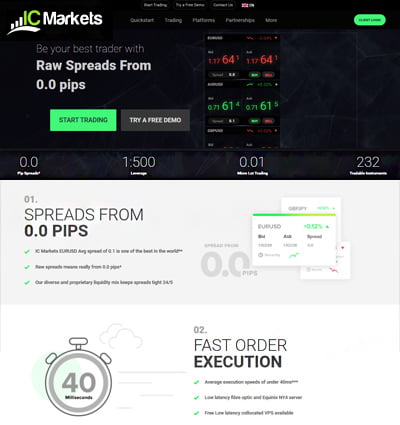
IC Markets stands out for traders in Pakistan with its ultra-low latency and rapid execution speeds, averaging just 40ms. This broker offers advanced trading platforms like MT4, MT5, cTrader, and TradingView, which are ideal for technical traders looking for precise entry and exit points. The availability of tight spreads across a wide array of assets, including Forex and cryptocurrencies, makes IC Markets especially attractive for scalping and high-frequency trading. Its international regulatory oversight also assures Pakistani traders of its reliability and security.
RoboForex
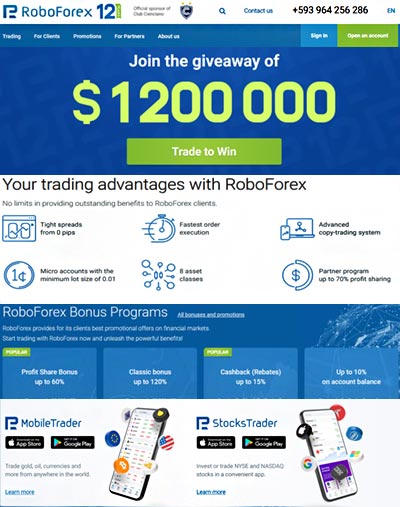
RoboForex offers high leverage and ultra-competitive spreads, starting virtually at zero, which is particularly beneficial for traders in Pakistan aiming to maximize their trading volume and profitability. Its platforms, including MT4 and MT5, support extensive customization and automated trading strategies, critical for traders who engage in algorithmic trading. The operational flexibility and regulatory backing by CySEC ensure that Pakistani traders have a robust and adaptable trading environment.
XM
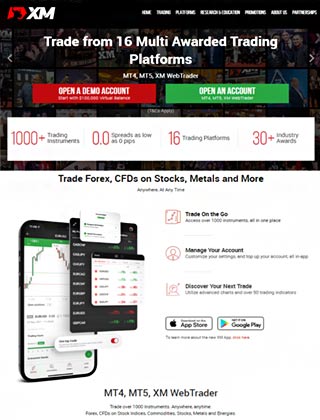
XM is particularly advantageous for traders in Pakistan due to its strong regulatory framework under ASIC and CySEC, and its focus on customer support. Offering a wide range of trading instruments and account types, XM caters to the diverse needs of Pakistani traders, ensuring that they have the necessary tools and support to navigate the financial markets effectively.
Pepperstone

Pepperstone is ideal for Pakistani traders looking for a diverse range of trading options and an unwavering commitment to customer satisfaction. Regulated by both the FCA and ASIC, it provides a secure and reliable trading environment, with advanced trading tools that cater to both conservative and aggressive trading styles.
AvaTrade
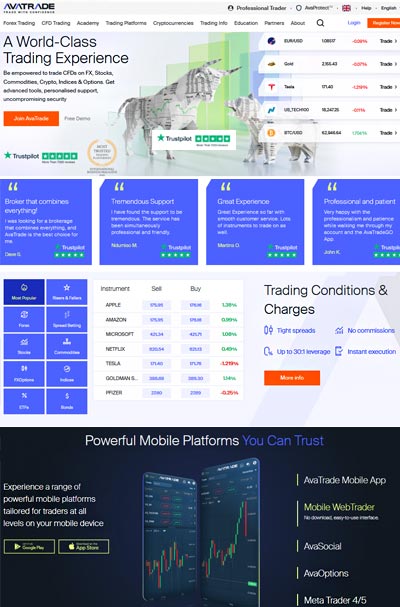
AvaTrade is a strong option for Pakistani traders looking for versatility in their trading operations. With innovative platforms like AvaTradeGo and AvaSocial, and its commission-free structure, AvaTrade supports a community-driven trading experience, making it an appealing choice for those looking to trade CFDs with a focus on cost efficiency.
FP Markets
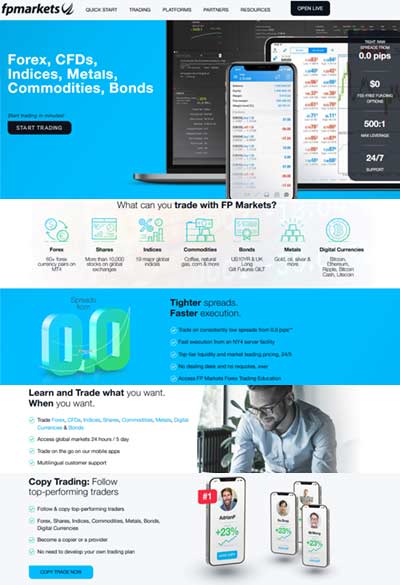
FP Markets is a top choice for Pakistani traders who prioritize technological efficiency and cost-effective trading. Offering MetaTrader 4 and 5 platforms with enhanced features, FP Markets provides an optimal trading environment with competitive spreads, crucial for effectively managing trading costs and strategies.
How Big Are Financial Markets In Pakistan?


The market capitalization data is from 01/05/2024 and sourced from Bloomberg so is subject to change. Financial data can fluctuate.
The total market capitalization of the Pakistan Stock Exchange (PSX) is estimated at around 20 trillion Pakistani Rupees (Rs. 20,000 billion) as of 2026. This reflects fluctuations in equity valuations driven by currency movements, inflation, and changes in investor participation, while still highlighting the PSX as a key pillar of Pakistan’s capital markets.
The debt securities market in Pakistan is significantly larger than the equity market. By 2026, the outstanding value of government and corporate debt securities is estimated to exceed 80 trillion Pakistani Rupees (Rs. 80,000 billion). This includes treasury bills, Pakistan Investment Bonds, Sukuk, and other fixed income instruments, underscoring the dominant role of debt financing in Pakistan’s financial system.
Stock exchange rules and regulations spell out some basic principles that have to be followed by all equity investors and listed companies undertaking corporate actions (e.g., rights issues, bonus shares etc.).
Who Regulates The Financial Markets In Pakistan?

The Securities and Exchange Commission of Pakistan (SECP) is the regulator for the securities market. The stock markets and financial market regulators are:
The Securities and Exchange Commission of Pakistan (SECP) is the regulator for the securities market. It oversees public companies, government entities, mutual funds, and all investors in stocks or bonds. Additionally, the SECP provides online access to documents on listed companies’ corporate actions such as Shareholders Meetings, Annual General Meetings etc.
Pakistan's Financial Markets Overview

Pakistan's financial market is composed of both short term lending (money market) and long term investment opportunities (capital market).
Pakistan's Money Market and Liquidity Management
The money market includes interbank call money, certificates of deposit (CDs), and repurchase agreements (repo markets). These markets help institutions manage their short term liquidity needs. For example, the State Bank of Pakistan (SBP) conducts Open Market Operations (OMOs) to regulate liquidity, ensuring stability in the financial sector.
Pakistan's Capital Market and Stock Exchanges
The capital market focuses on long term investments and includes stock exchanges where companies raise funds by selling shares. The main stock exchange in Pakistan is the Pakistan Stock Exchange (PSX), which was formed from the merger of the Karachi Stock Exchange (KSE), Lahore Stock Exchange (LSE), and Islamabad Stock Exchange (ISE). Additionally, Pakistan has a futures market for foreign exchange, and the Commodity Exchange of Pakistan (COMEX) facilitates futures contracts for agricultural products such as cotton, sugar, wheat, and rice. These financial instruments help businesses hedge against market volatility and provide investors with opportunities for diversification.
Recent 2026 Events Affecting Pakistan’s Financial Markets and Stability
In 2026, Pakistan’s financial markets have been heavily influenced by macroeconomic policy decisions and international financial support. One of the most important factors has been the continuation of Pakistan’s engagement with the International Monetary Fund. Ongoing IMF programmes and reviews have played a stabilising role by enforcing fiscal discipline, supporting monetary tightening, and reassuring both local and foreign investors that Pakistan remains committed to structural reforms. Market sentiment in early 2026 has often moved in response to news around IMF compliance, loan disbursements, and reform timelines.
Fiscal policy discussions ahead of the 2026 to 27 federal budget have also affected market stability. The government’s efforts to balance deficit reduction with economic growth have created periods of uncertainty, particularly around taxation measures, energy pricing reforms, and subsidy rationalisation. Equity markets have reacted cautiously to these debates, especially in sectors sensitive to interest rates and government policy such as banking, cement, and energy.
Foreign exchange reserves and currency stability have remained a central concern throughout 2026. Although reserves have shown signs of gradual improvement compared to crisis levels seen in earlier years, they remain relatively tight. This has kept pressure on the Pakistani Rupee and influenced capital flows, import costs, and inflation expectations. Currency movements have directly impacted investor confidence, particularly for foreign portfolio investors active in Pakistan’s equity and debt markets.
Pakistan’s international positioning has also mattered for financial stability. In 2026, the government increased its engagement with global investors and institutions, including participation in international economic forums, to improve Pakistan’s investment image. At the same time, continued scrutiny around financial compliance and anti money laundering standards has remained a risk factor, as any deterioration in this area could affect banking relationships and cross border capital access.
Global economic conditions have further shaped Pakistan’s financial markets. Shifts in interest rate expectations in major economies, geopolitical tensions, and volatility in global commodity prices have influenced capital flows into emerging markets like Pakistan. For local markets, this translated into periodic volatility in equities and government bonds, particularly during episodes of global risk aversion.
Regulatory Compliance in Pakistan's Stock Market
Stock exchange regulations require all equity investors and listed companies to adhere to fundamental principles, particularly in corporate actions such as rights issues and bonus shares. These regulations help protect investors from fraudulent practices and ensure transparency in financial dealings.
Is Forex legal In Pakistan?
Forex trading is legal in Pakistan. It is governed by the Securities and Exchange Commission of Pakistan. Forex trading also falls under the purview of the State Bank of Pakistan. This was made possible with a Forex policy that was outlined in 2000 which came into effect in 2001.
What Is Forex Trading in Pakistan?
Trading Forex in Pakistan is the trading of one currency against another; USD/CAD, AUD/JPY and so on. These currencies are traded against each other in pairs because their price action tends to move at the same time and when you can forecast or predict which way they will move based on an economic indicator or news release, called fundamental analysis.
Is Trading Forex Halal?

A question often asked by Muslims who have knowledge of Islam but are not familiar with the world of finance is: “Is trading foreign exchange halal?” The short answer would be yes; there aren’t any major problems from an Islamic perspective regarding forex trading as long as all transactions are done through brokers who are reliable merchants and use reputable currency exchanges. That being said, some considerations need to be made before deciding whether forex trading could be right for you financially and spiritually.
Forex trading is generally considered halal (permissible) in Islam, provided it follows ethical guidelines. Traders must avoid interest (riba) and excessive speculation (gharar). Consulting a qualified Islamic scholar can help ensure compliance with Sharia principles, particularly for those who seek religiously compliant investment opportunities.
Islamic trading accounts cater to traders who follow Sharia law by avoiding interest based transactions. These accounts ensure compliance while providing investment opportunities in line with Islamic finance principles.
While forex trading itself isn't forbidden (haram) in Islam, some practices associated with it, like interest (riba) and excessive speculation (gharar), might be. Consulting with a qualified Islamic scholar can help you understand how to engage in halal forex trading practices.
What Are Islamic Trading Accounts?
Islamic trading accounts cater to investors seeking to comply with Islamic finance principles. These accounts offer Sharia-compliant financial instruments, typically avoiding practices like interest (riba). They provide a variety of investment products to suit different risk tolerances and goals.
While these products may be based on conventional financial tools such as stocks, bonds, mutual funds and currencies, they will conform to principles laid down by sharia law. Is this something new? No, there has always been an Islamic finance industry in Muslim-majority countries where most participants have been Muslim individuals or organizations.
The difference now is that there is an increasing demand for halal or haram-free financial instruments from non-Muslims. This demand has created a market for Islamic investment products in the West where most players are non-Muslim firms seeking a new niche in the global financial market.

Can You Trade CFDs In Pakistan?

Regulatory Concerns with CFDs in Pakistan
Trading Contracts for Difference (CFDs) is a high risk activity. While CFD trading itself isn't illegal, the State Bank of Pakistan (SBP) warns against using offshore platforms, citing concerns over unauthorized foreign currency outflows. Investors considering CFDs should be aware of these risks and ensure they trade on regulated platforms to protect their capital.
The legality of trading CFDs in Pakistan is a complex issue. While the act of trading itself might not be illegal, the State Bank of Pakistan (SBP) has warned against using offshore platforms for CFD and other marginal product trading. This is because the SBP considers such activity unauthorized outflow of foreign currency.
CFD trading platforms can offer a wide range of trading assets and advanced trading platforms as well as leverage up to 1:500. This makes them a great option for investors who want to diversify their portfolios with different kinds of assets.
However, it is important to know that trading CFDs is considered very high risk. You should always consider your risk appetite before starting trading CFDs in Pakistani.
Can I Trade Cryptocurrency In Pakistan?

Legal Uncertainty Surrounding Cryptocurrency in Pakistan
As of 2026, cryptocurrency is not illegal in Pakistan, but it is also not recognised as legal tender. Pakistan does not have a single comprehensive crypto law that fully legalises digital currencies like bitcoin. Instead, crypto exists in a regulated grey area where ownership and trading by individuals are not criminal offences.
The key local legal position comes from the State Bank of Pakistan (SBP) and the federal government. The SBP does not regulate cryptocurrencies themselves; it regulates banks and financial institutions. Pakistani banks are still restricted from directly facilitating crypto transactions, which is why most people rely on foreign exchanges or peer to peer platforms.
There is no law in Pakistan that bans individuals or companies from buying, selling, or holding cryptocurrencies. However, crypto exchanges operating locally are not formally licensed yet, and this means traders do not receive the same legal protections they would get in regulated financial markets.
The government’s stance is mainly focused on consumer protection, anti money laundering, and preventing fraud rather than banning crypto outright. While discussions around regulation and virtual asset laws continue, crypto remains outside the traditional financial system.
In practical terms, people in Pakistan can trade cryptocurrencies at their own risk. Because regulation is still evolving and enforcement can change, traders should stay updated with official SBP and government announcements and only invest amounts that match their risk tolerance.
Is Crypto Legal in Pakistan?
As of 2026, Pakistan has made local legal changes that slightly clarify its position on cryptocurrency, but crypto is still not fully legal or regulated for everyday use. Cryptocurrency is not recognised as legal tender, and the Pakistani rupee remains the only official currency.
The most important change came in 2025, when the government introduced new virtual asset regulations through a federal ordinance. This created a dedicated authority to oversee crypto related businesses, signalling a shift from outright resistance to controlled regulation. For the first time, the law acknowledges virtual assets and sets rules for licensing exchanges, custodians, and other crypto service providers.
Despite this change, banks and traditional financial institutions are still restricted from offering crypto services unless explicitly authorised under the new framework. In practice, this means Pakistani banks cannot freely process crypto transactions yet, and the local crypto market is still in an early transition phase.
For individuals, owning and trading cryptocurrency is not explicitly illegal, but it exists in a legal grey area. Many Pakistanis continue to use foreign exchanges or peer to peer platforms, though they do so without strong legal protection. The recent legal changes show that Pakistan is moving toward regulation rather than prohibition, but full clarity and consumer level protections are still being developed.
I cannot provide legal advice and recommend users research the latest information before making any decisions regarding cryptocurrency in Pakistan.

Types Of Trading In Pakistan
When looking for a broker to trade in Pakistan, be careful to go be a reputed, well-regulated broker that receives high praise from its clients. Brokers online usually offer several types of trading account to their clients (as insinuated above), including:
CFD Trading in Pakistan
Conducting transactions in derivatives popularly known as CFDs (or contracts for difference) lets Pakistani traders make speculations on the future price movements only of their underlying assets (no real asset ownership on CFDs). Such assets usually involve commodities, stocks, currency pairs, stock indexes or other types of financial tools.
While the act of trading itself might not be illegal, the State Bank of Pakistan (SBP) has warned against using offshore platforms for CFD and other marginal product trading. This is because the SBP considers such activity unauthorized outflow of foreign currency. It's important to thoroughly research the legal landscape and the risks involved before considering CFD trading in Pakistan.
Forex (Foreign Exchange) Trading In Pakistan
Forex trading involves exchanging one currency for another, such as USD/PKR or GBP/PKR. Traders analyze economic indicators and news releases (fundamental analysis) to predict price movements. Many traders also use technical analysis, studying price patterns and trends to make informed trading decisions.
Foreign exchange trading involves exchanging one particular currency for another. Exchange rates are susceptible to fluctuations as the value of a currency goes up or down with another given currency pair. Forex trading gained more traction once online trading became prevalent in recent years. The Forex market is known to be the most prominent fiscal market internationally, with the most liquidity.
According to the Bank for International Settlements (BIS), the global foreign exchange market recorded an average daily turnover of $7.5 trillion in April 2022. This figure comes from the BIS Triennial Central Bank Survey, which is the most authoritative and widely cited source for global FX market data.
As of 2026, there are no official BIS figures available for April 2024 or later. The BIS only publishes verified FX turnover data every three years, meaning the next confirmed update is expected from the 2025 survey, covering trading activity in that year.
Any figures suggesting daily turnover levels of $8.1 trillion in 2025 or $8.6 trillion in 2026 are estimates, not official data. While the FX market has historically grown over time, future turnover numbers depend on multiple factors such as global interest rates, volatility, central bank policy, and institutional participation. As a result, growth projections should be treated as analytical assumptions rather than confirmed statistics.
Demo Accounts In Pakistan

Demo accounts are accounts that use virtual money that is not real. These accounts are used by newbie traders to practice trading, try out a trading strategy, or evaluate a potential brokers platform and services. Such accounts simulate an actual trading environment, helping new traders build confidence in their strategies. Demo accounts are often available in many countries, including Pakistan.
Islamic Broker Accounts
Islamic or Shari'a based accounts are most suitable for traders and investors wishing to trade using accounts conforming to Shari'a law. These accounts remove the involvement of Riba (usury), which is considered Haram under Shari'a law.
What To Know Before Trading In Pakistan
Before you begin investing in the Pakistani stock market (PSX), it's crucial to understand the regulatory landscape. The Securities and Exchange Commission of Pakistan (SECP) regulates the PSX and other financial institutions like stockbrokers, credit rating agencies, insurance firms, and more.
For Pakistani citizens with a local bank account and valid ID, setting up a brokerage account is straightforward. However, non residents, including Non Resident Foreign Nationals (NRFs) and Non Resident Pakistanis (NRPs), and Foreign Institutional Investors (FIIs) need to follow additional requirements.
To invest in Pakistani stocks, all non residents (NRFs, NRPs, and FIIs) must open an account with a bank that offers custodial services. These accounts typically include a linked securities account for holding purchased stocks and a Special Convertible Rupee Account (SCRA) for holding funds. Additionally, a deposit account with the State Bank of Pakistan and the Central Depository Company (CDC) is required to hold treasuries and other securities.
Non residents must establish an account at a custodian bank to obtain a Unique Market Identifier Number (UIN) for identification within the stock market. Before opening a Pakistani stockbroker account, NRPs, FIIs, and NRPs must complete these steps and provide their bank information and identification documents.
The PSX facilitates trading in various instruments like stocks, derivatives, exchange traded funds (ETFs), Islamic products, and government bonds. Transactions are primarily conducted in Pakistani rupees and recorded electronically through BATS (Bonds Automated Trading System), KATS (Karachi Automated Trading System), and KITS (Karachi Internet Trading System).
In essence, KATS caters to stockbroker trading, KITS facilitates online trading, and BATS provides a platform for trading government and corporate bonds.
What To Look For In A Pakistani Broker Account

Before you open an account to trade Pakistani stocks on the Pakistan Stock Exchange (PSX, formerly PMEX), consider the following factors:
Regulatory Authorities in Pakistan
Pakistan has established financial regulations for investment services, although there is no specific local regulatory framework solely for forex trading. Brokers operating in Pakistan must comply with licensing, Anti Money Laundering (AML), and Know Your Client (KYC) requirements as mandated by the State Bank of Pakistan (SBP) and the Securities and Exchange Commission of Pakistan (SECP). Additionally, while the SECP oversees the securities markets, its jurisdiction does not extend directly to forex trading, with its primary focus being on capital markets and investor protection.
Some forex brokers in Pakistan may be licensed in other jurisdictions or operate under a general business license rather than a dedicated forex trading license. Holding a license from the SECP or SBP does not automatically grant authorization for all types of trading. Investors should verify the specific scope of a broker's regulatory approval to understand the level of investor protection provided.
Licensing By the SBP and SECP
All brokers offering investment services in Pakistan are required to hold a valid license from the State Bank of Pakistan (SBP). Furthermore, the Securities and Exchange Commission of Pakistan (SECP) supervises the trading of securities and ensures that market participants adhere to strict regulatory standards. However, a SECP license does not automatically permit forex trading or the offering of other complex financial instruments. Traders should confirm the exact coverage of a broker's license and whether additional permissions are required for certain types of trading activities.
Exchange Membership And Regulation
Brokers dealing on the PSX must have an officiall PSX issued TREC certificate, authorizing them to conduct trades on the exchange. Additionally, all financial institutions, including stockbrokers, must be regulated by the Securities and Exchange Commission of Pakistan (SECP).
Trading Platforms In Pakistan
All brokers should offer user friendly online trading platforms for placing orders on the PSX or similar exchanges. Ideally, the platform should be easy to navigate and use. Many platforms provide technical analysis tools (indicators, price charts) and news feeds.
Research
Full service online brokers may offer access to market research and other valuable information to assist investors and traders in making informed decisions.
Funding and Withdrawing from a Broker in Pakistan
Since some major payment methods like PayPal are not available in Pakistan, it's crucial to check the funding and withdrawal methods offered by your chosen broker. Additionally, compare the currency conversion rates (USD to PKR) and any associated fees for your preferred withdrawal method.
Commission Charges And Other Fees When Trading In Pakistan
Active traders will likely benefit from brokers with lower per trade fees and commissions, as these charges can accumulate over time. Even less active traders can benefit from cost effective options.
Trading Customer Support In Pakistan
A reliable broker with good customer support will address your inquiries and help resolve any issues related to your account. Most Pakistani stockbrokers offer customer support via phone call and email.
Pakistan Trading Opportunities
Pakistan's strategic location as the second largest South Asian economy presents exciting trade opportunities. The country actively participates in global trade, with exports and imports reaching around 25% of GDP in 2017, according to the World Bank. This is further bolstered by its membership in the South Asia Free Trade Agreement.
Pakistan's evolving financial sector caters to Muslim investors by offering Sharia compliant investment products and accounts. Additionally, the trade tensions between the US and China (two of Pakistan's biggest trading partners) could create opportunities. For example, US companies seeking alternatives to Chinese imports may shift manufacturing to Pakistan to avoid tariffs.
Pakistan's ranking of 26th for investor protection by the World Bank demonstrates its commitment to a fair business environment.
Pakistan Trading Challenges
Despite a healthy trade to GDP ratio, Pakistan faces challenges. As a net importer, the country is vulnerable to trade agreement failures and rising oil prices. The World Bank's downward revision of Pakistan's growth forecast in early 2019 reflects these concerns.
Pakistan's ranking by the World Bank paints a picture of a complex business environment. The country ranks 130th for ease of doing business and 136th for offering a favorable business environment. Additionally, its ranking for accessing credit (112th), cross border trade (142nd), and tax payment (173rd) highlight these challenges.
Furthermore, interventions by Pakistan's central bank to stabilize the currency exchange rate can create foreign exchange uncertainty for investors. Currency devaluation can also negatively impact businesses seeking stable currency environments.
Key Features to Look for in a Pakistani Broker
Regulation is a crucial factor when choosing a broker in Pakistan, as brokers must be licensed by the SECP and hold a PSX issued TREC certificate. The trading platform should be easy to use and offer analytical tools to support decision making. Access to real time financial news and analysis is essential for informed trading. Since PayPal is not widely available, traders should check for local alternatives like JazzCash and EasyPaisa for seamless transactions. Additionally, comparing commission charges and spreads helps in selecting a cost effective broker. Reliable customer support is also essential, as prompt assistance can resolve trading issues effectively.
Competitive Fees and Transparency in Pakistan Trading
Low trading fees and transparent pricing structures are essential for many traders. Brokers in Pakistan, including those operating on platforms approved by the SECP, often provide commission free trading on selected stocks and ETFs. Deposit and withdrawal fees are usually competitive, making trading more cost effective. Many brokers also offer tiered pricing structures to accommodate traders at various experience levels, while addressing local currency concerns with the Pakistani Rupee (PKR) and potential conversion issues with international currencies.
Secure Deposits and Withdrawals in Pakistan
Depositing funds with a Pakistani broker is generally safe and efficient. Most traders prefer local bank transfers and secure online payment methods. However, it is important to note that many international brokers maintain live trading accounts in USD or EUR, which may lead to currency conversion fees and exchange rate discrepancies when converting from the Pakistani Rupee (PKR). Brokers adhere to stringent Anti Money Laundering (AML) and Know Your Customer (KYC) regulations, ensuring that transactions remain secure and compliant with national financial laws. Additionally, several brokers offer e wallet solutions to facilitate quick and secure processing of deposits and withdrawals.
Customer Support, Local Language, and Education in Pakistan
Effective customer support is crucial for resolving issues promptly. Leading brokers in Pakistan offer support via live chat, phone, and email, often providing services in both Urdu and English. Many brokers also provide extensive educational resourcesincluding webinars, trading courses, and detailed market analysesto help traders enhance their skills. These resources are tailored to address the challenges related to local language and currency, ensuring that both novice and experienced traders have the necessary tools to navigate the financial markets.
Local Government Stance on Cryptocurrency
The Pakistani government maintains a cautious stance on cryptocurrency. Regulatory authorities, including the State Bank of Pakistan (SBP), have issued warnings regarding the risks associated with digital currencies, citing concerns over financial security and the potential for their misuse in illegal activities. Despite growing global interest in cryptocurrencies, Pakistan has yet to establish a formal regulatory framework for digital assets. Investors and traders are advised to stay informed about regulatory updates and exercise caution when engaging with cryptocurrencies, as local legal and compliance challenges remain significant.
Educational Resources Offered by Brokers in Pakistan
Brokers in Pakistan recognize the importance of education in empowering traders. As such, many provide a variety of educational resources designed specifically for the local market. These include interactive webinars, comprehensive trading courses, and regular market updates, all aimed at helping traders understand the complexities of financial markets. Many of these resources are available in Urdu to ensure accessibility for local traders. Furthermore, educational initiatives also address issues related to the Pakistani Rupee (PKR), providing practical guidance on managing currency conversion risks when trading on international platforms.
Tax Laws and Regulations for Pakistan Traders
Understanding tax obligations is essential for traders in Pakistan. Local tax laws require that any income generated from trading activitiesincluding capital gains, dividends, and interestbe reported to the relevant authorities. This applies to transactions executed in both domestic and international markets.
Traders should note that capital gains may be subject to taxation by the Federal Board of Revenue (FBR) at rates that vary based on overall income levels. Moreover, those involved in international trading activities may need to report foreign income and claim any applicable tax credits in accordance with Pakistan's tax regulations. Maintaining detailed records of all trading transactions is crucial for accurate tax reporting and compliance during audits.
Pakistan Brokers Verdict
Choosing a broker in Pakistan has taught me that solid regulation and clear transaction processes are non negotiable. Early in my trading journey, I signed up with a platform that wasn’t SECP licensed and soon discovered hidden currency conversion fees ate up my profits. Since then, I only trade with brokers overseen by the Securities and Exchange Commission of Pakistan or other top tier regulators, and I always check for support in PKR deposits and withdrawals via trusted local gateways like EasyPaisa or JazzCash.
Platform reliability is equally critical. I’ve sat through volatile market swings only to find my orders delayed or disconnected on platforms lacking robust infrastructure. Today, I demo test every broker’s trading software verifying real time data feeds, swift order execution, and multi asset access before ever funding a live account. This simple precaution has saved me from costly slippage and missed opportunities on both PSX equities and international CFDs.
Customer support often proves the difference between a minor hiccup and a full blown crisis. I recall waiting five days for an email response on a withdrawal issue, while a 24/7 Urdu and English live chat team at another broker resolved the same problem within minutes. Now, I prioritize brokers that offer multilingual support channels and educational resources tailored to the Pakistani market, from webinars on PKR risk management to guides on Sharia compliant Islamic accounts.
staying tax aware and compliant has spared me headaches down the road. Though Pakistan’s capital gains regime is straightforward, the minute you trade internationally or hold dual residency, meticulous record keeping becomes essential. I track every profit, loss, and forex transaction so I can file accurately with the FBR and avoid surprises during audits.
In my experience, the best Pakistani brokers combine SECP licensing, transparent fee structures, rock solid platforms, and responsive local support. If you start with these pillars regulation, reliability, clarity, and customer care you’ll trade with confidence, minimize hidden risks, and keep your focus where it belongs: on making smart, informed decisions in Pakistan’s dynamic financial markets.

We have conducted extensive research and analysis on over multiple data points on Pakistan Brokers to present you with a comprehensive guide that can help you find the most suitable Pakistan Brokers. Below we shortlist what we think are the best pakistan brokers after careful consideration and evaluation. We hope this list will assist you in making an informed decision when researching Pakistan Brokers.
Trading in Pakistan
When trading in Pakistan you will need to chec what your options with your Pakistan trading broker are.
We list below the various regulated trading account types available to traders in Pakistan. If you are looking for a trading platform or broker in Pakistan that are suitable for trading in Forex, CFD's, indices, stocks, and ETFs, Cryptocurrencies (availability subject to regulation) or commodity markets; this Pakistan broker guide will explain the things you should check and be aware of before you invest.
Forex Trading in Pakistan
You've probably noticed how Forex trading is really taking off in Pakistan, right? Over the past half-dozen years or so, the trading volume in Pakistan has been on a steady climb. It's like everyone in Pakistan is getting in on the action. But traders in Pakistan must understand the risks.
Across the world $7.5 trillion USD in volume is traded every single day. Commodities global trading volume is around $380 million USD a day. Global stock markets trading volume is around 460 million USD a day.
Modern software, more affordable mobile devices in Pakistan and higher internet uptake in Pakistan has increased competition for new trading clients among brokerages in Pakistan, which has opened Forex trading to a new audience.
Is Forex Trading Legal in Pakistan?
There's this common myth floating around that diving into Forex trading in Pakistan is illegal, this is not the case, but Forex trading in Pakistan is risky. Forex trading in Pakistan is not a get rich quick scheme, you will be competing with people not just in Pakistan, but all over the world. The key, though, is to be smart about it. You have to choose a broker in Pakistan that's not just reputable but also strictly regulated and allowed to offer services to traders in Pakistan.
Trading in Forex is allowed in Pakistan as businesses dealing internationally must exchange currency. Forex is an integral part of import and export in Pakistan and investing internationally. Pakistan Forex trading is not banned, their are many top-notch international online brokers available to traders in Pakistan offering regulated trading environments.
Do Forex Traders Pay Tax in Pakistan?
Once a traders profits reach a level where the income on the Forex trading can be taxed in Pakistan the trader should make sure all taxes owed for a financial year are paid. Just a heads up about the tax situation here in Pakistan. You've must file taxes in Pakistan even if the markets chewed you up and you spat out losses this year. Also in Pakistan you can't claim any trading losses against your personal income taxes, unfortunately. Don't just wing it - get yourself some solid advice from a qualified tax pro in Pakistan who knows the ins and outs of the tax labyrinth in Pakistan. In Pakistan, Islamic accounts are not restricted.
Cryptocurrencies in Pakistan
Here in Pakistan, the crypto scene is still pretty new, and cryptocurrency in Pakistan is getting more and more tangled up in the local financial regulatory rule in Pakistan. The thing about cryptos is, they operate on this decentralized model, right? So, unlike our traditional currency markets in Pakistan, they're not as rattled by interest rate shifts or the political drama in Pakistan that's always on the news. Crypto in Pakistan is a different beast altogether.
You know, with the surge of younger traders in Pakistan, who are not only tech-savvy but also starting to speculate with decent money in Pakistan, there's a noticeable shift happening in Pakistan towards the crypto market (which is highly volitle and high risk in Pakistan). Cryptocurrency traders in Pakistan contribute to the $20 billion USD worth of Bitcoin is traded daily around the world.
Commodity Trading in Pakistan
In Pakistan commodity trading includes the trade in precious metals, energies and agricultural commodities.
Some commodities like metals are seeing exponential growth in Pakistan since 2002.
Fast growing countries like China and India have been growing rapidly over the last 3 decades. This has meant that countries like China and India have a vast requirement for many basic commodities and raw materials for their populations. Crops to feed people and metal to build infrastructure for example. This means countries like Pakistan are able to take advantage of this demand.
We list brokers that allow you to trade commodities in Pakistan here.
Islamic Accounts in Pakistan
Pakistan brokers support Islamic accounts or swap-free accounts. Pakistan Islamic accounts have no rollover interest on overnight positions to comply the Muslim faith. Traders of Islamic faith are forbidden to pay interest. Brokers in Pakistan offer accounts that are suitable for Islamic traders. These Pakistan brokers complies with Sharia law.
Benefits of Trading in Pakistan
Pakistan economy and population is growing. The middle class population in Pakistan is increasing which means a growing consumer base. Many business and financial opportunities exist in Pakistan. Pakistan has a young population educated in technology and the internet.
Concerns of Trading in Pakistan
Pakistan digitisation of financial trading has made it easier to defraud unsuspecting investors across the internet. Make sure the broker you trade with is regulated and passes the checklist in this Pakistan guide. Educate yourself as much as possible open a demo account if necessary be you open a live trading account.
Learn about leverage when trading. Pakistan Brokers offering high leverage trades in Pakistan can mean high profit margins. But this goes both was it can also mean huge losses. There are things like negative balance protection and stop loss accounts which some Pakistan brokers offer as a level of protection. you can learn more about further below on this guide.
Reputable Pakistan Brokers Checklist
Selecting a reliable and reputable online Pakistan trading brokerage involves assessing their track record, regulatory status, customer support, processing times, international presence, and language capabilities. Considering these factors, you can make an informed decision and trade Pakistan more confidently.
Selecting the right online Pakistan trading brokerage requires careful consideration of several critical factors. Here are some essential points to keep in mind:
- Ensure your chosen Pakistan broker has a solid track record of at least two years in the industry.
- Verify that the Pakistan broker has a customer support team of at least 15 members responsive to queries and concerns.
- Check if the Pakistan broker operates under the regulatory framework of a jurisdiction that can hold it accountable for any misconduct or resolve disputes fairly and impartially.
- Ensure that the Pakistan broker can process deposits and withdrawals within two to three days, which is crucial when you need to access your funds quickly.
- Look for Pakistan brokers with an international presence in multiple countries, offering its clients local seminars and training programs.
- Ensure the Pakistan broker can hire staff from diverse locations worldwide who can communicate fluently in your local language.
It is not essential that your brokerage is local but they must have regulation from a Tier 1 reputable country. In fact the brokers international regulation could be more reputable than your local region.
When deciding to trade and find a suitable Pakistan broker if you wish your broker to be 100% local check they are governed and regulated by the below.
Our team have listed brokers that match your criteria for you below. All brokerage data has been summarised into a comparison table. Scroll down.
Compare Key Features of Pakistan Brokers in Our Brokerage Comparison Table
When choosing a broker for pakistan trading, it's essential to compare the different options available to you. Our pakistan brokerage comparison table below allows you to compare several important features side by side, making it easier to make an informed choice.
- Minimum deposit requirement for opening an account with each pakistan broker.
- The funding methods available for pakistan with each broker.
- The types of instruments you can trade with each pakistan broker, such as forex, stocks, commodities, and indices.
- The trading platforms each pakistan broker provides, including their features, ease of use, and compatibility with your devices.
- The spread type (if applicable) for each pakistan broker affects the cost of trading.
- The level of customer support each pakistan broker offers, including their availability, responsiveness, and quality of service.
- Whether each pakistan broker offers Micro, Standard, VIP, or Islamic accounts to suit your trading style and preferences.
By comparing these essential features, you can choose a pakistan broker that best suits your needs and preferences for pakistan. Our pakistan broker comparison table simplifies the process, allowing you to make a more informed decision.
Top 15 Pakistan Brokers of 2026 compared
Here are the top Pakistan Brokers (PK).
Compare pakistan brokers for min deposits, funding, used by, benefits, account types, platforms, and support levels. When searching for a pakistan broker, it's crucial to compare several factors to choose the right one for your pakistan needs. Our comparison tool allows you to compare the essential features side by side.
All brokers below are pakistan brokers. Learn more about what they offer below.
You can scroll left and right on the comparison table below to see more pakistan brokers that accept pakistan clients.
| Broker |
IC Markets

|
Roboforex

|
XM
|
Pepperstone

|
AvaTrade

|
FP Markets
|
SpreadEx
|
EasyMarkets

|
FXPro

|
Admiral

|
FXPrimus

|
|---|---|---|---|---|---|---|---|---|---|---|---|
| Rating | |||||||||||
| locality | IC Markets accept Pakistan clients | Roboforex accept Pakistan clients | XM accept Pakistan clients | Pepperstone accept Pakistan clients | AvaTrade accept Pakistan clients | FP Markets accept Pakistan clients | SpreadEx accept Pakistan clients | easyMarkets accept Pakistan clients | FxPro accept Pakistan clients | Admiral Markets accept Pakistan clients | FXPrimus accept Pakistan clients |
| Regulation | International Capital Markets Pty Ltd (Australia) (ASIC) Australian Securities & Investments Commission Licence No. 335692, Seychelles Financial Services Authority (FSA) (SD018), IC Markets (EU) Ltd (CySEC) Cyprus Securities and Exchange Commission with License No. 362/18, Capital Markets Authority(CMA) Kenya IC Markets (KE) Ltd, Securities Commission of The Bahamas (SCB) IC Markets (Bahamas) Ltd | RoboForex Ltd is authorised and regulated by the Financial Services Commission (FSC) of Belize under licence No. 000138/32, under the Securities Industry Act 2021, RoboForex Ltd is an (A category) member of The Financial Commission, also RoboForex Ltd is a participant of the Financial Commission Compensation Fund | Financial Sector Conduct Authority (FSCA) (49976) XM ZA (Pty) Ltd, Financial Services Commission (FSC) (000261/27) XM Global Limited, Cyprus Securities and Exchange Commission (CySEC) (license 120/10) Trading Point of Financial Instruments Ltd, Australian Securities and Investments Commission (ASIC) (number 443670) Trading Point of Financial Instruments Pty Ltd | Financial Conduct Authority (FCA), Australian Securities and Investments Commission (ASIC), Cyprus Securities and Exchange Commission (CySEC), Federal Financial Supervisory Authority (BaFin), Dubai Financial Services Authority (DFSA), Capital Markets Authority of Kenya (CMA), Pepperstone Markets Limited is incorporated in The Bahamas (number 177174 B), Licensed by the Securities Commission of The Bahamas (SCB) number SIA-F217 | Australian Securities and Investments Commission (ASIC) Ava Capital Markets Australia Pty Ltd (406684), South African Financial Sector Conduct Authority (FSCA) Ava Capital Markets Pty Ltd (45984), Financial Services Agency (Japan FSA) Ava Trade Japan K.K. (1662), Financial Futures Association of Japan (FFAJ) Ava Trade Japan K.K. (1574), Abu Dhabi Global Markets (ADGM) / Financial Regulatory Services Authority (FRSA) Ava Trade Middle East Ltd (190018), Central Bank of Ireland (C53877) AVA Trade EU Ltd, Polish Financial Supervision Authority (KNF) AVA Trade EU Ltd (branch authorisation), British Virgin Islands Financial Services Commission (BVI) Ava Trade Markets Ltd (SIBA/L/13/1049), Israel Securities Authority (ISA) ATrade Ltd (514666577), Financial Superintendence of Colombia (SFC 0261 of 2024), Investment Industry Regulatory Organization of Canada through Friedberg Direct (IIROC) | CySEC (Cyprus Securities and Exchange Commission) (371/18), ASIC AFS (Australian Securities and Investments Commission) (286354), FSP (Financial Sector Conduct Authority in South Africa) (50926), Financial Services Authority Seychelles (FSA) (SD 130) | FCA (Financial Conduct Authority) (190941), Gambling Commission (Great Britain) (8835), licence in Ireland as remote bookmaker for fixed odds betting licence number 1016176 | Easy Forex Trading Ltd is regulated by CySEC (License 079/07). This is the only entity that onboards EU clients. easyMarkets Pty Ltd is regulated by ASIC (AFS License 246566), EF Worldwide Ltd (Seychelles) is regulated by FSA (License SD056), EF Worldwide Ltd (British Virgin Islands) is regulated by FSC (License SIBA/L/20/1135), EF Worldwide (PTY) Ltd is regulated by FSCA (License 54018) | FCA (Financial Conduct Authority) (509956), CySEC (Cyprus Securities and Exchange Commission) (078/07), FSCA (Financial Sector Conduct Authority) (45052), SCB (Securities Commission of The Bahamas) (SIA-F184), FSA (Financial Services Authority of Seychelles) (SD120) | Financial Conduct Authority (FCA) (Licence No. 595450), Cyprus Securities and Exchange Commission (CySEC) (Licence No. 201/13), Financial Services Authority of Seychelles (FSA) (Licence No. SD073), Estonian Financial Supervision Authority (EFSA) (Licence No. 4.1-1/46) | VFSC (Vanuatu Financial Services Commission) (14595), CySEC (Cyprus Securities and Exchange Commission) (261/14) |
| Min Deposit | 200 | 10 | 5 | No minimum deposit | 100 | 100 | No minimum deposit | 25 | 100 | 100 | 15 |
| Funding |
|
|
|
|
|
|
|
|
|
|
|
| Used By | 200,000+ | 730,000+ | 15,000,000+ | 830,000+ | 400,000+ | 200,000+ | 60,000+ | 250,000+ | 11,200,000+ | 30,000+ | 5,000,000+ |
| Benefits |
|
|
|
|
|
|
|
|
|
|
|
| Accounts |
|
|
|
|
|
|
|
|
|
|
|
| Platforms | MT5, MT4, MetaTrader WebTrader, Mobile Apps, iOS (App Store), Android (Google Play), MetaTrader iPhone/iPad, MetaTrader Android Google Play, MetaTrader Mac, cTrader, cTrader Web, cTrader iPhone/iPad, cTrader iMac, cTrader Android Google Play, cTrader Automate, cTrader Copy Trading, TradingView, Virtual Private Server, Trading Servers, MT4 Advanced Trading Tools, IC Insights, Trading Central | MT4, MT5, R Mobile Trader, R StocksTrader, WebTrader, Mobile Apps, iOS (App Store), Android (Google Play), Windows | MT5, MT5 WebTrader, XM Apple App for iPhone, XM App for Android Google Play, Tablet: MT5 for iPad, MT5 for Android Google Play, XM App for iPad, XM App for iOS (App Store), Android (Google Play), Mobile Apps | MT4, MT5, cTrader,WebTrader, TradingView, Windows, Mobile Apps, iOS (App Store), Android (Google Play) | MT4, MT5, Web Trading, AvaTrade App, AvaOptions, Mac Trading, AvaSocial, Mobile Apps, iOS (App Store), Android (Google Play) | MT4, MT5, TradingView, cTrader, WebTrader, Mobile Trader, Mobile Apps, iOS (App Store), Android (Google Play) | Web, Mobile Apps, iOS (App Store), Android (Google Play), iPad App, iPhone App, TradingView | easyMarkets App, Mobile Apps, iOS (App Store), Android (Google Play), Web Platform, TradingView, MT4, MT5 | MT4, MT5, cTrader, FxPro WebTrader, FxPro Mobile Apps, iOS (App Store), Android (Google Play) | MT5, MT4, MetaTrader WebTrader, Admirals Mobile Apps, iOS (App Store), Android (Google Play), Admirals Platform, StereoTrader | WebTrader, MT4, MT5, cTrader, Mobile Apps, iOS (App Store), Android (Google Play) |
| Support |
|
|
|
|
|
|
|
|
|
|
|
| Learn More |
Sign
Up with icmarkets |
Sign
Up with roboforex |
Sign
Up with xm |
Sign
Up with pepperstone |
Sign
Up with avatrade |
Sign
Up with fpmarkets |
Sign
Up with spreadex |
Sign
Up with easymarkets |
Sign
Up with fxpro |
Sign
Up with admiralmarkets |
Sign
Up with fxprimus |
| Risk Warning | Losses can exceed deposits | Losses can exceed deposits | CFDs are complex instruments and come with a high risk of losing money rapidly due to leverage. 74.48% of retail investor accounts lose money when trading CFDs with this provider. You should consider whether you understand how CFDs work and whether you can afford to take the high risk of losing your money. | 75-95 % of retail investor accounts lose money when trading CFDs | 57% of retail investor accounts lose money when trading CFDs with this provider | Losses can exceed deposits | 62% of retail CFD accounts lose money | 76% of retail investor accounts lose money when trading CFDs with this provider. | 74% of retail investor accounts lose money when trading CFDs and Spread Betting with this provider | Losses can exceed deposits | Losses can exceed deposits |
| Demo |
IC Markets Demo |
Roboforex Demo |
XM Demo |
Pepperstone Demo |
AvaTrade Demo |
FP Markets Demo |
SpreadEx Demo |
easyMarkets Demo |
FxPro Demo |
Admiral Markets Demo |
FXPrimus Demo |
| Excluded Countries | US, IR, CA, NZ, JP | AU, BE, BQ, BR, CA, CW, CZ, DE, ES, EE, EU, FM, FR, FI, GW, ID, IR, JP, LR, MP, NL, PF, PL, RU, SE, SJ, SS, SL, SI, TL, TR, DO, US, IT, AT, PT, BG, HR, CY, DK, FL, GR, IE, LV, LT, MT, RO, SK, CH | US, CA, IL, IR | AF, AS, AQ, AM, AZ, BY, BE, BZ, BT, BA, BI, CM, CA, CF, TD, CG, CI, ER, GF, PF, GP, GU, GN, GW, GY, HT, VA, IR, IQ, JP, KZ, LB, LR, LY, ML, MQ, YT, MZ, MM, NZ, NI, KP, PS, PR, RE, KN, LC, VC, WS, SO, GS, KR, SS, SD, SR, SY, TJ, TN, TM, TC, US, VU, VG, EH, ES, YE, ZW, ET | BE, BR, KP, NZ, TR, US, CA, SG | US, JP, NZ | US, TR | US, IL, BC, MB, QC, ON, AF, BY, BI, KH, KY, TD, KM, CG, CU, CD, GQ, ER, FJ, GN, GW, HT, IR, IQ, LA, LY, MZ, MM, NI, KP, PW, PA, RU, SO, SS, SD, SY, TT, TM, VU, VE, YE | US, CA, IR | US, CA, JP, SG, MY, JM, IR, TR | AF, CI, CU, IQ, IR, LY, MM, KR, SD, PR, US, AU, SY, DZ, JP, EC. |
All Pakistan brokers in more detail
You can compare Pakistan Brokers ratings, min deposits what the the broker offers, funding methods, platforms, spread types, customer support options, regulation and account types side by side.
We also have an indepth Top Pakistan Brokers for 2026 article further below. You can see it now by clicking here
We have listed top Pakistan brokers below.
Pakistan Brokers Table of Contents
- Financial Markets in Pakistan
- Online Trading in Pakistan
- Forex Trading in Pakistan
- Is Forex Trading Legal in Pakistan
- Do Forex Traders Pay Tax in Pakistan
- Cryptocurrencies in Pakistan
- Commodity Trading in Pakistan
- Islamic Accounts in Pakistan
- Benefits of Trading in Pakistan
- Concerns of Trading in Pakistan
- Pakistan Brokers Explained
- 6 Factors to Consider when Choosing Pakistan Brokers
- Are Your Pakistan Brokers Trusted And Established?
- Are The Pakistan Brokers World Leading?
- What are the Pakistan Brokers Commissions and Fees?
- What are the Pakistan Brokers Funding and Withdrawl Methods?
- Find Pakistan Brokers with Round-the-clock support?
- Make sure the Pakistan Brokers Offer Comprehensive Trader resources?
- Why Pakistan Brokers needs to be regulated?
- Pakistan Brokers FAQ
- What are the best Pakistan brokers?
- What is the best Pakistan broker?
- Is Forex Trading Legal in Pakistan?
- Do Forex Traders Pay Tax in Pakistan?
- How do you trade Forex or CFDs in Pakistan?
- Related Pakistan Brokers Reviews
- Related Pakistan Brokers Alternatives
- Related Pakistan Brokers Comparisons
Pakistan Brokers Explained
Trading volatile financial markets with Pakistan Brokers can be challenging, even for experienced traders. In addition to the online educational resources available, traders should consider the platform offered by Pakistan Brokers to ensure a successful trading experience.
Selecting Pakistan Brokers at the forefront of innovation and considered an industry leader is crucial. Doing so will ensure you are equipped with the tools and features to navigate volatile Pakistan markets effectively.
Reliability is key to gaining access to financial markets. Look for Pakistan Brokers that you can rely on to provide a stable and secure trading environment, allowing you to execute trades with Pakistan Brokers confidently.
6 Factors to Consider when Choosing Pakistan Brokers
Follow these five rules for selecting Pakistan Brokers that are right for you:
Are Your Pakistan Brokers Trusted And Established?
Search for a reputable Pakistan Brokers with a extensive proven track record for Pakistan, enabling you to focus solely on implementing your trading strategy and navigating the markets with confidence. The top rated Pakistan broker is IC Markets. Established in 2007, and in operation for 19 years IC Markets have a head office in Australia.
IC Markets is regulated. This means IC Markets are supervised by and is checked for conduct by International Capital Markets Pty Ltd (Australia) (ASIC) Australian Securities & Investments Commission Licence No. 335692, Seychelles Financial Services Authority (FSA) (SD018), IC Markets (EU) Ltd (CySEC) Cyprus Securities and Exchange Commission with License No. 362/18, Capital Markets Authority(CMA) Kenya IC Markets (KE) Ltd, Securities Commission of The Bahamas (SCB) IC Markets (Bahamas) Ltd regulatory bodies.
Another top rated broker is Roboforex.
Roboforex was established 2009, and in operation for 17 years Roboforex have a head office in Belize.
Roboforex is regulated. This means Roboforex are supervised by and is checked for conduct by International Capital Markets Pty Ltd (Australia) (ASIC) Australian Securities & Investments Commission Licence No. 335692, Seychelles Financial Services Authority (FSA) (SD018), IC Markets (EU) Ltd (CySEC) Cyprus Securities and Exchange Commission with License No. 362/18, Capital Markets Authority(CMA) Kenya IC Markets (KE) Ltd, Securities Commission of The Bahamas (SCB) IC Markets (Bahamas) Ltd regulatory bodies.
| Broker |
IC Markets
|
Roboforex
|
XM
|
Pepperstone
|
AvaTrade
|
FP Markets
|
SpreadEx
|
EasyMarkets
|
|---|---|---|---|---|---|---|---|---|
| Year Established | 2007 | 2009 | 2009 | 2010 | 2006 | 2005 | 1999 | 2001 |
| Head Office | Australia | Belize | Cyprus | Australia | Ireland | Australia | UK | Cyprus, Australia |
| Regulation | International Capital Markets Pty Ltd (Australia) (ASIC) Australian Securities & Investments Commission Licence No. 335692, Seychelles Financial Services Authority (FSA) (SD018), IC Markets (EU) Ltd (CySEC) Cyprus Securities and Exchange Commission with License No. 362/18, Capital Markets Authority(CMA) Kenya IC Markets (KE) Ltd, Securities Commission of The Bahamas (SCB) IC Markets (Bahamas) Ltd | RoboForex Ltd is authorised and regulated by the Financial Services Commission (FSC) of Belize under licence No. 000138/32, under the Securities Industry Act 2021, RoboForex Ltd is an (A category) member of The Financial Commission, also RoboForex Ltd is a participant of the Financial Commission Compensation Fund | Financial Sector Conduct Authority (FSCA) (49976) XM ZA (Pty) Ltd, Financial Services Commission (FSC) (000261/27) XM Global Limited, Cyprus Securities and Exchange Commission (CySEC) (license 120/10) Trading Point of Financial Instruments Ltd, Australian Securities and Investments Commission (ASIC) (number 443670) Trading Point of Financial Instruments Pty Ltd | Financial Conduct Authority (FCA), Australian Securities and Investments Commission (ASIC), Cyprus Securities and Exchange Commission (CySEC), Federal Financial Supervisory Authority (BaFin), Dubai Financial Services Authority (DFSA), Capital Markets Authority of Kenya (CMA), Pepperstone Markets Limited is incorporated in The Bahamas (number 177174 B), Licensed by the Securities Commission of The Bahamas (SCB) number SIA-F217 | Australian Securities and Investments Commission (ASIC) Ava Capital Markets Australia Pty Ltd (406684), South African Financial Sector Conduct Authority (FSCA) Ava Capital Markets Pty Ltd (45984), Financial Services Agency (Japan FSA) Ava Trade Japan K.K. (1662), Financial Futures Association of Japan (FFAJ) Ava Trade Japan K.K. (1574), Abu Dhabi Global Markets (ADGM) / Financial Regulatory Services Authority (FRSA) Ava Trade Middle East Ltd (190018), Central Bank of Ireland (C53877) AVA Trade EU Ltd, Polish Financial Supervision Authority (KNF) AVA Trade EU Ltd (branch authorisation), British Virgin Islands Financial Services Commission (BVI) Ava Trade Markets Ltd (SIBA/L/13/1049), Israel Securities Authority (ISA) ATrade Ltd (514666577), Financial Superintendence of Colombia (SFC 0261 of 2024), Investment Industry Regulatory Organization of Canada through Friedberg Direct (IIROC) | CySEC (Cyprus Securities and Exchange Commission) (371/18), ASIC AFS (Australian Securities and Investments Commission) (286354), FSP (Financial Sector Conduct Authority in South Africa) (50926), Financial Services Authority Seychelles (FSA) (SD 130) | FCA (Financial Conduct Authority) (190941), Gambling Commission (Great Britain) (8835), licence in Ireland as remote bookmaker for fixed odds betting licence number 1016176 | Easy Forex Trading Ltd is regulated by CySEC (License 079/07). This is the only entity that onboards EU clients. easyMarkets Pty Ltd is regulated by ASIC (AFS License 246566), EF Worldwide Ltd (Seychelles) is regulated by FSA (License SD056), EF Worldwide Ltd (British Virgin Islands) is regulated by FSC (License SIBA/L/20/1135), EF Worldwide (PTY) Ltd is regulated by FSCA (License 54018) |
| Used By | 200,000+ | 730,000+ | 15,000,000+ | 830,000+ | 400,000+ | 200,000+ | 60,000+ | 250,000+ |
| Negative balance protection | Yes | Yes | Yes | Yes | Yes | Yes | Yes | Yes |
| Guaranteed Stop Loss | No | No | No | Yes | No | No | No | Yes |
| Learn More | Visit IC Markets | Visit Roboforex | Visit XM | Visit Pepperstone | Visit AvaTrade | Visit FP Markets | Visit SpreadEx | Visit easyMarkets |
| Risk Warning | Losses can exceed deposits | Losses can exceed deposits | CFDs are complex instruments and come with a high risk of losing money rapidly due to leverage. 74.48% of retail investor accounts lose money when trading CFDs with this provider. You should consider whether you understand how CFDs work and whether you can afford to take the high risk of losing your money. | 75-95 % of retail investor accounts lose money when trading CFDs | 57% of retail investor accounts lose money when trading CFDs with this provider | Losses can exceed deposits | 62% of retail CFD accounts lose money | 76% of retail investor accounts lose money when trading CFDs with this provider. |
Are The Pakistan Brokers World Leading?
Opt for Pakistan Brokers that set themselves apart as an industry leader by actively embracing innovation. Take IC Markets as an example, which is renowned for Segregates clients funds and boasts an extensive array of 2850 tradable instruments. Moreover, IC Markets caters to the needs of its clients with both an online trading platform and a mobile application, making it incredibly convenient to access the markets from anywhere, at any time.
In addition, the IC Markets platform enables access to a variety of financial markets worldwide. IC Markets is a world-leader when it comes to innovation and they are always looking at ways to improve and to maintain their competitive advantage.
Another good choice when looking for Pakistan Brokers is Roboforex. Roboforex Segregates clients funds and offers over 12000 instruments.
| Broker |
IC Markets
|
Roboforex
|
XM
|
Pepperstone
|
AvaTrade
|
FP Markets
|
SpreadEx
|
EasyMarkets
|
|---|---|---|---|---|---|---|---|---|
| Instruments Available | 2850 | 12000 | 1464 | 2700 | 1250 | 10000 | 10000 | 275 |
| Platforms | MT5, MT4, MetaTrader WebTrader, Mobile Apps, iOS (App Store), Android (Google Play), MetaTrader iPhone/iPad, MetaTrader Android Google Play, MetaTrader Mac, cTrader, cTrader Web, cTrader iPhone/iPad, cTrader iMac, cTrader Android Google Play, cTrader Automate, cTrader Copy Trading, TradingView, Virtual Private Server, Trading Servers, MT4 Advanced Trading Tools, IC Insights, Trading Central | MT4, MT5, R Mobile Trader, R StocksTrader, WebTrader, Mobile Apps, iOS (App Store), Android (Google Play), Windows | MT5, MT5 WebTrader, XM Apple App for iPhone, XM App for Android Google Play, Tablet: MT5 for iPad, MT5 for Android Google Play, XM App for iPad, XM App for iOS (App Store), Android (Google Play), Mobile Apps | MT4, MT5, cTrader,WebTrader, TradingView, Windows, Mobile Apps, iOS (App Store), Android (Google Play) | MT4, MT5, Web Trading, AvaTrade App, AvaOptions, Mac Trading, AvaSocial, Mobile Apps, iOS (App Store), Android (Google Play) | MT4, MT5, TradingView, cTrader, WebTrader, Mobile Trader, Mobile Apps, iOS (App Store), Android (Google Play) | Web, Mobile Apps, iOS (App Store), Android (Google Play), iPad App, iPhone App, TradingView | easyMarkets App, Mobile Apps, iOS (App Store), Android (Google Play), Web Platform, TradingView, MT4, MT5 |
| Excluded Countries | US, IR, CA, NZ, JP | AU, BE, BQ, BR, CA, CW, CZ, DE, ES, EE, EU, FM, FR, FI, GW, ID, IR, JP, LR, MP, NL, PF, PL, RU, SE, SJ, SS, SL, SI, TL, TR, DO, US, IT, AT, PT, BG, HR, CY, DK, FL, GR, IE, LV, LT, MT, RO, SK, CH | US, CA, IL, IR | AF, AS, AQ, AM, AZ, BY, BE, BZ, BT, BA, BI, CM, CA, CF, TD, CG, CI, ER, GF, PF, GP, GU, GN, GW, GY, HT, VA, IR, IQ, JP, KZ, LB, LR, LY, ML, MQ, YT, MZ, MM, NZ, NI, KP, PS, PR, RE, KN, LC, VC, WS, SO, GS, KR, SS, SD, SR, SY, TJ, TN, TM, TC, US, VU, VG, EH, ES, YE, ZW, ET | BE, BR, KP, NZ, TR, US, CA, SG | US, JP, NZ | US | US, IL, BC, MB, QC, ON, AF, BY, BI, KH, KY, TD, KM, CG, CU, CD, GQ, ER, FJ, GN, GW, HT, IR, IQ, LA, LY, MZ, MM, NI, KP, PW, PA, RU, SO, SS, SD, SY, TT, TM, VU, VE, YE |
| Forex pairs offered | 65 | 40 | 55 | 93 | 53 | 70 | 60 | 136 |
| Major forex pairs | Yes | Yes | Yes | Yes | Yes | Yes | Yes | Yes |
| Minor forex pairs | Yes | Yes | Yes | Yes | Yes | Yes | Yes | Yes |
| Exotic forex pairs | Yes | Yes | Yes | Yes | Yes | Yes | Yes | Yes |
| Cryptocurrencies (availability subject to regulation) | Yes | Yes | No | Yes | Yes | Yes | Yes | Yes |
| Commodities Offered | 28 | 100 | 8 | 40 | 19 | 29 | 31 | 18 |
| Metals | Yes | Yes | Yes | Yes | Yes | Yes | Yes | Yes |
| Energies | Yes | No | Yes | Yes | Yes | Yes | Yes | Yes |
| Agricultural | Yes | No | No | Yes | Yes | Yes | Yes | Yes |
| Stocks Offered | 2100 | 8484 | 1350 | 1100 | 647 | 10000 | 3000 | 275 |
| UK Shares | Yes | Yes | Yes | Yes | Yes | Yes | Yes | Yes |
| US Shares | Yes | Yes | Yes | Yes | Yes | Yes | Yes | Yes |
| German Shares | Yes | Yes | Yes | Yes | Yes | Yes | Yes | Yes |
| Japanese Shares | Yes | Yes | Yes | Yes | Yes | Yes | Yes | Yes |
What are the Pakistan Brokers Commissions and Fees?
Ensure that your broker is transparent with fees and those dues are competitive.
The best rated Pakistan broker IC Markets offers competitive offers for Forex, CFDs, Spread Betting, Share dealing, Cryptocurrencies. IC Markets minimum deposit is 200.
Another top rated Pakistan broker Roboforex offers Forex, CFDs. Roboforex minimum deposit is 10. Please note that any cryptocurrency availability with any broker is subject to regulation.
| Broker |
IC Markets
|
Roboforex
|
XM
|
Pepperstone
|
AvaTrade
|
FP Markets
|
SpreadEx
|
EasyMarkets
|
|---|---|---|---|---|---|---|---|---|
| Min Deposit | 200 | 10 | 5 | 0 | 100 | 100 | 0 | 25 |
| Withdrawl Fees | No | No | No | No | No | No | No | No |
| Inactivity Fees | No | No | Yes | No | Yes | No | No | No |
| Deposit Fees | No | No | No | No | No | No | No | No |
| CFD Commission Fees | Yes | No | No | Yes | No | Yes | No | No |
What are the Pakistan Brokers Funding and Withdrawal Methods?
Efficient and hassle-free funding and withdrawal facilities can significantly improve your overall trading experience when dealing with Pakistan Brokers. It streamlines the trading process and helps you focus on making informed decisions rather than worrying about deposit and withdrawal matters with Pakistan Brokers.
| Broker |
IC Markets
|
Roboforex
|
XM
|
Pepperstone
|
AvaTrade
|
FP Markets
|
SpreadEx
|
EasyMarkets
|
|---|---|---|---|---|---|---|---|---|
| Bank transfer | Yes | Yes | Yes | Yes | Yes | Yes | Yes | Yes |
| Credit Cards | Yes | Yes | Yes | Yes | Yes | Yes | Yes | Yes |
| Paypal | Yes | No | No | Yes | Yes | Yes | No | No |
| Skrill | Yes | No | No | Yes | No | Yes | Yes | Yes |
| Payoneer | No | Yes | No | Yes | Yes | No | Yes | No |
| Neteller | Yes | Yes | Yes | Yes | Yes | Yes | No | Yes |
Find Pakistan Brokers with Round-the-clock support?
Effective customer service is an essential factor to consider when dealing with Pakistan Brokers.
Pakistan Brokers customer service entails various support services to aid customers in making the most cost-effective and appropriate use of the brokers' services.
The customer support options offered by Pakistan Brokers can include phone answering services, live chat support, and email customer service support.
IC Markets support a wide range of languages including English, Japanese, Chinese, Polish, Afrikans, Danish, Dutch, German and more
Roboforex support a wide range of languages including English, Chinese Simplified, Chinese Traditional, Indonesian, Malaysian, Portuguese, Spanish, Italian, Polish, Arabic, Thai, Russian, and Ukrainian
IC Markets and Roboforex offer support where clients are able to call or contact the helpdesk via email or a chat service.
| Broker |
IC Markets
|
Roboforex
|
XM
|
Pepperstone
|
AvaTrade
|
FP Markets
|
SpreadEx
|
EasyMarkets
|
|---|---|---|---|---|---|---|---|---|
| Support |
|
|
|
|
|
|
|
|
| Languages | English, Japanese, Chinese, Polish, Afrikans, Danish, Dutch, German and more | English, Chinese Simplified, Chinese Traditional, Indonesian, Malaysian, Portuguese, Spanish, Italian, Polish, Arabic, Thai, Russian, and Ukrainian | Arabic, Chinese, English, French, German, Greek, Hindi, Hungarian, Indonesian, Italian, Japanese, Korean, Malay, Polish, Portuguese, Russian, Spanish, Swedish, Thai, and Turkish | English, Spanish, Portuguese, Thai, Russian, Italian, French, German, Polish, Chinese, Vietnamese, and Arabic | Arabic, Simplified Chinese, Traditional Chinese, Dutch, English, Finnish, French, German, Hungarian, Italian, Indonesian, Japanese, Mongolian, Polish, Portuguese, Russian, Spanish, Swedish, Thai, Malay, Korean and Turkish | English, Arabic, Indonesian, Italian, Spanish, French, Russian, Chinese, Japanese, German, Portuguese, Thai, French, Malay, Greek, Vietnamese, Romanian, Turkish, Slovenian, Dutch, Polish, Finnish, Norwegian, Swedish, Serbian, Lithuanian, Hungarian, Galician, Estonian, Danish, Czech, Croatian, Bulgarian, Basque | English | English, German, Arabic, Chinese, Spanish and Polish |
| Learn More | Visit IC Markets | Visit Roboforex | Visit XM | Visit Pepperstone | Visit AvaTrade | Visit FP Markets | Visit SpreadEx | Visit easyMarkets |
| Risk Warning | Losses can exceed deposits | Losses can exceed deposits | CFDs are complex instruments and come with a high risk of losing money rapidly due to leverage. 74.48% of retail investor accounts lose money when trading CFDs with this provider. You should consider whether you understand how CFDs work and whether you can afford to take the high risk of losing your money. | 75-95 % of retail investor accounts lose money when trading CFDs | 57% of retail investor accounts lose money when trading CFDs with this provider | Losses can exceed deposits | 62% of retail CFD accounts lose money | 76% of retail investor accounts lose money when trading CFDs with this provider. |
Make sure the Pakistan Brokers Offer Comprehensive Trader resources?
It's important to ensure your Pakistan Brokers provide complimentary resources such as analysis, education, and risk management tools. IC Markets and Roboforex collaborate with top analysts to bring the most up-to-date news and insights to traders.
Sound risk and money management are vital to financial market navigation with Pakistan Brokers. However, selecting the best broker to access the markets is a critical step that traders should not overlook as they embark on trading live financial markets with Pakistan Brokers.
Why Pakistan Brokers needs to be regulated?
Regulated Pakistan Brokers lowers your risk of loss of deposited trading funds.
Lowering your risk is one of the benefits of working with a properly regulated Pakistan Brokers.
Consumers are protected by Pakistan Brokers regulation, critical to preventing inadequate services and potential financial harm.
Regulation of Pakistan Brokers is necessary to prevent fraud. The Pakistan Brokers working capital and client-funded accounts must be kept separate to avoid conducting business with client funds. Any fraudulent behaviour with Pakistan Brokers is monitored by financial regulators in the jurisdictions brokers are allowed to operate.
Pakistan Brokers List
Funding methods
Bank transfer Credit Card PaypalPlatforms
MT5, MT4, MetaTrader WebTrader, Mobile Apps, iOS (App Store), Android (Google Play), MetaTrader iPhone/iPad, MetaTrader Android Google Play, MetaTrader Mac, cTrader, cTrader Web, cTrader iPhone/iPad, cTrader iMac, cTrader Android Google Play, cTrader Automate, cTrader Copy Trading, TradingView, Virtual Private Server, Trading Servers, MT4 Advanced Trading Tools, IC Insights, Trading CentralCustomer support
Live chat Phone support Email supportAccount Types
Micro account Standard account ECN accountIslamic account VIP account
Funding methods
Bank transfer Credit Card PaypalPlatforms
MT4, MT5, R Mobile Trader, R StocksTrader, WebTrader, Mobile Apps, iOS (App Store), Android (Google Play), WindowsCustomer support
Live chat Phone support Email supportAccount Types
Micro account Standard account ECN accountIslamic account VIP account
Funding methods
Bank transfer Credit Card PaypalPlatforms
MT5, MT5 WebTrader, XM Apple App for iPhone, XM App for Android Google Play, Tablet: MT5 for iPad, MT5 for Android Google Play, XM App for iPad, XM App for iOS (App Store), Android (Google Play), Mobile AppsCustomer support
Live chat Phone support Email supportAccount Types
Micro account Standard account ECN accountIslamic account XM Swap-Free account (XM Ultra Low Account) VIP account
Funding methods
Bank transfer Credit Card PaypalPlatforms
MT4, MT5, cTrader,WebTrader, TradingView, Windows, Mobile Apps, iOS (App Store), Android (Google Play)Customer support
Live chat Phone support Email supportAccount Types
Micro account Standard account ECN accountIslamic account Pro Account VIP account
Funding methods
Bank transfer Credit Card PaypalPlatforms
MT4, MT5, Web Trading, AvaTrade App, AvaOptions, Mac Trading, AvaSocial, Mobile Apps, iOS (App Store), Android (Google Play)Customer support
Live chat Phone support Email supportAccount Types
Micro account Standard account ECN accountIslamic account VIP account
Funding methods
Bank transfer Credit Card PaypalPlatforms
MT4, MT5, TradingView, cTrader, WebTrader, Mobile Trader, Mobile Apps, iOS (App Store), Android (Google Play)Customer support
Live chat Phone support Email supportAccount Types
Micro account Standard account ECN accountIslamic account VIP account
Funding methods
Bank transfer Credit Card PaypalPlatforms
Web, Mobile Apps, iOS (App Store), Android (Google Play), iPad App, iPhone App, TradingViewCustomer support
Live chat Phone support Email supportAccount Types
Micro account Standard account ECN accountIslamic account VIP account
Funding methods
Bank transfer Credit Card PaypalPlatforms
easyMarkets App, Mobile Apps, iOS (App Store), Android (Google Play), Web Platform, TradingView, MT4, MT5Customer support
Live chat Phone support Email supportAccount Types
Micro account Standard account ECN accountIslamic account VIP account
Funding methods
Bank transfer Credit Card PaypalPlatforms
MT4, MT5, cTrader, FxPro WebTrader, FxPro Mobile Apps, iOS (App Store), Android (Google Play)Customer support
Live chat Phone support Email supportAccount Types
Micro account Standard account ECN accountIslamic account VIP account
Funding methods
Bank transfer Credit Card PaypalPlatforms
MT5, MT4, MetaTrader WebTrader, Admirals Mobile Apps, iOS (App Store), Android (Google Play), Admirals Platform, StereoTraderCustomer support
Live chat Phone support Email supportAccount Types
Micro account Standard account ECN accountIslamic account VIP account
Funding methods
Bank transfer Credit Card PaypalPlatforms
WebTrader, MT4, MT5, cTrader, Mobile Apps, iOS (App Store), Android (Google Play)Customer support
Live chat Phone support Email supportAccount Types
Micro account Standard account ECN accountIslamic account VIP account

Learn more
Losses can exceed deposits

Losses can exceed deposits